Follow Us on Google Discover
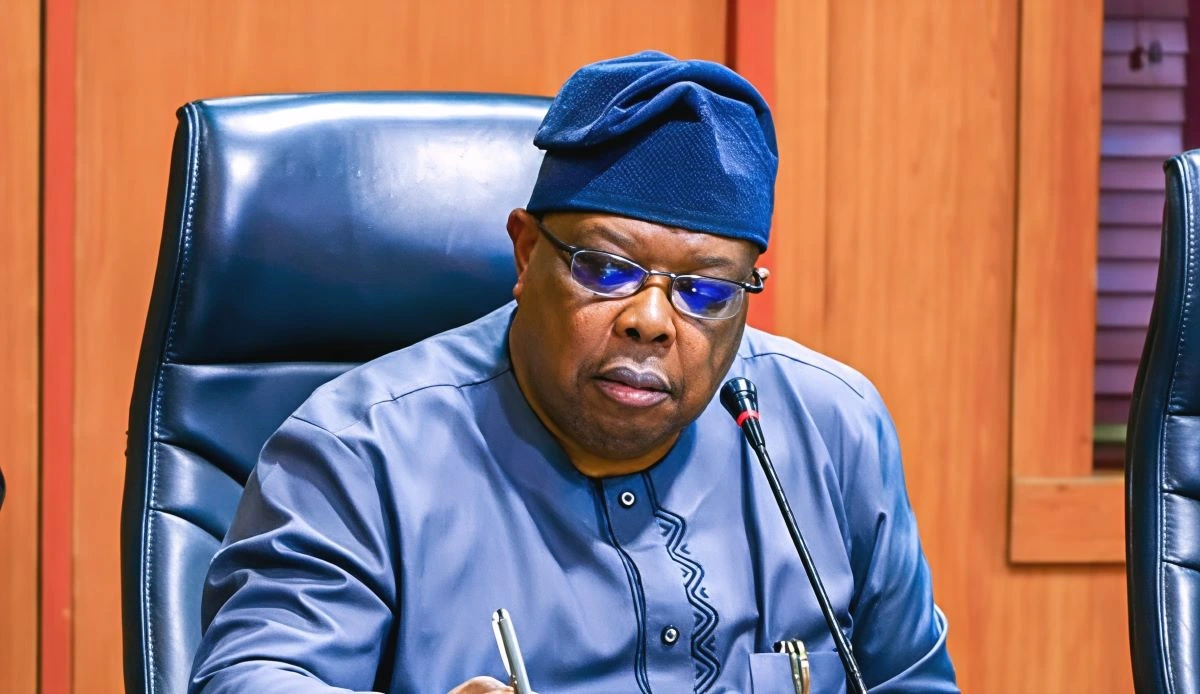
Minister of Power Joseph Tegbe has outlined a roadmap to stabilise Nigeria’s electricity grid, expand transmission capacity and attract fresh investment into the power sector, with a focus on improving electricity supply and resolving longstanding industry challenges.
He announced the priorities at the opening of the Nigeria Energy Leadership Summit and Exhibition 2026 at the Landmark Centre, Lagos. The event, which runs from October 27 to 29, is themed “Strengthening Power Delivery Through Execution, Coordination and Performance.”
Tegbe said the government’s focus must shift from designing reforms to delivering measurable improvements in electricity supply, system performance and market sustainability.
Government targets three energy corridors
Tegbe outlined four priorities for the sector: strengthening energy zones, improving liquidity and financial sustainability, optimising existing assets, and expanding infrastructure to meet future demand.
Also Read
He identified gas supply constraints, overstretched transmission infrastructure, distribution losses and accumulated industry liabilities as major challenges requiring coordinated action across the electricity value chain.
To improve power delivery, the minister highlighted three priority economic energy corridors:
- Lagos–Ogun;
- Benin–Enugu–Port Harcourt; and
- Abuja–Kaduna–Kano.
The strategy aims to align electricity generation, transmission infrastructure, distribution capacity and identifiable demand within these corridors. According to Tegbe, the approach is intended to improve electricity delivery and support industrial productivity.
He also emphasised the need to make better use of existing power-sector assets while expanding infrastructure to accommodate rising demand.
Power reforms target losses and liabilities
The minister identified the reduction of technical and commercial losses as another priority, highlighting ongoing initiatives such as the Presidential Metering Initiative (PMI), the Distribution Sector Recovery Programme (DSRP) and the Meter Acquisition Fund (MAF).
On the sector’s financial position, Tegbe said the government was addressing legacy liabilities and had paid N1.23 trillion out of an estimated N3.3 trillion. He added that measures were being taken to block financial leakages and prevent new liabilities from accumulating.
The reforms, aligned with President Bola Tinubu’s Renewed Hope Agenda, are intended to translate improvements in the electricity market into tangible economic benefits, including stronger industrial productivity, business growth, investment and job creation.
Nigeria’s electricity reform agenda
The roadmap builds on wider efforts to restructure Nigeria’s electricity market and attract investment. In June 2023, Tinubu signed the Electricity Act 2023 into law, replacing the Electric Power Sector Reform Act 2005 and establishing a framework for the post-privatisation phase of the Nigerian Electricity Supply Industry.
- In March 2026, the Federal Government said power-sector reforms had attracted $2 billion in investment and reduced liabilities to N146 billion. It also reported that 16 state electricity markets had been activated, encouraging greater competition and innovation.
- However, regulatory coordination remains an important part of the reform process. In April 2026, PricewaterhouseCoopers (PwC) said the success of Nigeria’s electricity reforms depended on clearer regulatory frameworks and stronger coordination between federal and state authorities.
Tegbe had also said in September that Nigeria’s power-sector reforms could offer lessons for developing economies seeking to strengthen energy security amid rising geopolitical tensions and global fragmentation.