Follow Us on Google Discover
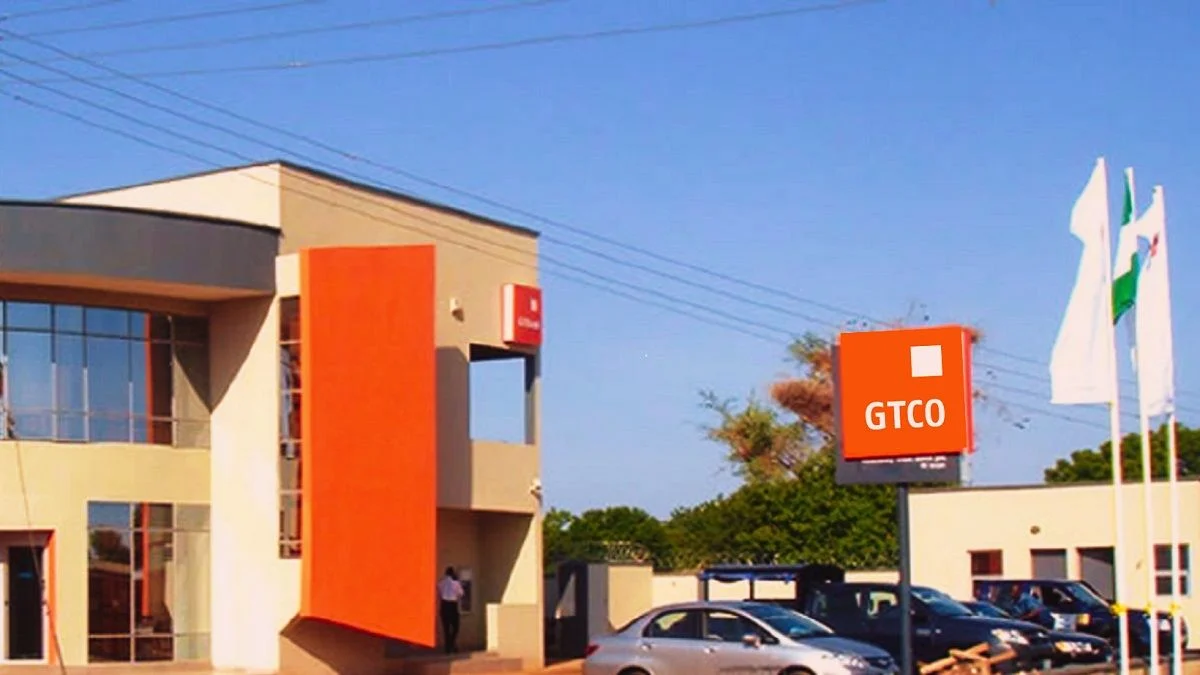
Guaranty Trust Holding Company Plc (GTCO) recorded a 2.32% decline in pre-tax profit to N879.90 billion for the nine months ended September 30, 2026, compared with N900.80 billion in the corresponding period of 2025, as rising funding costs weighed on earnings.
According to the company’s unaudited financial results filed with the Nigerian Exchange (NGX) on Tuesday, October 27, gross earnings increased by 3.27% to N1.63 trillion, supported by higher interest income despite a sharp increase in interest expenses.
Profit after tax declined by 12.16% to N614.57 billion from N699.64 billion, while earnings per share fell by 19.94% to N16.58 from N20.71.
GTCO Interest Expense jumps 27.73%:
GTCO’s pre-tax profit declined despite higher interest income and a substantial reduction in loan impairment charges during the nine-month period.
Also Read
- Interest income increased by 4.96% to N1.29 trillion, but interest expense rose faster by 27.73% to N356 billion from N278.73 billion, reducing net interest income by 1.71% to N935.88 billion.
- Loan impairment charges declined by 58.41% to N29.02 billion from N69.79 billion, providing support to the group’s earnings.
- Net interest income after impairment consequently increased by 2.78% to N906.86 billion, despite the decline in net interest income before impairment.
- Net fee and commission income remained broadly flat at N182.42 billion, representing a marginal decline of 0.44% from the corresponding period of 2025.
- Net trading gains increased by 3.14% to N79.63 billion, while other income declined by 12.89% to N74.78 billion.
The figures show that lower credit costs helped cushion the impact of rising funding expenses, but non-interest income provided limited additional support. As a result, GTCO was unable to translate its higher gross earnings into growth in pre-tax profit.
Operating Costs pressure GTCO profit:
Higher operating expenses added to the pressure on GTCO’s profitability, with depreciation and amortisation increasing by 40.98% to N82.46 billion.
- Other operating expenses also rose by 6.49% to N228.83 billion, while personnel expenses declined by 3.38% to N88.51 billion.
- Combined depreciation, personnel and other operating expenses increased by approximately 9.5% to N399.80 billion from N364.98 billion a year earlier.
- Income tax expense rose by approximately 31.9% to N265.32 billion from N201.16 billion, pushing the effective tax rate to about 30.2% from 22.3%.
- Third-quarter pre-tax profit declined by 7.68% to N276.86 billion from N299.90 billion, while profit after tax fell by 20.05% to N200.39 billion.
- Third-quarter net interest income declined by 10.51% to N286.28 billion, while earnings per share dropped by 27.32% to N5.48.
- The higher tax charge explains why profit after tax declined more sharply than pre-tax profit, while profit attributable to shareholders fell by 11.93% to N606 billion.
Although third-quarter net fee and commission income rose by 23.59% to N59.39 billion and other income more than doubled to N30.44 billion, these improvements did not prevent the decline in quarterly profitability. The results indicate that funding costs, operating expenses and taxation remained significant pressures on GTCO’s earnings.
Customer deposits reach N13.73 trillion:
GTCO’s balance sheet expanded during the nine-month period, with total assets rising by 3.45% to N18.37 trillion from N17.76 trillion at the end of December 2025.
- Customer deposits increased by 9.40%, or approximately N1.18 trillion, to N13.73 trillion from N12.55 trillion, providing additional funding for the group.
- Loans and advances to customers declined by 4.08% to N3 trillion from N3.13 trillion, despite the increase in customer deposits.
- Investment securities rose to approximately N5.94 trillion from N5.54 trillion at the end of December 2025, indicating increased holdings of securities rather than growth in customer lending.
- Other borrowed funds declined by 81.95% to N14.84 billion, suggesting that balance-sheet expansion was supported by deposits rather than additional borrowing.
- Total shareholders’ equity increased by 2.10% to N3.48 trillion, while retained earnings rose by 4.28% to N1.79 trillion.
The figures show that GTCO maintained a growing deposit base and stronger equity position despite the decline in pre-tax profit.
However, the fall in customer lending and the weaker third-quarter net interest income highlight the challenges facing the group as it enters the final quarter of 2026.
Investors will be watching whether GTCO can convert its expanding deposit base into loan growth, ease funding costs and sustain the benefits of lower impairment charges.
GTCO shares gain 35.8% YTD:
GTCO’s share price declined by 1.52% to N123.20 on Tuesday, October 27, 2026, from N125.10 at the previous trading session.
- Despite the decline, the stock remained 35.8% above its opening price of N90.70 at the beginning of 2026, ranking 61st on the NGX in year-to-date performance.
- The October 27 decline represented a loss of N1.90 per share, extending recent weakness in the stock’s market performance.
- GTCO shares have lost approximately 10% of their value over the past four weeks, despite remaining positive on a year-to-date basis.
- The company’s nine-month results showed strong deposit growth and lower loan impairment charges, but higher funding costs, operating expenses and taxation weighed on profitability.
- The decline in customer lending alongside increased investment securities holdings also highlights the changing composition of the group’s assets.
For investors, the key considerations heading into the fourth quarter include the direction of funding costs, the effective tax rate and whether GTCO can translate deposit growth into stronger lending activity. The group’s ability to sustain net interest income and contain operating expenses will also be important in determining whether profitability improves after the third-quarter slowdown.