Follow Us on Google Discover
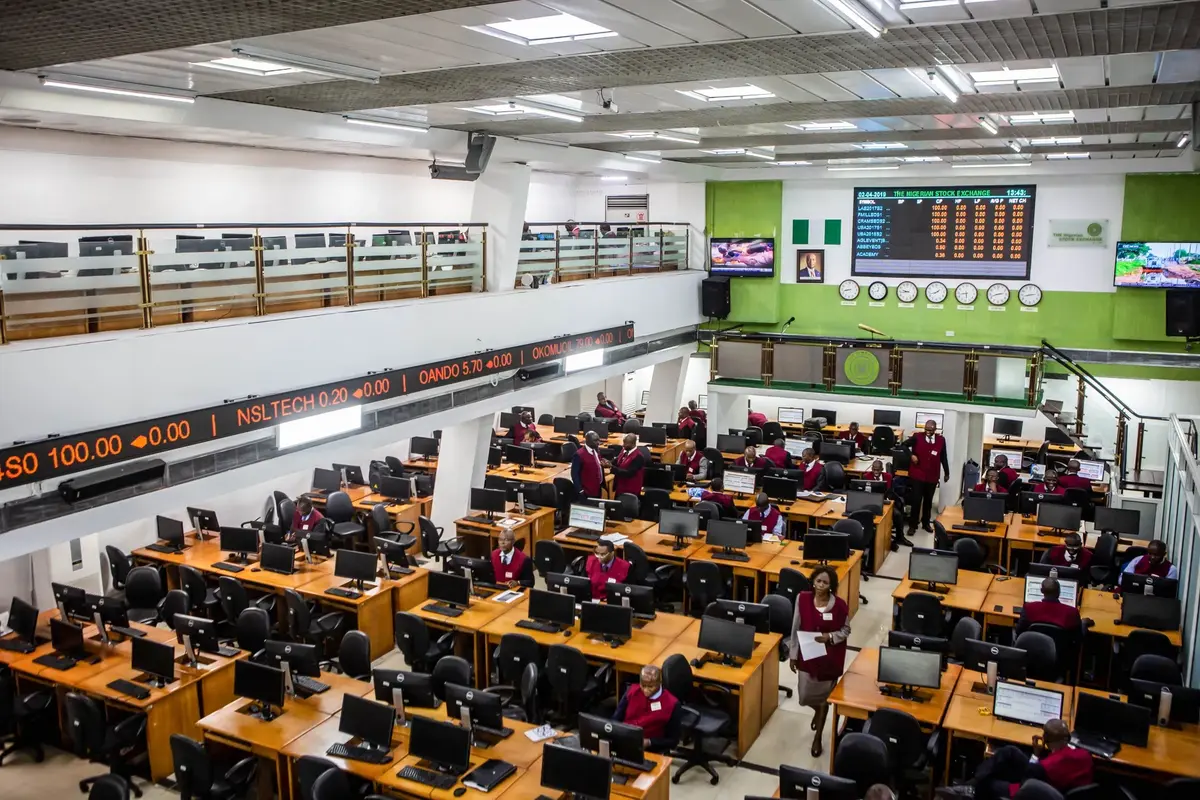
Stock exchanges make money when investors trade shares and companies raise capital.
Nigeria has seen plenty of both this year, and Nigerian Exchange Group has been collecting the fees.
Nine-month revenue rose 80% to N27.3 billion, while pre-tax profit climbed 83% to N20.6 billion, already surpassing the full-year 2025 figure.
The catalyst was the central bank’s requirement for lenders to raise fresh capital by March.
Also Read
Banks responded by issuing trillions of naira in new shares. Offers from the biggest lenders and banks such as Fidelity, FCMB and Wema drew retail investors into the market, many for the first time. Those investors kept trading after the offers closed. The All-Share Index has gained about 60% this year, while market capitalisation has climbed above N160 trillion.
The direct payoff was relatively modest: listing fees rose 25% to N3.7 billion. The bigger reward came from transaction fees, which more than doubled to N20.7 billion and accounted for three-quarters of revenue. Recapitalisation brought investors in; the bull market kept them trading.
NGX benefits from that activity in another way. It owns 43.5% of CSCS, the depository that clears trades on the exchange. Its share of profits from associates rose 70% to N5.7 billion, contributing more than a quarter of pre-tax profit. The disappearance of last year’s N700 million finance cost provided another boost.
The third quarter, however, offers a less flattering picture. Revenue rose 36%, but operating expenses climbed 63%. Staff costs doubled as bonus accruals caught up with the windfall, while general expenses, travel costs and donations also jumped. Quarterly net profit fell 7%, and the cost-to-income ratio worsened from 46% to 59%.
Listing fees also fell 10% in the quarter, despite their strong nine-month performance. Bank recapitalisation is complete, and insurers’ capital raises offer a much smaller follow-on opportunity.
That leaves NGX more exposed to market sentiment than its record earnings might suggest. Market data and technology income, the recurring revenue streams meant to cushion a downturn, are flat or shrinking. Treasury income also fell despite growth in the investment portfolio.
The balance sheet remains sound with no debt, N61 billion in equity and enough liquid bonds to support generous dividends.
At last week’s share price of about N165, however, the stock trades at roughly 27 times annualised earnings. That valuation assumes continued growth from a business whose fortunes depend heavily on a buoyant market.
The next catalyst is the listing pipeline. If the promised NNPC listing and other large IPOs materialise, NGX could sustain its momentum. If they do not, investors may be paying a premium for an exceptional year that proves difficult to repeat.