Follow Us on Google Discover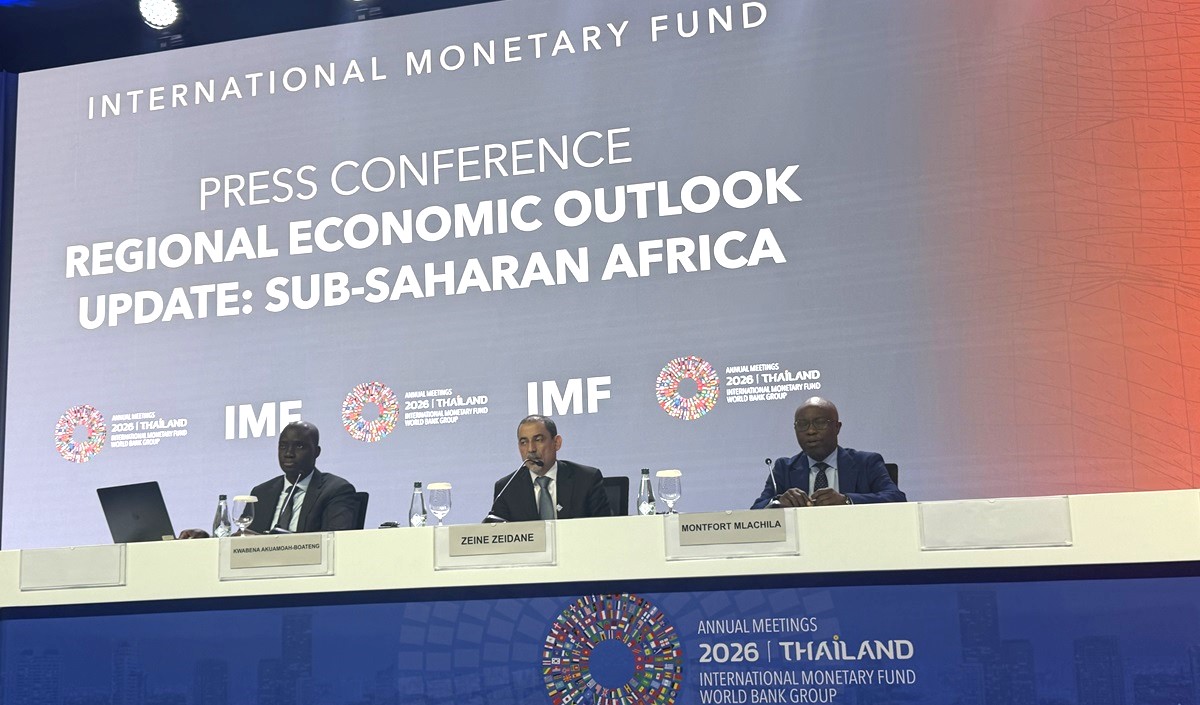
The International Monetary Fund (IMF) has described the Central Bank of Nigeria’s (CBN) September interest rate cut as the right move, saying Nigeria has made significant progress in reducing inflation while monetary policy remains tight.
Zeine Ould Zeidane, director of the IMF’s African Department, said this at a press briefing at the ongoing IMF-World Bank Annual Meetings 2026 in Thailand.
He said the decision to lower interest rates was appropriate given the progress made in bringing inflation down from elevated levels.
- “What I say [on monetary policy] is that in the case of Nigeria, they have made significant progress lowering inflation. Because it has been coming from huge levels and they had high, real interest rates. And they decided to normalise the monetary policy, to lower those real interest rates, which is appropriate in our view. This is the right thing to do,” Zeidane said.
He added that the adjustment should not yet be interpreted as a full easing of monetary policy because the overall stance remains restrictive.
IMF backs CBN’s interest rate cut
Zeidane said the CBN’s decision to reduce interest rates was justified by the progress made in tackling inflation, while stressing that monetary policy must continue to respond to economic data.
- “And it’s not easing yet because the stance itself remains a tight one,” he said.
- “So, the qualification that the central bank did is the right one in our view,” Zeidane added.
- “Monetary policy has to remain data dependent, but the focus should be on making sure that you bring inflation to your target”.
The IMF’s latest regional assessment also warned that monetary tightening “may be needed” in most countries, adopting a firmer position than its April assessment, which referred to a “difficult balancing act.”
The Fund’s position suggests that while Nigeria’s rate reduction is viewed as appropriate, future monetary policy decisions will need to reflect inflation trends and progress towards the CBN’s target.
CBN cuts benchmark rate to 23%
At the conclusion of its 307th Monetary Policy Committee (MPC) meeting in September, the CBN reduced the Monetary Policy Rate (MPR) by 350 basis points, despite widespread expectations that it would leave rates unchanged.
The reduction lowered the benchmark rate to 23% from 26.5%, marking a shift in the bank’s policy stance following progress in moderating inflation.
Alongside the rate cut, the MPC recalibrated the Standing Facilities Corridor while retaining existing Cash Reserve Requirement (CRR) levels for Deposit Money Banks, Merchant Banks and non-Treasury Single Account public sector deposits.
The decision followed a period of tight monetary policy aimed at bringing inflation under control. The CBN’s latest adjustment also reflects its assessment of prevailing economic conditions.
Nigeria’s inflation rate continues to ease
Nigeria’s headline inflation rate declined to 15.39% in August 2026 from 15.43% in July, according to data released by the National Bureau of Statistics (NBS).
The marginal decline extended the country’s disinflation trend for a third consecutive month, providing context for the CBN’s decision to lower the benchmark interest rate.
However, the IMF has emphasised that monetary policy must remain data-dependent, with the priority being to bring inflation towards the central bank’s target.