Follow Us on Google Discover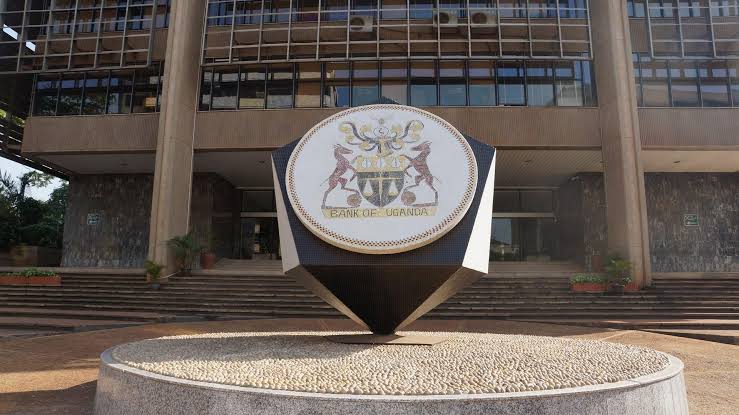
The Bank of Uganda (BoU) has raised its benchmark interest rate by 225 basis points to 12%, tightening monetary policy in response to the Ugandan shilling’s depreciation, worsening external balances, and rising inflation risks.
The central bank announced the increase from 9.75% at an emergency Monetary Policy Committee (MPC) meeting held on Wednesday, October 14, 2026, according to a statement by Governor Michael Atingi-Ego.
The 225-basis-point hike is the largest monthly policy-rate adjustment since October 2011 and takes Uganda’s benchmark rate to its highest level since December 2016.
The decision also marks a shift from the central bank’s previous policy stance, which had kept the Central Bank Rate (CBR) unchanged at 9.75% since October 2024.
Middle East conflict, energy prices drive rate hike
The central bank attributed the decision to mounting external pressures, including escalating conflict in the Middle East, higher global energy prices, and tighter international financial conditions.
According to the BoU, these developments have intensified pressure on the shilling and increased the risk of imported inflation.
Atingi-Ego said the policy tightening was intended to contain inflationary pressures, limit further price increases caused by rising energy costs and currency depreciation, and anchor inflation expectations.
- “The Monetary Policy Committee (MPC) of the Bank of Uganda (BoU), at its special meeting held on 14 October 2026, raised the Central Bank Rate (CBR) by 225 basis points, from 9.75 percent to 12.0 percent,” the governor said.
External deficit widens by $1.4 billion
Uganda’s external position has weakened, with its current account deficit widening by $1.4 billion, or 43.8%, to $4.6 billion.
- The central bank attributed the deterioration to weaker agricultural export earnings, lower tourism receipts, and higher import costs.
- Over the 12 months to August 2026, the goods trade deficit increased from $2.4 billion to $2.8 billion, while the services deficit widened by 50% to $3.3 billion, largely due to higher freight charges.
- However, the secondary income surplus, supported by remittances, improved to $3.1 billion from $2.7 billion.
The BoU also reported weaker foreign capital inflows, partly attributing the trend to higher interest rates in advanced economies, which have made foreign assets more attractive relative to Ugandan financial instruments.
Inflation forecast rises above target
The central bank now expects headline inflation to average between 7.0% and 7.5% over the next 12 months, compared with 4.6% in September.
- Core inflation is projected to average between 5.5% and 6.0%, exceeding the bank’s medium-term inflation target of 5%.
- Headline inflation rose to 4.6% in September from 4.1% in August, while core inflation increased to 3.7% from 3.0% in May, reflecting growing pressure from fuel and food prices.
The higher inflation outlook has increased the urgency of the central bank’s response, as currency depreciation and elevated energy costs threaten to feed into domestic prices.
Cash reserve requirement also increased
The rate hike follows an earlier increase in commercial banks’ Cash Reserve Requirement (CRR) from 11.0% to 13.5%, effective September 24.
The measure is intended to absorb excess liquidity in the banking system and strengthen the transmission of monetary policy to lending and deposit rates.
Following the latest decision, the BoU’s rediscount rate rises to 15.0%, while its bank rate increases to 16.0%.
The central bank said it remained prepared to introduce further measures to preserve price and financial stability.
Economic growth outlook lowered
The monetary tightening comes alongside a weaker economic outlook. The BoU lowered its gross domestic product growth forecast for the 2026/27 financial year to between 6.0% and 6.5%, from its previous projection of 7.0% to 7.5%.
The revision reflects the potential impact of currency depreciation, elevated energy costs, and tighter financial conditions on economic activity.
Before the latest external pressures intensified, the central bank had maintained its benchmark rate at 9.75%, citing a relatively stable inflation outlook and a policy stance intended to support economic activity while keeping inflation around its medium-term target.
The latest increase signals a shift towards tighter monetary conditions as the BoU seeks to contain inflation risks and stabilise the shilling, even as higher borrowing costs could weigh on investment and growth.
Nigeria interest rate
Despite the increase, Uganda’s interest rate is still lower than that of Nigeria.
In September, the Central Bank of Nigeria (CBN) “reset” the Monetary Policy Rate (MPR) by 350 basis points to 23%, following the 307th meeting of the Monetary Policy Committee (MPC) in Abuja.
The decision effectively reduced the benchmark interest rate from 26.5% and marks the second rate reduction this year. It also takes the MPR to its lowest level since February 2024, when it stood at 22.75%.