Follow Us on Google Discover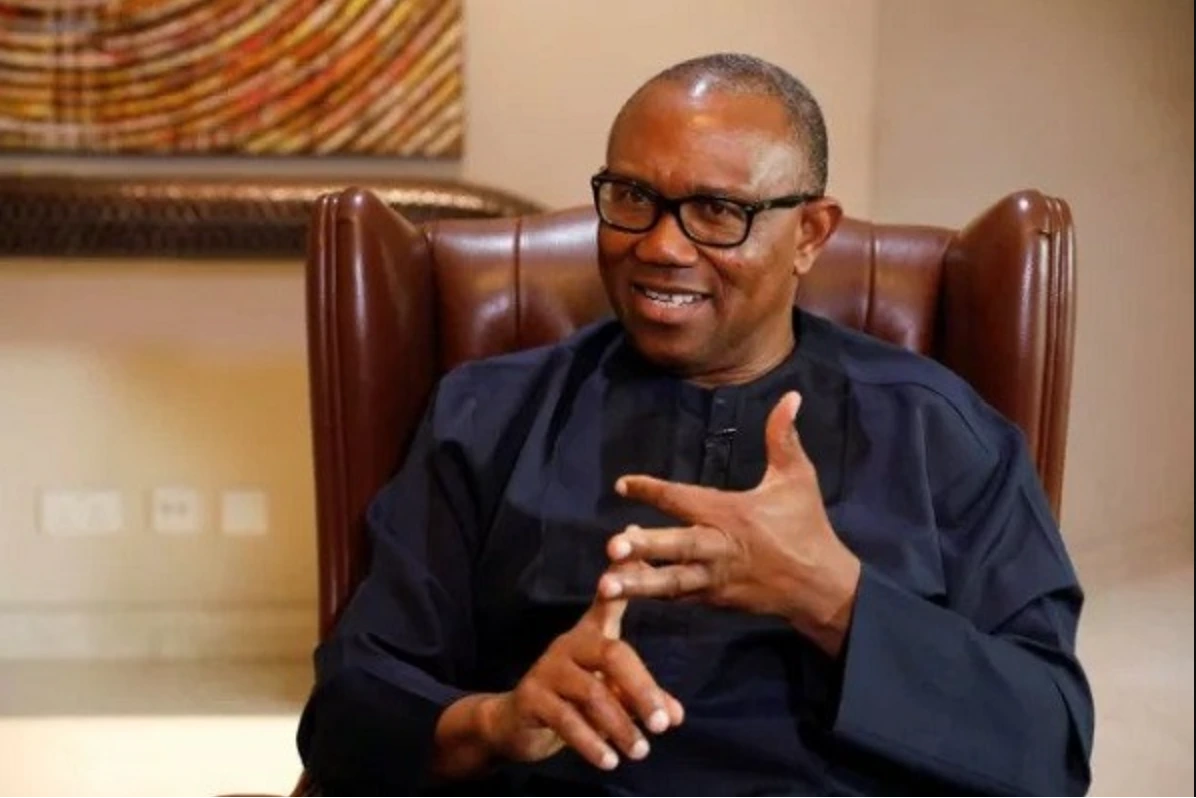
Former Anambra State Governor Peter Obi has criticised President Bola Tinubu’s administration over N7.7 trillion in debt interest payments in the first half of 2026, arguing that improvements in economic indicators have not translated into better living conditions for Nigerians.
Obi made the remarks in a post on X while reacting to a World Bank report titled Beyond the Federal Purse: How Higher Revenues Reshaped State Priorities.
He questioned the government’s presentation of economic progress, saying poverty reduction, job creation and declining inequality should be the key measures of development.
The NDC presidential candidate also raised concerns about the Federal Government’s revenue and expenditure, arguing that rising debt costs and lower capital spending undermine claims of economic progress.
Also Read
Debt interest payments exceed revenue
According to the figures Obi cited from the World Bank report, the Federal Government spent N7.7 trillion on debt interest payments between January and June 2026, against total revenue of N6.2 trillion. He said interest payments exceeded revenue by approximately N1.5 trillion, representing 124.2% of revenue for the period.
- “The World Bank noted that the Federal Government spent a whooping N7.7 trillion on debt interest payments alone in the first six months of 2026 from January to June. This represents about 124.2% of our total revenue of N6.2 trillion within the same period with debt interest payment exceeding revenue by about N1.5 trillion. How do you explain the unsustainable debt crisis even with exponential increase in revenue that we have had since 2023?,” he noted.
Obi questioned how the government could address the country’s debt burden despite increased revenue since 2023. He also argued that capital expenditure had declined by about N700 billion in the first half of 2026, while interest payments were approximately 11 times higher than spending on capital projects.
He attributed the situation to what he described as excessive borrowing, corruption and incompetence under the Tinubu administration.
The concerns come amid previously reported increases in Nigeria’s debt-service costs.
Nairametrics reported that Nigeria spent approximately N16 trillion servicing its debt in 2025, up 22.9% from N13.02 trillion in 2024, based on an analysis of Debt Management Office data.
- In August 2026, Nairametrics reported that Nigeria incurred N10.61 trillion in additional debt-service costs between June 2023 and December 2025, exceeding the N6.47 trillion spent on strategic infrastructure development over the same period.
- The additional costs were attributed to exchange-rate depreciation and higher domestic interest rates.
These figures provide context for Obi’s concerns about the share of government resources going towards debt obligations rather than infrastructure and other public priorities.
Peter Obi questions Tinubu’s economic gains
Obi said the improvements in economic growth and revenue generation highlighted in the World Bank’s assessment should not be presented as proof that Nigerians’ living standards have improved.
He argued that economic stability should be measured by whether households can afford food, access healthcare, educate their children and live with dignity, rather than by macroeconomic indicators alone.
In his statement, Obi said:
- “So-called ‘economic stability’ has not resulted in higher living standards, improved employment opportunities, and reduction of poverty and inequality across Nigeria.”
- “An economy is not truly stabilized simply because government revenue increases, foreign reserves strengthen, or GDP grows.”
- “The definitive measure of economic success is not the apparent stability of the economy on paper, but the quality of people’s lives.”
Obi also questioned the benefits of the government’s reforms for households facing high living costs, saying the impact of economic policies should be assessed by their consequences for the poorest and most vulnerable.
He urged the administration to focus on making improvements in economic indicators translate into measurable gains in citizens’ welfare.
World Bank raises Nigeria’s growth forecast
The World Bank has raised its forecast for Nigeria’s economic growth in 2026 to 4.3%, from 4.0% in 2025, with growth projected at 4.4% annually in 2027 and 2028.
The improved outlook provides a measure of the country’s projected economic performance, but Obi argued that growth figures alone do not establish whether households are experiencing better living conditions.
He called on the Federal Government to review its reforms and focus on outcomes that Nigerians can see and feel, particularly in poverty reduction, employment and inequality.
Obi also cited a figure of about 140 million Nigerians living in multidimensional poverty and referred to a recent United Nations Development Programme report that he said showed reversals in poverty-reduction gains.