Follow Us on Google Discover
West African crude has traded at its biggest discount in more than a decade as soaring freight costs and weaker Asian demand put pressure on oil cargoes from the region.
Bloomberg reported the development, citing trading data from S&P Global Energy’s Platts pricing window and estimates from traders specialising in West African crude deals.
West African crude refers to crude oil grades produced across the region, including barrels from countries such as Nigeria and Angola, and sold into international markets.
Freight costs deepen crude discounts
The weakness has been driven largely by softer demand from Asian refiners and a sharp rise in shipping costs, according to Yash Bajaj, a crude analyst at Energy Aspects.
Freight rates have risen to about four times their pre-war levels, making West African cargoes more expensive to move to key Asian markets at a time when increased oil shipments from the Persian Gulf are giving refiners more nearby alternatives.
- “Softer Asian demand is the key reason why Angolan differentials are discounting,” said Bajaj. The highest Gulf loadings since the start of the Iran war have “led to a softer Asian pull on WAF and more generally Atlantic Basin barrels,” he added.
A cargo of Angola’s Hungo crude scheduled for loading next month traded on Tuesday at a $19.60-per-barrel discount to Dated Brent, the widest discount for any West African crude cargo in the Platts data compiled by Bloomberg since 2011.
- Another November-loading cargo of the Republic of the Congo’s Djeno crude was offered at a discount of $23.10 per barrel to the same benchmark but failed to attract a buyer.
- The market is also dealing with unsold October supplies, with 13 Angolan and Nigerian cargoes for loading this month still available based on estimates compiled from traders earlier this week.
The pressure is expected to persist if Atlantic Basin freight rates remain elevated and Persian Gulf exports continue to reduce Asian demand for West African barrels.
Africa seeks credible crude benchmark
The steep discounts come amid wider discussions over the need for a more unified and credible crude oil benchmark that better reflects the realities of West African energy markets.
- In late July, the Nigerian Midstream and Downstream Petroleum Regulatory Authority said it was exploring ways to establish an African reference price benchmark that would improve transparency and better reflect regional market conditions.
- NMDPRA Chief Executive Rabiu Umar said factors including regional demand and supply conditions as well as the cost of transporting petroleum products into specific markets would need to be reflected in determining such a benchmark.
The logistics component is particularly significant as the latest weakness in West African crude shows how sharply higher shipping costs can affect the competitiveness of regional barrels in distant markets.
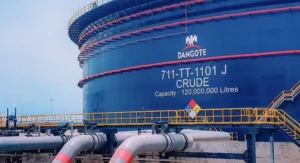
In August, Umar reinforced the push for a more integrated regional market when the NMDPRA called for a functioning West African fuel market as supply chains are reshaped by the emergence of the Dangote Refinery.
Africa expands local refining capacity
The wider shift across Africa is increasingly toward processing more crude on the continent rather than exporting raw petroleum and importing large volumes of refined products.
- Nigeria’s Dangote Refinery in Lagos is central to that transition, with domestic petrol imports already declining as local refining capacity expands.
- Nigeria’s average daily petrol imports fell by 26% to 14.6 million litres in August 2026 from 19.7 million litres in July, according to the NMDPRA.
- The decline reflects Nigeria’s gradual move toward reducing its dependence on imported refined petroleum products as more locally refined fuel enters the market.
Dangote is also developing a refinery project in Kenya targeted at the East African market, extending the same local-processing model beyond Nigeria.