Follow Us on Google Discover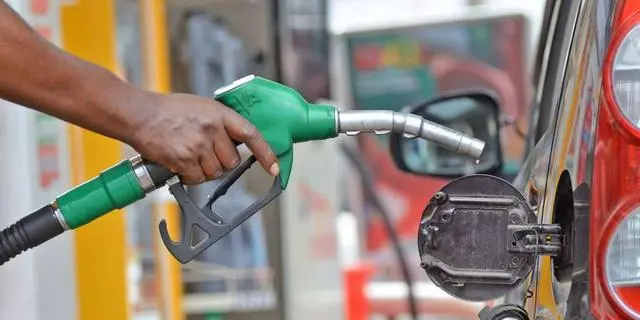
Global fossil-fuel subsidies could exceed $1 trillion in 2026 as governments spend more to protect households and businesses from rising energy costs triggered by the crisis in the Middle East.
The projection was contained in the United Nations Development Programme’s September 2026 policy brief, From Shock to Resilience: Protecting development gains amid compounding crises, produced with the United Nations Development Coordination Office.
The report said disruptions to energy markets and major shipping routes have pushed crude oil and other commodity prices higher, increasing the fiscal cost of fuel subsidies, price caps and tax reductions being deployed by governments to cushion consumers.
Subsidies rise as debt mounts
UNDP estimates that global fossil-fuel subsidies could surpass $1 trillion this year if energy prices remain around current levels. The potential increase comes as many developing economies are already struggling with elevated debt-service costs and limited fiscal space.
- “UNDP estimates suggest that with energy prices at current levels, global fossil fuel subsidies could easily surpass $1 trillion this year,” the report said.
The report found that 55 developing countries, representing 44% of the sample, now spend more than 10% of government revenue on interest payments, compared with 32 countries, or 26%, a decade ago.
Brent crude averaged about $101 per barrel in September, representing a 22% increase since the July ceasefire broke down and fighting resumed.
UNDP said limited access to finance, weak data systems and difficulties identifying vulnerable households are making it harder for governments to replace broad subsidies with more targeted interventions.
Governments therefore face a trade-off between suppressing energy prices through subsidies and price controls or allowing higher costs to reach consumers while financing targeted cash transfers for vulnerable households.
Both approaches require additional fiscal resources, creating further pressure for countries already dealing with high borrowing costs, debt burdens and competing development needs.
African governments cushion fuel prices
Several African governments have introduced temporary measures to reduce the impact of higher international fuel prices on consumers. The interventions range from fuel-levy reductions to direct government absorption of part of pump-price increases.
- In Kenya, President William Ruto said in April that the government had committed KSh6.5 billion to stabilise fuel prices, alongside a temporary reduction in value-added tax on petroleum products.
- South Africa maintained relief of R3 per litre on petrol from May 6 to June 2 and increased diesel relief to R3.93 per litre, effectively reducing the general diesel fuel levy to zero during the period.
- Namibia committed about N$1.3 billion through the National Energy Fund to absorb part of fuel-market under-recoveries and supplier premiums for April and May.
- Ghana initially absorbed GH¢2 per litre on diesel and GH¢0.36 per litre on petrol in April, with the diesel intervention continuing as international fuel prices remained elevated.
Nairametrics had also reported in April that Ghana was moving to reduce some taxes and levies along the fuel supply chain as authorities sought to limit the impact of higher global energy prices on pump prices.
Nigeria avoids return to subsidy
Nigeria has largely avoided returning to a nationwide petrol subsidy following its removal in 2023, despite the renewed surge in global oil prices. The policy has reduced direct subsidy exposure for the government but has also left consumers more exposed to movements in international petroleum prices and foreign-exchange costs.
Executive Chairman of the Nigeria Revenue Service, Zacch Adedeji, said in April that maintaining the former subsidy regime under higher crude prices could have cost the government as much as N52 trillion in 2026, equivalent to about 76% of the N68 trillion federal budget.
The estimate was based on a scenario in which crude oil reached $120 per barrel.
Petrol prices that were around N800 per litre before the latest escalation have subsequently climbed to roughly N1,400 per litre at many filling stations.
Before the subsidy was removed, Nigeria spent about N4.3 trillion on petrol subsidies in 2022, while another N3.36 trillion had been budgeted for the first half of 2023.
UNDP’s broader assessment is that rising energy costs are increasingly forcing developing economies to balance immediate consumer protection against debt sustainability and longer-term development spending, as larger subsidy bills risk diverting scarce public resources from investment and essential services.