
 Follow Us on Google Discover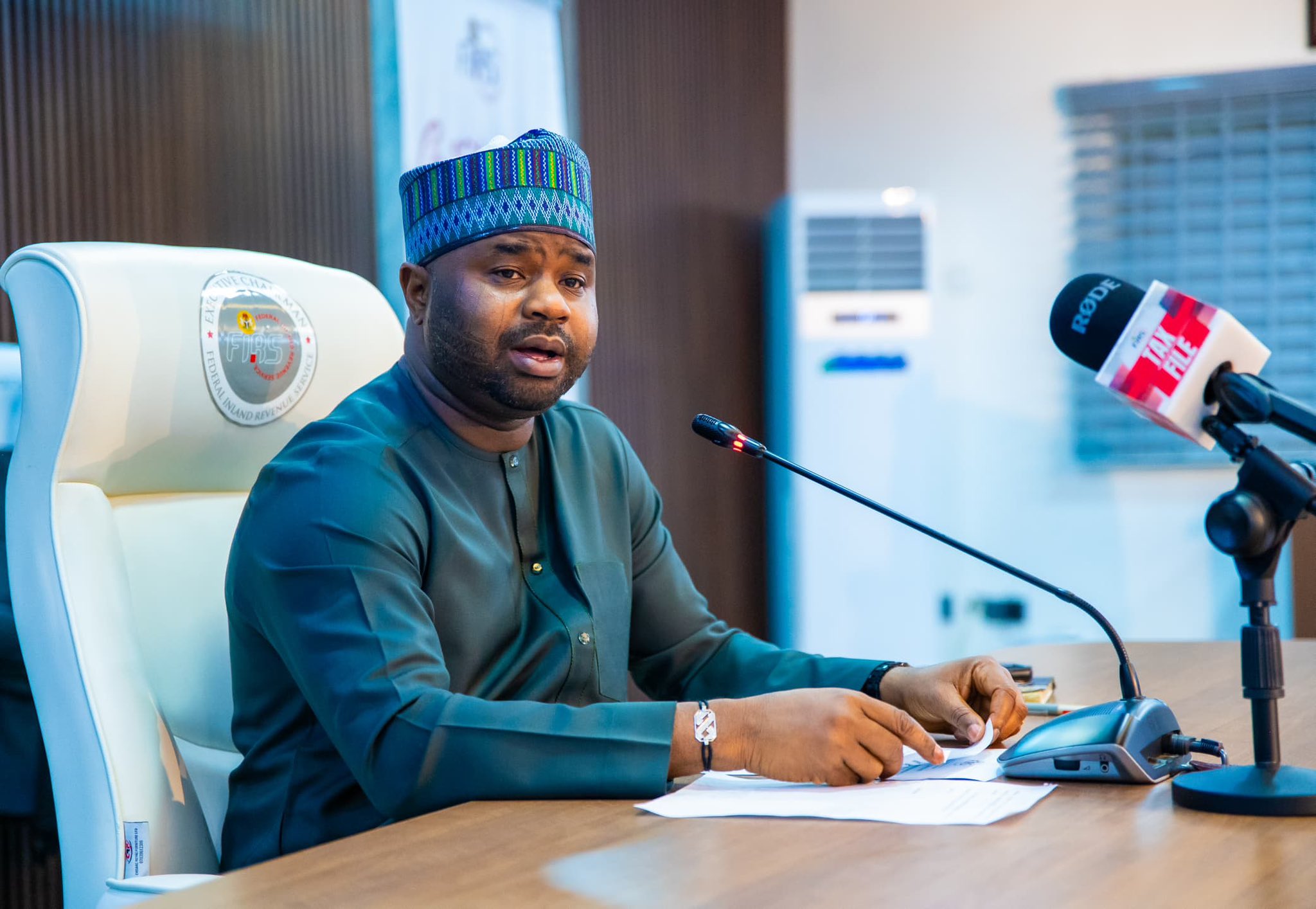
Executive Chairman of the Nigeria Revenue Service, Zacch Adedeji, has said Nigeria would have spent about N52 trillion on fuel subsidies, representing 76% of the N68 trillion 2026 budget, if the policy had not been removed.
He made this known on Tuesday during the commissioning of the NRS headquarters in Abuja.
He noted that the decision to scrap fuel subsidies has significantly improved the country’s fiscal outlook.
The disclosure highlights the scale of subsidy-related pressures on public finances prior to recent economic reforms.
Also Read
He explained that the removal of the subsidy has helped reposition Nigeria from severe fiscal strain to a more stable economic footing.
What the Chairman is saying
Adedeji emphasised the fiscal implications of maintaining the subsidy regime.
- “Mr. President, if that decision had not been taken, fuel subsidies alone would have consumed about 76% of the N68 trillion budget. At an estimated oil price of $120 per barrel, we were looking at subsidy costs of over N52 trillion. That would have left very little for capital projects, social services, and national development.”
- “Our external reserves have grown to about $34 billion, compared to a projected $2 billion if we had continued on the same path.”
He added that the reforms have led to increased revenue, improved allocations to states, and enhanced transparency in the fiscal system.
Backstory
In his inaugural address on May 29, 2023, President Bola Ahmed Tinubu unveiled a bold and transformative policy designed to alleviate the mounting financial pressures on Nigeria’s government.
- “Fuel subsidy is gone,” Tinubu announced, sending a clear message of his administration’s commitment to economic reform during his inaugural speech.
For years, the subsidy, introduced in the 1970s, has been a contentious issue. Despite Nigeria’s status as Africa’s largest oil producer, the country struggles to refine enough crude oil to meet local demand. As a result, Nigeria imports most of its petroleum products, which are sold at subsidized rates set by the government.
While the subsidy kept fuel prices artificially low for consumers, it placed an enormous strain on public finances. In 2022 alone, the subsidy consumed a staggering N4.3 trillion. For the first half of 2023, another 3.36 trillion naira had already been earmarked for subsidy payments.
More Insights
The Minister of Finance and Coordinating Minister of the Economy, Wale Edun, also highlighted progress in revenue administration.
- He described the newly commissioned NRS headquarters as a symbol of transformation in tax governance.
- He noted that the transition from the Federal Inland Revenue Service to the NRS reflects stronger governance and broader mandates.
- The Minister emphasised that improved coordination is expected to boost investor confidence and efficiency.
- He added that technology adoption will enhance compliance and sustain revenue growth.
Edun, represented by Taiwo Oyedele, said the reforms signal a shift toward a more coherent and transparent revenue system.
The government believes investment in tax administration will significantly boost revenue generation.
- Authorities estimate that every N1 invested in tax administration could generate up to N10 in returns.
- The government is considering raising revenue targets for the NRS based on improved efficiency.
- The reforms are aimed at ensuring long-term fiscal sustainability and reducing reliance on borrowing.
What you should know
Nairametrics earlier reported that Edun has ruled out any plan to reintroduce fuel subsidy to cushion the rising cost of petrol triggered by the conflict in the Middle East.
The minister, who assumed the chairmanship of the Intergovernmental Group of 24 on November 1, 2025, said that rather than reversing reforms, the focus for Nigeria and other oil-producing countries like Ecuador should be on targeted and temporary relief for the poor and most vulnerable.
I pray the day comes when Nigeria realizes that policy is not the problem. The greatest reform need is behavior.
Subsidy ia practiced in China, Vietnam, Saudi, Qatar, Kuwait, UAE etc. Yet these nations are all more developed than Nigeria.
Some have used energy subsidies to become global powers.
So, subsidy has never been the main problem.
Nigerias challenge is how it’s people think and behavr.
In one extreme, some people abuse subsidy and steal from it. In another extreme other people gas light subsidy as evil.
Yet, as long as humans live, no society can work without subsidizing one thing or the other because humans will always need help.
Developed nations spend trillions on social security. That is a form of liviing subsidy..
When subsidy is gas lighted, government finds itself in a bind during global crises like currently. They now have to use other words like “temporary relief” to describe the same thing. Cost subsidy.
Can we come back to the middle?
Any policy can work if there is focus on the benefits and how to fix the problems reduce wastages and improve systems.
And most importantly sustain policy consistency for decades.
As long as there is a China and a Vietnam, it will be very hard to sell some economic ideas because these two nations have proven that subsidy, controls, central planning, state intervention etc can still produce results.
Maybe we should study them a bit more.