Follow Us on Google Discover
The Federal Government’s securitised Ways and Means debt declined by N613.34 billion in the second quarter of 2026, marking its first recorded reduction since the obligation was added to Nigeria’s public debt stock in 2023.
Data from the Debt Management Office (DMO) showed that the outstanding balance fell to N22.106 trillion as of June 30, 2026, from N22.719 trillion at the end of March.
This represents a quarter-on-quarter decline of 2.70%.
The reduction coincided with the expiration of the three-year moratorium on principal repayment granted when the debt was securitised in 2023.
Also Read
spanSecuritised Ways and Means balance
The securitised Ways and Means balance remained at N22.719 trillion from its inclusion in the public debt stock in June 2023 through March 2026.
Although the DMO initially reported the amount as part of the broader FGN bond portfolio, later reports presented it separately as “FGN Securitised Ways & Means.”
- By June 2026, the figure had dropped to N22.106 trillion, indicating that the debt had entered a reduction phase after remaining unchanged for about three years.
- Despite the decline, the securitised debt remained a substantial part of the Federal Government’s domestic obligations. It accounted for 25.41% of the total FGN domestic debt stock and 34.09% of all FGN bonds at the end of June.
FGN bonds stood at N64.839 trillion, comprising N41.468 trillion in naira-denominated bonds, N22.106 trillion in securitised Ways and Means debt and N1.265 trillion in domestic dollar bonds.
How Ways and Means debt was restructured
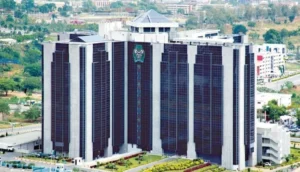
Ways and Means Advances are temporary loans granted by the Central Bank of Nigeria (CBN) to the Federal Government to address shortfalls between government revenue and expenditure.
- Years of reliance on the facility pushed the outstanding balance far beyond the statutory limit stipulated in the CBN Act.
- Following approvals by the President and the National Assembly in May 2023, the government converted N22.719 trillion of the advances into long-term FGN securities issued to the CBN.
- The securitisation did not involve the disbursement of fresh funds. It converted an existing short-term liability owed to the central bank into a recognised component of the Federal Government’s domestic debt.
The arrangement carried a 40-year tenor, a 9% annual interest rate and a three-year moratorium on principal repayment. After the moratorium, the principal was to be amortised over the remaining 37 years.
The restructuring reduced the interest rate from the previous cost of the Monetary Policy Rate plus three percentage points and made the obligation visible in Nigeria’s reported public debt.
Nigeria’s public debt reaches N166.79 trillion
In May 2023, the National Assembly approved the securitisation of Nigeria’s Ways and Means loans estimated at about N22.7 trillion, paving the way for the legislation of the controversial debt.
- The Ways and Means refers to a provision that allows the government to borrow from the Central Bank of Nigeria (CBN) if it needs short-term or emergency finance to fund delayed government expected cash receipts of fiscal deficits.
- Provisions in the CBN Act cap monetary financing of fiscal deficits at 5% of the prior year’s revenues but this was breached by the government of former President Muhammadu Buhari. To legalise the breach, the Buhari government presented a bill to the National Assembly to approve the conversion of the loan into a national debt.
- The decline in the Ways and Means balance did not translate into a reduction in the government’s overall debt.
Nigeria’s total public debt stock rose to N166.79 trillion as of June 30, 2026, from N159.35 trillion as of March 31, 2026, with domestic debt accounting for N91.59 trillion, or 54.91% of the total debt portfolio.
The latest figures released by the Debt Management Office (DMO) put Nigeria’s total public debt at $120.93 billion in US dollar terms, comprising $54.52 billion in external debt and $66.41 billion in domestic debt.