Follow Us on Google Discover
The official interbank/NAFEM market has remained relatively stable in the aftermath of previous structural shocks and aggressive Naira devaluation.
The large reserve buffer is preventing the sharp downward spirals seen in earlier quarters.
The Monetary Policy Committee (MPC) of the Central Bank of Nigeria (CBN) announced a bold 350-basis-point rate cut, bringing the Monetary Policy Rate (MPR) down from 26.5% to 23% to realign transmission effectiveness in domestic financial markets and ease inflation, which declined to 15.39% as of August.
The official CBN rate remains within a narrow range of about N1,327/$ to N1,330/$ amid the CBN’s deep interest rate cut.
Also Read
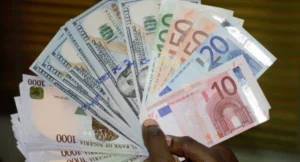
The black-market rate opened at about N1385/$ on Monday. The parallel market trades relatively close to the official rate, and the spread is much narrower than in previous years.
Enhanced external buffers-supported by higher capital flows and sustained oil & gas sector receipts-have also allowed CBN to catalyze Naira’s stability without exposing the country to jarring, destabilizing speculative activities in the foreign exchange market.
The Central Bank’s tight monetary policy stance, OMO bills, and measures to replenish FX liquidity have kept the currency around 1,300, avoiding the extremes seen at around N1,500/$
The naira occasionally weakens declines in interbank FX turnover and isolated corporate dollar demand. When liquidity dries up, the naira comes under mild downward pressure.
The shrinking nature of turnover means that small pockets of corporate calls have been able to induce intraday naira softening, while recent sessions have been driven by gyrating interbank FX turnover. Whenever the naira tests weaker mental bands, institutional liquidity is injected by renewed interest in the naira-denominated assets, preventing daily bouts of hard bullish runs on the dollar.
Consequently, the yield-hungry offshore investors have continued to buy short-term instruments such as Treasury Bills and OMO bills with domestic yields on the high side, but market analysts added that they are generally a sensitive “hot money” flow.
However, Yields on Treasury Bills and rates on Open Market Operation (OMO) bills have dipped since the MPR declined to 23%. Treasury Bills’ oversubscription (as seen with OMOs of several trillion naira) affirmed domestic liquidity is high, and demand for naira-backed assets remains strong.
The Bull Case: Reserves & FX Liquidity, both rising to a record $55.25 billion: Gross external reserves have exceeded $55 billion, mainly on the back of steady diaspora remittances, sound trade balances, and consistent inflows from crude oil.
The massive cushion offers CBN significant firepower to maintain the naira against speculative attack and continue to meet legitimate commercial and invisible FX demand.
The Bear/Caution Case:
Although the CBN insists this is just a process of bringing the policy rate nearer to market realities of the money market and not a complete departure from the CBN’s anti-inflation stance, the fact is that the rate has fallen, and this, by itself, diminishes the appeal of high-yielding fixed-income instruments to foreign portfolio investors (FPIs). When real yields fall too low, hot money can decelerate, putting pressure on FX supply.
The continued pressure from domestic dollar demand for covering energy requirements and structural raw materials remains a source of basic friction despite strong dollar reserves. Stability will largely depend on keeping crude oil production at or above the 2 million bpd mark.