Follow Us on Google Discover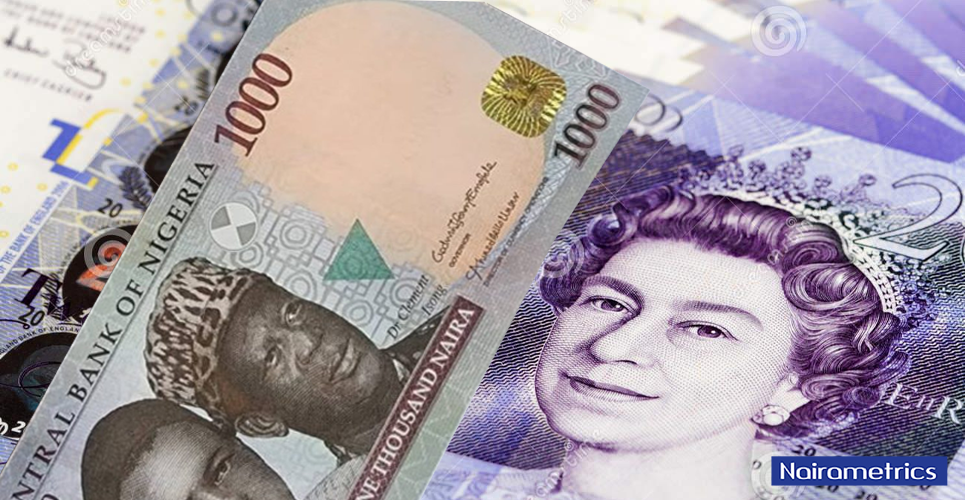
The naira maintained its bullish momentum against the British pound despite the recent interest-rate cut by Nigeria’s Central Bank.
The CBN’s latest data highlighted British pound-to-Nigerian-naira (GBP/NGN) exchange rate settled at approximately N1,762/£ at the mid-week trading session in the official market.
The British currency has weakened over the past several weeks, declining from early-September levels near N1,800/£ to the mid-N1,750/£ range.
The pair was trading near N1,948/£, at the beginning of the year, indicating that the naira has experienced periods of consolidation or relative strength against the pound compared with the pair’s historically extreme volatility, although it remains influenced by macroeconomic fundamentals in both economies.
Also Read
The Nigerian currency’s strength and recovery against major currencies, including the Sterling, can be attributed to a combination of market interventions by specific participants and domestic buffers, despite monetary easing and CBN rate cuts.
In principle, lower interest rates reduce the attractiveness of domestic assets to foreign portfolio investors and, theoretically, should result in currency depreciation. However, the naira has defied this trend and appreciated its foreign peers.
The substantial increase in Nigeria’s gross external reserves, which stand at $55 billion and represent multi-year highs, provides the CBN and market makers with significant resources to intervene in, defend, and cushion the foreign-exchange market, thereby reducing concerns about an abrupt currency collapse.
A major factor supporting the naira’s relative stability has been the significant increase in spot-market turnover and dollar liquidity in Nigeria’s official foreign-exchange market (NFEM).
Stronger dollar inflows, supported by favorable external-sector dynamics and targeted CBN liquidity-management measures, have contributed to narrowing the gap between official and parallel-market exchange rates.
Stable Oil-Dollar Inflows: Supported by a favorable oil-price environment earlier in the year, stable foreign-exchange receipts continue to make a significant contribution to Nigeria’s external account and underpin the country’s foreign-exchange supply.
Nigeria is a major crude-oil exporter; consequently, foreign-exchange inflows largely driven by crude-oil production and global prices. Changes in these factors directly affect the CBN’s ability to inject foreign exchange into the official market, thereby alleviating or intensifying cross-rates such as GBP/NGN.
CBN Tightening Measures: Despite an aggressive reduction in the CBN Monetary Policy Rate (MPR), including a 350-basis-point reduction that brought the benchmark interest rate to 23%, the apex bank has maintained other restrictive measures, presumably to support exchange-rate stability. These measures include high cash-reserve requirements (CRR) for commercial and merchant banks.
The CBN continues to promote flexible exchange-rate practices, seeking to reduce parallel-market premiums and enhance transparency. Periodic interventions and efforts to clear foreign exchange backlogs affect the ease with which importers can obtain foreign exchange.
The Nigerian Apex Bank adopted a hawkish monetary stance, characterized by a high-interest-rate environment, to counter elevated domestic inflation. High domestic yields can attract demand for naira-denominated assets and influence capital flows.
The naira’s overall strength in the domestic market has depressed its synthetic cross-rate against the British pound, despite intermittent strength in the pound against other major currencies globally. This is because local market participants and institutional dealers expect cross-currency pairs, such as GBP/NGN, to be priced according to domestic dollar liquidity and prevailing local-market conditions.