Follow Us on Google Discover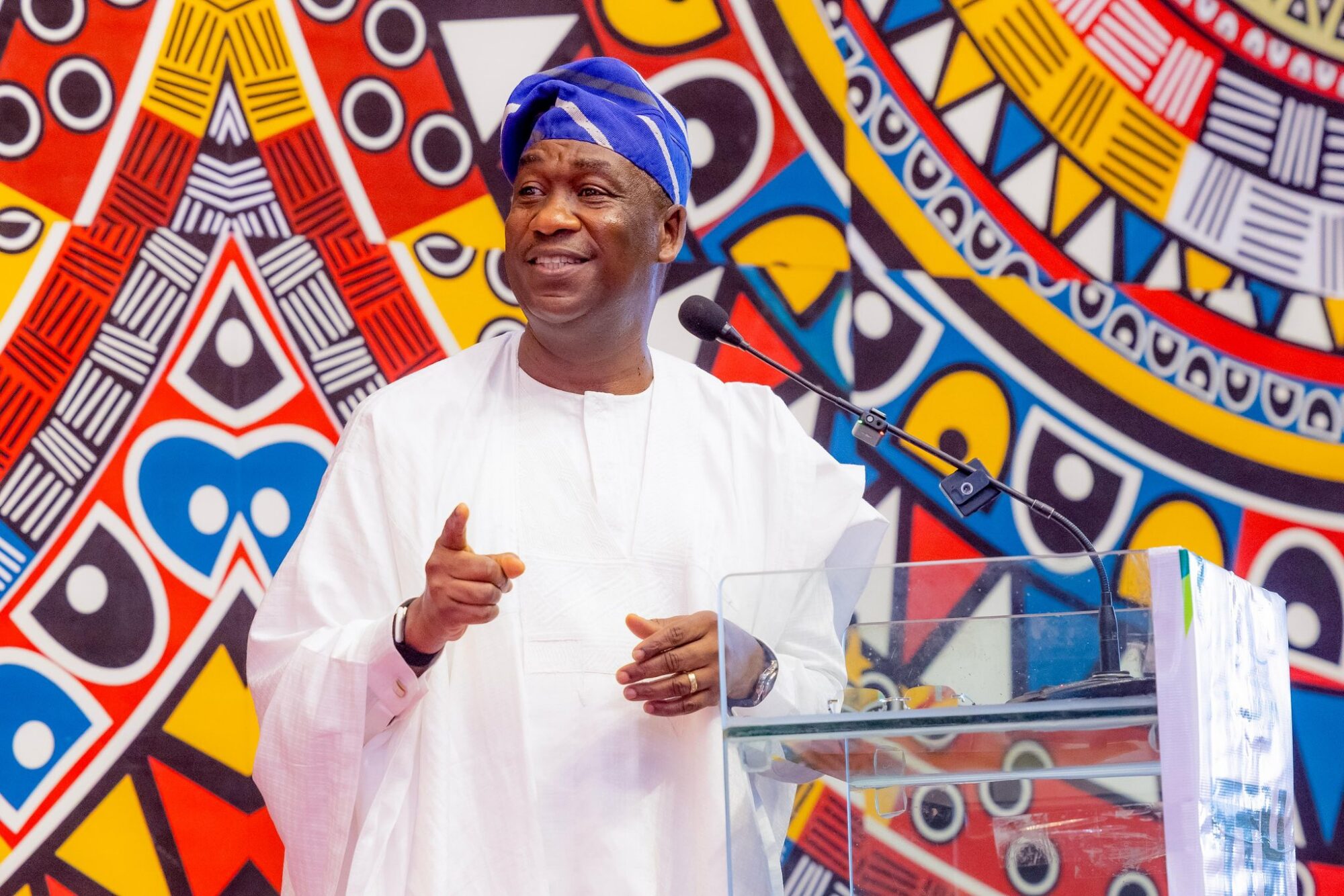
Nigeria’s fintech industry must move beyond making digital payments easier and focus on how the infrastructure it has built can support credit, insurance, savings and wider economic activity.
The Lagos State Deputy Governor, Dr. Obafemi Hamzat, said this in remarks delivered at the Nigeria Fintech Week 2026, organised by the Fintech Association of Nigeria (FintechNGR) under the theme, “Legacy in Motion: Powering the Digital Renaissance,” in Lagos.
Hamzat was represented by the Special Adviser to the Governor on Technology, Broadband and Innovation, Mr Ganiu O. Oseni.
He said Nigeria had reached a point where the question was no longer whether digital finance worked, but what could be built on the digital infrastructure already created by the fintech ecosystem.
Also Read
From payments to economic infrastructure
Hamzat said the growth of real-time payments had created a new layer of economic infrastructure that should now support activities beyond transactions.
Citing the CBN’s 2026 Fintech Report, he said Nigeria’s real-time payment infrastructure had grown, with close to 11 billion transactions processed through the NIBSS Instant Payment platform in 2024, compared with about 5 billion in 2022.
- “Those numbers represent more than success in the payment industry; they represent the emergence of a new layer of economic infrastructure,” he said.
- “Once technology becomes infrastructure, our thinking must change. The question is no longer simply whether people can make payments. It’s what those payments can enable,” he added.
He pointed to several potential applications, including using transaction histories to help small businesses access real-time credit, using trusted digital identity to make financial services easier to access, making insurance and savings more accessible, and using interoperable systems to reduce the cost of doing business.
He also asked whether Nigerian commerce could participate more effectively in African commerce, saying this was part of the next chapter for fintech.
Hamzat said digitalisation was creating financial records that could make business activity more visible and support better financial decision-making.
- “A merchant who receives digital payments is generating information about the economic activity of that business. A company conducting its invoicing and collections digitally is creating a financial record,” he said.
From digital adoption to digital productivity
Hamzat said the broader opportunity was to use the infrastructure created by fintech to improve productivity across the economy.
- “The first generation of fintech made payments easier. The next generation can make the economy more intelligent,” he said.
Hamzat also pointed to Lagos’ role in this transition, given the concentration of financial institutions, technology companies and government institutions in the state.
He highlighted the Lagos State Digital Services Portal, which provides access to more than 300 public services, as part of the state’s wider digital transformation efforts.
- “That is how we move from digital adoption to digital productivity. That is how we move from fintech as an industry to fintech as an economic infrastructure,” he said.
How Nigeria’s payment system is evolving
Nigeria’s payment infrastructure has been expanding beyond traditional payment channels, with new systems and policy initiatives shaping how digital payments are delivered.
Nairametrics reported in June that the National Payment Stack, developed as next-generation payment infrastructure, recorded 153,000 transactions during its pilot phase and is expected to support faster and more interoperable payments across banks, fintechs and other payment providers.
The CBN’s Payment System Vision 2028 targets 95% financial inclusion by 2028, while focusing on deeper digital payments, interoperability and consumer protection.