Follow Us on Google Discover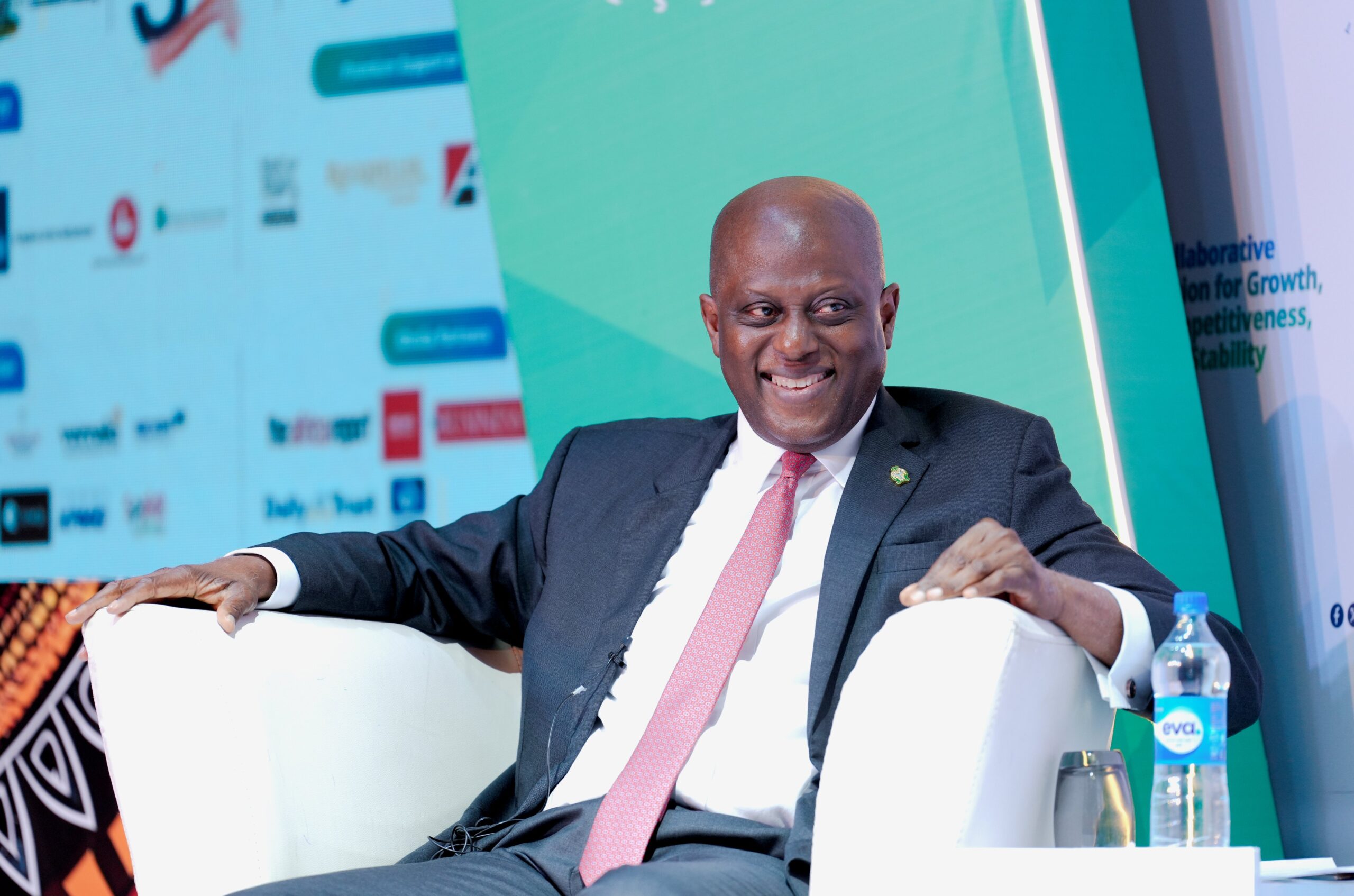
Nigeria’s foreign reserves have crossed $55 billion, reaching their highest level in more than 18 years, according to Central Bank of Nigeria (CBN) Governor Olayemi Cardoso.
Cardoso announced the development at a news conference on Tuesday, following the 307th meeting of the Monetary Policy Committee (MPC) in Abuja.
He attributed the reserve rebuilding to consistency and discipline in the CBN’s approach, while also pointing to diaspora contributions.
He also discussed changes in the foreign exchange market and the MPC’s operational adjustments to monetary policy.
Also Read
Nigeria’s foreign reserves cross $55 billion
Cardoso said the CBN had rebuilt the country’s foreign reserves to a level not seen in more than 18 years.
He described the milestone as the result of a consistent and disciplined approach, while also identifying diaspora contributions as part of the development.
- “We have been able to rebuild our reserves. We know that today, the reserves have crossed US$ 55 billion – the highest number in over 18 years. That’s a big thing. It’s come through consistency and discipline in approach. In addition to that is the whole issue of diaspora contributions,” Cardoso said.
CBN highlights foreign exchange market reforms
Cardoso also discussed the changes in Nigeria’s foreign exchange market, contrasting the previous system of multiple exchange rates with what he described as the closure of the gap between rates.
He said the former structure allowed different rates depending on individuals’ access and connections.
- “We had a very dysfunctional foreign exchange market whereby there were multiplicity of rates depending on whom you knew and the access you had will determine the rate you will get.”
- “What has happened is that we have succeeded in closing that gap. It is not fair for some people to profit at the expense of others,” he said.
Cardoso added that the losses associated with the former system of subsidies were significant.
- “The losses of these ‘subsidies’ were in the region of 2.2% of the GDP. And that is staggering,” he said.
The governor’s remarks presented the narrowing of the gap between exchange rates as a change in the market’s operation.
CBN resets monetary policy operations
At the same MPC meeting, the committee recalibrated the asymmetric corridor around the Monetary Policy Rate (MPR) to +50/-300 basis points.
Cardoso said the adjustment was an operational reset intended to improve the effectiveness of monetary policy, rather than a change in the committee’s current policy stance.
- “The MPC emphasized that the recalibration of the corridor does not constitute a change in the current monetary policy stance, but rather an operational reset to enhance the effectiveness of monetary policy and support the transition to an inflation targeting framework,” he said.
- “The committee therefore considered a reset of the MPR and recalibration of the corridor appropriate to better align the monetary policy implementation framework with market realities,” he added.
The committee also retained the Cash Reserve Requirement (CRR) at 45% for Deposit Money Banks and 16% for Merchant Banks, while maintaining the 75% CRR on non-Treasury Single Account (TSA) public sector deposits.
Cardoso said the adjustment was expected to strengthen monetary policy transmission and restore the MPR as the principal signal of monetary policy.
The reserve announcement and monetary policy decisions were disclosed at the same news conference, with the governor highlighting the reserve milestone, changes in the foreign exchange market and the MPC’s operational adjustments.
What you should know
The CBN announced a reduction of the Monetary Policy Rate (MPR) by 350 basis points to 23% from 26.5%.
Nairametrics earlier reported that Nigeria’s external reserves have crossed the $54 billion mark for the first time since December 2008, reaching $54.08 billion as of September 3, 2026.
The latest position has now surpassed the CBN’s projected reserve level of approximately $51.04 billion for the whole of 2026.