Follow Us on Google Discover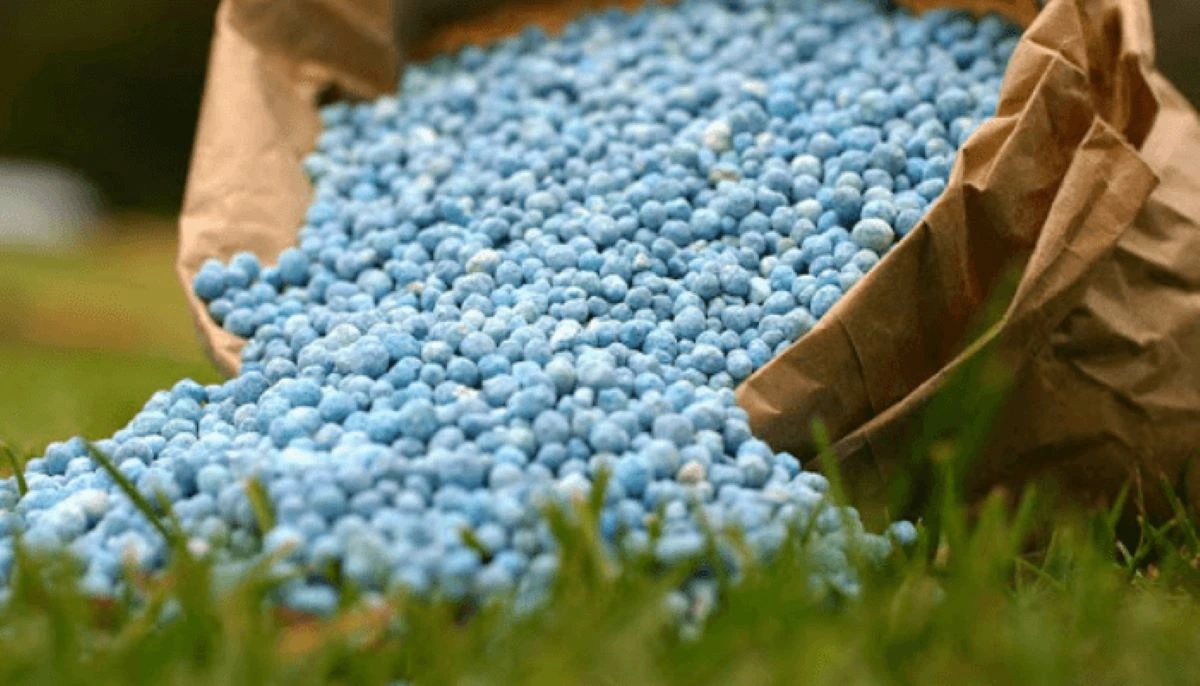
Nigeria’s fertilizer use remains at about 15kg per hectare, significantly below the 50kg per hectare target agreed for ECOWAS countries, highlighting a major constraint to agricultural productivity.
The Chief Executive Officer of Greenview Fertiliser Corporation, the parent company of Dangote Fertilizer, Vishwajit Sinha, disclosed this during the plenary session of the FirstBank Agric & Export Expo 2026 in Lagos.
The plenary session brought together policymakers and private sector leaders to discuss agricultural productivity, financing and Nigeria’s export potential.
What Vishwajit Sinha is saying
Sinha said Nigeria’s fertilizer consumption remains among the lowest globally, despite the regional target set under the Abuja Convention to increase fertilizer application to 50kg per hectare within 10 years.
Also Read
- “Whereas 14 years back, there was an Abuja Convention. It was decided that ECOWAS country will have in 10 years’ time 50 kg per hectare. But now 14 years have passed by and one acre consumption of fertilizer has come to the 15 kg per hectare,” Sinha said.
- He said yields for crops including sorghum, cassava, yam, maize and rice remain at about 20% to 25% of comparable global levels.
- He said smallholder farmers struggle to afford quality seeds, fertilizer and crop protection chemicals, while the average farmer operates on about 2.5 acres.
- Sinha also identified limited irrigation, poor roads, inadequate storage and high logistics costs as constraints, with post-harvest losses estimated at 40% to 50%.
- According to Sinha, only 5.8% of agricultural land has been irrigated under command-area development, leaving farmers exposed to excessive or inadequate rainfall.
- Sinha said access to finance is another challenge, noting that while about 78% of farmers are financially included, only about 2% of total loans to the agricultural sector go to farms.
- Panelists highlight policy, financing and domestic supply constraints
Other panelists said improving agricultural productivity would require consistent government policies, patient financing and stronger domestic supply. They also stressed the need to balance export opportunities with the requirements of local industries.
Mohamed Tahir of Wilmar Agribusiness called for sustained government support, consistent policies and stronger implementation, as well as patient financing for long-gestation crops such as palm and cashew.
Agboola Zubayr Belgore, Managing Director of Amo Byng Nigeria Limited, said Nigeria should prioritise domestic supply of some commodities before focusing heavily on exports.
Belgore said Nigeria requires about 2 million metric tonnes of soybeans annually but produces roughly 1 million to 1.3 million metric tonnes.
He said demand for non-GMO soybeans which Nigeria has, in export markets could increase prices for local livestock feed producers.
The panelists said government should focus on policy, research and standardisation, while the private sector drives production, processing and exports.
More insights
The concerns over fertilizer use come as Nigeria’s fertilizer industry has expanded its role in the country’s export market. Fertilizer exports generated N1.37 trillion in the first quarter of 2026, ranking behind only crude oil and natural gas.
- Crude oil generated N11.20 trillion and natural gas N2.01 trillion during the quarter.
- Fertilizer exports exceeded petroleum gases at N1.34 trillion, jet fuel at N1.33 trillion and gas oil at N625.45 billion.
- Fertilizer exports also exceeded cocoa exports, which generated N596.9 billion during the quarter.
- Urea exports increased from N855.85 billion in Q1 2025 and N1.00 trillion in Q4 2025 to N1.37 trillion in Q1 2026.
The figures highlight the contrast between Nigeria’s growing fertilizer export capacity and the relatively low level of fertilizer application by domestic farmers.
What you should know
Nigeria’s low fertilizer application comes amid continued pressure on food security, with 36.3 million people facing Crisis or worse food insecurity in August 2026, according to the Alliance for a Green Revolution in Africa (AGRA).
AGRA’s Food Security Monitor tracks people experiencing IPC/CH Phase 3+ or equivalent food insecurity across selected countries in East, Southern and West Africa, with Nigeria recording the largest affected population among the 17 countries monitored in August.
The 36.3 million people represent 16.7% of Nigeria’s population, with conflict, insecurity, displacement, high food prices and weather-related production challenges identified as key factors affecting food access.
Earlier projections also highlighted rising agricultural input costs. PwC had projected 34.7 million Nigerians could face acute food insecurity in 2026, while reporting that NPK fertilizer prices rose 19.5% in 2025, alongside increases of 29.2% in maize production costs and 36.8% in soybean production costs.