Follow Us on Google Discover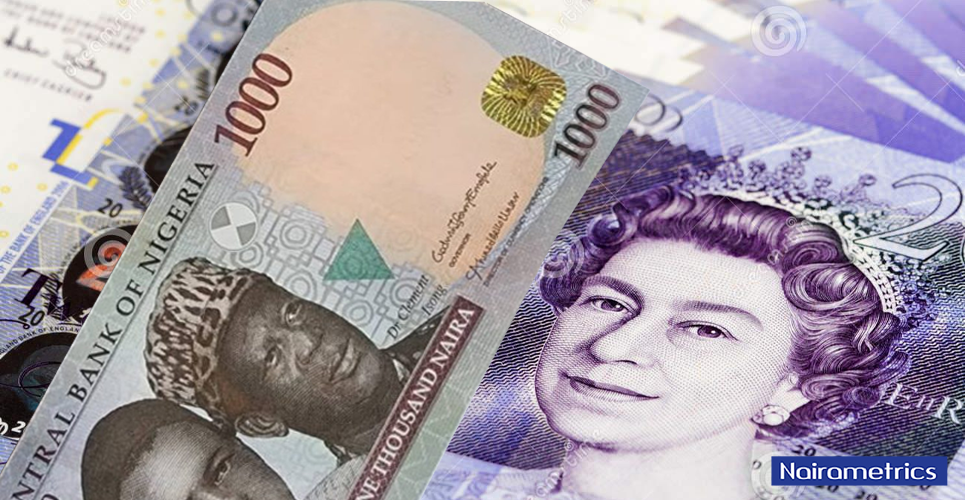
The naira maintained its bullish run against the British pound amid robust fundamentals within the Nigerian economy. The naira recently broke below the N1,800/£ resistance, trading around N1,786/£ against the British Pound.
The breach below N1,800/£ will likely activate long stop-loss orders, especially in the British pound, verified by firmly bearish candles on the weekly and daily timeframes, with volume that shows evidence of institutional selling against low-liquidity short bets.
Appreciation beyond this psychological barrier necessitates significant macroeconomic drivers that alter demand and supply dynamics in the Nigerian foreign exchange market.
Nigeria’s foreign exchange market has become increasingly determined by market forces, with the Central Bank of Nigeria (CBN) emphasizing liquidity, price discovery, and distortion over a fixed peg. The future direction of the CBN’s framework will be particularly relevant for the British pound/naira exchange rate, as sterling’s value is ultimately derived from the naira FX market.
Also Read
Arranged backlog settlements for legacy foreign exchange obligations have normalized in contrast to recent shocks and have shifted focus toward diaspora remittances, crude oil export proceeds, and autonomous flows, which serve as support frameworks for the naira.
British Pound sterling falls against US dollar
The Pound Sterling has eroded gains against the US dollar on Tuesday, with the pair trading just above five-week lows near $1.3465 at the outset of the London trading session.
Weak employment data from the UK has failed to bolster the Pound, and the persistent negative divergence in monetary policy between the Bank of England (BoE) and the Federal Reserve (Fed) continues to exert downward pressure ahead of critical policy meetings.
The UK employment report released on Tuesday indicated that the ILO Unemployment Rate remained stable at 4.9% for the three months ending in July, contrary to market expectations of an increase to 5%. Additionally, claims for unemployment benefits surged by 27.8K, significantly surpassing the forecast for an 8.3K rise and following an 11.8K decline in the previous month.
Market participants are awaiting the Bank of England’s (BoE) statement following its monthly monetary policy meeting, which concludes on Thursday. The consensus views the likelihood of unchanged rates due to a divided committee; however, inflation data due to be published on Wednesday could influence this decision if it reveals a substantially larger increase than anticipated.
Currency traders will scrutinize the policy statement and the number of hawkish dissenters to gauge the likelihood of an interest rate hike prior to year’s end although Governor Bailey is not scheduled to hold a press conference after the announcement.
Furthermore, The Telegraph reported on Tuesday that the UK central bank intends to reorganize its bond-selling operations, ceasing sales of 20- and 30-year yields to mitigate the impact on local borrowing costs amid the ongoing global sell-off.
In the United States, attention will focus on Tuesday’s August Retail Sales report, expected to have increased by 0.9% following a 0.6% decline in July. It is unlikely that this data will significantly influence the US Dollar, as market focus remains on the Federal Open Market Committee (FOMC) meeting scheduled for Tuesday, which market participants anticipate will be the first interest rate hike in three years.
Fed Chairman Kevin Warsh prefers to avoid discussing forward guidance; however, market strategists at Commerzbank note that market perceptions have changed markedly.