Follow Us on Google Discover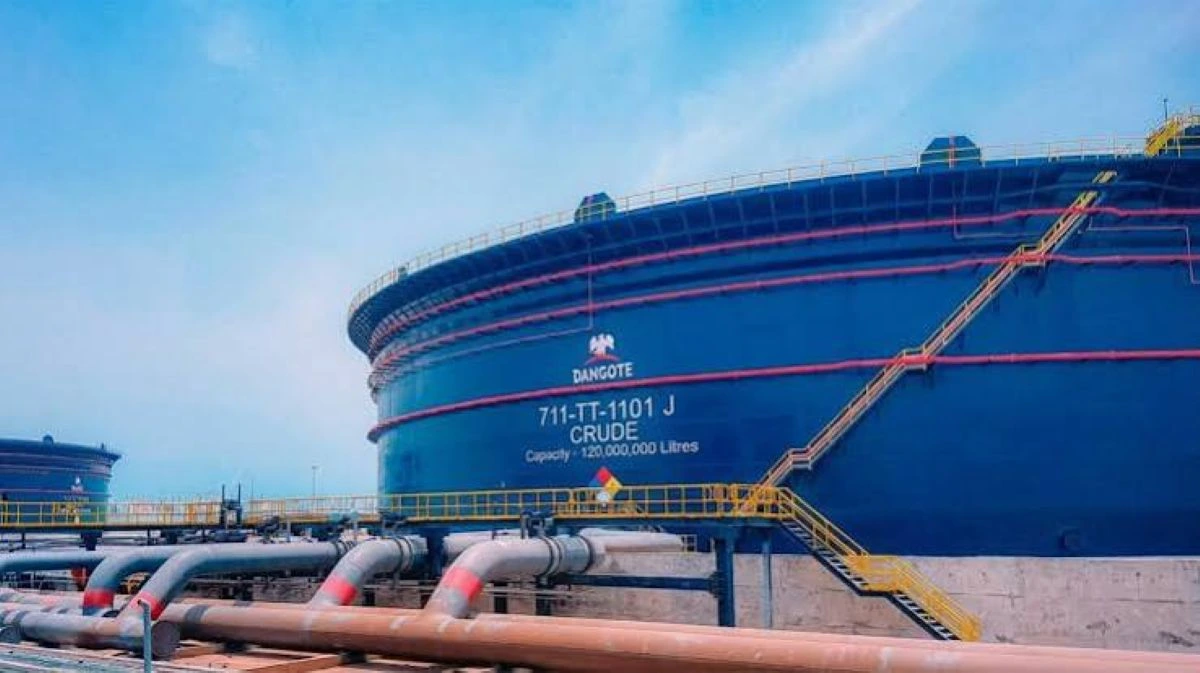
Tunde Ayinde drives a commercial bus between Ojota and CMS every day, and on the morning the newspapers announced that Aliko Dangote was opening his refinery to “the people,” he did the maths on a scrap of paper taped to his dashboard.
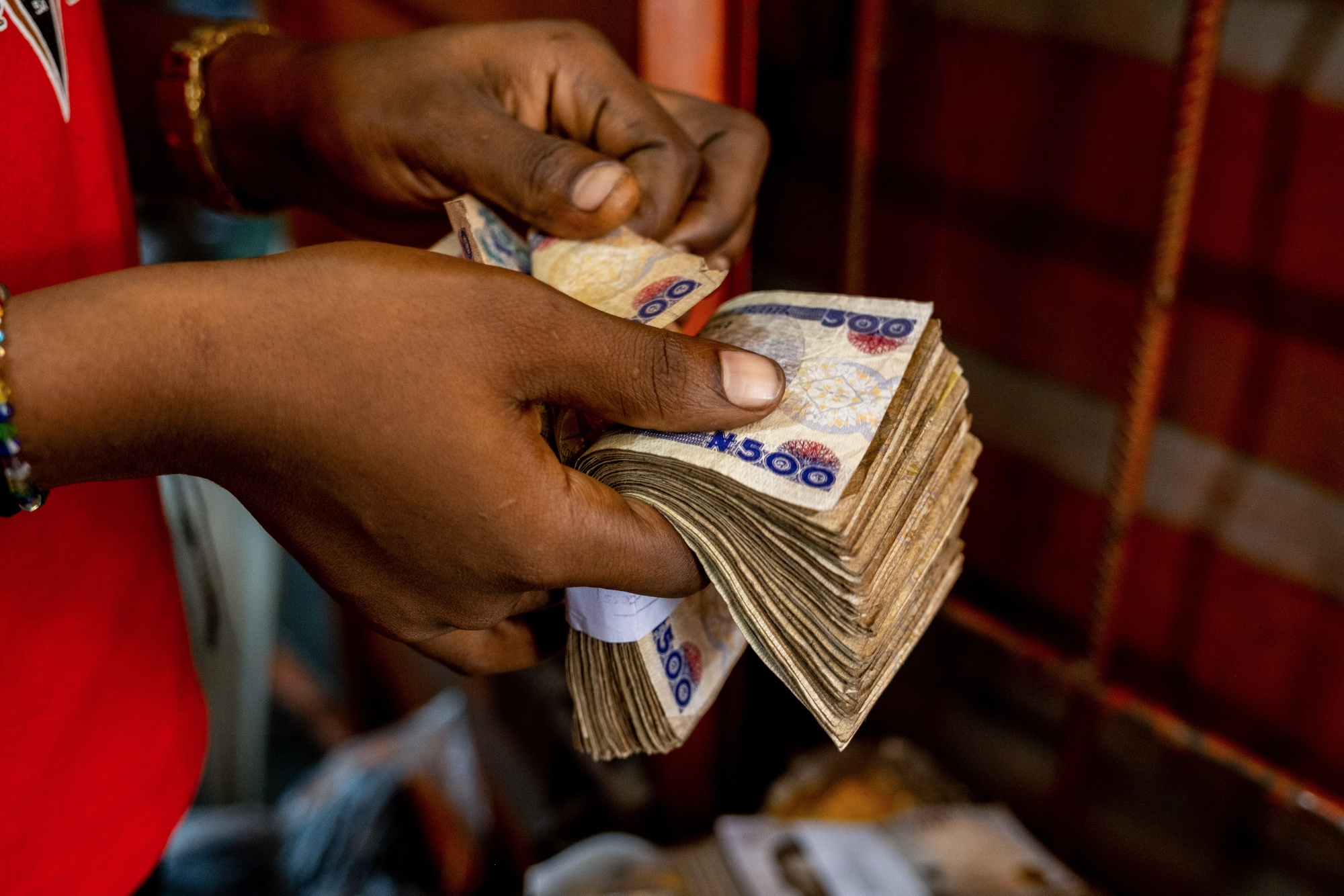
Ten shares at ₦525 each came to ₦5,250, a little more than a good day’s takings after fuel and union levies, and by the time he dropped his last passenger that evening he had decided he would find the money.
He liked the idea of owning a piece of the biggest refinery in Africa, the one whose diesel he sometimes buys at the roadside every week, and he liked even more the idea that a company that size would let a bus driver in as an equal footnote to Nigeria’s billionaires.
What Tunde did not know is that his ₦5,250 sits inside a ₦2.15 trillion offer that is itself a small slice of a company whose post-IPO value is estimated at above ₦65 trillion, and that when the shares start trading in late November, one man’s refinery could single-handedly explain almost all of the growth the Nigerian stock exchange itself is expecting for the rest of the year.
Also Read
The number that has travelled furthest in the headlines, $5 billion, is not quite what it sounds like.
The order book for Dangote Petroleum Refinery and Petrochemicals opens September 14 and closes October 13, offering 4.1 billion ordinary shares at ₦525 apiece, targeting ₦2.15 trillion (roughly $1.6 billion), with the SEC approving the valuation of the existing 120.13 billion shares at ₦63.07 trillion (approximately $47 billion).
The minimum ticket is ten shares, ₦5,250, marketed as Nigeria’s first fully digital retail offer with a stated target of ten million retail subscribers. The $5 billion figure is, in fact, the sum of three separate events: a $2.5 billion private placement in July, oversubscribed 3.7 times at a $40 billion valuation; a further $1 billion underwriting programme in August; and this roughly $1.6 billion retail and institutional tranche now opening.
Add them together and the total is just over $5 billion, an accurate account of everything raised around this listing, but a materially different claim from “a $5 billion IPO,” and Tunde’s ₦5,250 belongs only to the smallest and last of the three.
The scale becomes clearer against the market it is joining. NGX’s total market capitalisation stood at ₦160.60 trillion (about $121.5 billion) on September 7, 2026, and NGX Group has projected the exchange will reach ₦230 trillion by year end.
Add Dangote Refinery’s ₦65.22 trillion transaction to the current base and the combined figure is almost ₦226 trillion, meaning a single listing could account for nearly all of the ₦69 trillion in additional market value the exchange’s own management expects between now and December.
On that combined base, Dangote Refinery alone would represent roughly 29% of the entire exchange, a share market analyst elsewhere put as high as 30 to 35 percent. Either way, the eight blue-chip companies that reportedly account for close to 64% of NGX’s current value, among them Nigeria’s largest banks, MTN Nigeria and Airtel Africa, would see their combined share fall to near 46% without losing a naira of value, simply because the denominator has grown so much larger.
A barn built to hold every household’s grain becomes everyone’s hunger if it burns, and fund managers are already visibly rearranging the barn, trimming tier-one banks, MTN Nigeria, Airtel Africa and Dangote Cement to free up cash for this subscription.
PenCom’s rule imposing concentration limits on individual issuers of a pension fund’s assets is real, but wide enough to drive a refinery through. Behind the retail marketing sits a financing history that reads less like a company inviting the public in and more like a company arranging its exit from one class of lender into another.
Afreximbank, the single largest financier of the Dangote group, and in March 2026 underwrote $2.5 billion of a new $4 billion syndicated loan explicitly intended to consolidate existing financing and optimise the refinery’s capital structure ahead of its long-term growth plan.
Four months later came the $2.5 billion private placement at a $40 billion valuation, and now the retail IPO itself. Read in sequence, the pattern is a fairly conventional leveraged-build-to-public-exit playbook: raise debt to build the asset, refinance that debt right before a liquidity event, bring in sophisticated private investors at a rich valuation, then open the same asset to the retail public at a similar or higher price once the earlier risk has already been taken off the table by others.
The trader who invites the whole market to help pay off his debt is still the only one who keeps the shop, and Nigerians buying in this October are, whether or not the prospectus frames it this way, providing exit liquidity to some of the same lenders and private investors who financed the refinery’s riskiest years.
This does not make the business bad; proceeds will fund an expansion from 700,000 to 1.4 million barrels per day, with the broader Dangote Group programme envisaging a quadrupling of fertiliser output, and new projects in the Democratic Republic of Congo and Zambia, all real industrial capacity. It does mean the capital structure Tunde is buying into has already been substantially de-risked for everyone who arrived before him.
It also means Tunde is buying into a company whose control has barely moved even as its shareholder base explodes. NNPC has held a 7.2% stake, with unconfirmed reports from November 2025 suggesting an ambition to raise that toward 20%, while earlier plans had contemplated selling up to 10% of the refinery, the approved IPO is offering 4.1 billion shares, equivalent to about 3.3% of the enlarged share capital, implying the founder retains the overwhelming majority of shares and voting control even as the company becomes one of the most widely held in Nigerian history.
The operational risk underneath the valuation inverts the story Nigerians have been told for years: Africa’s largest single-train refinery sits inside Africa’s largest crude producer, yet still imports 30 to 40% of its crude, partly because much of NNPC’s joint-venture crude is already tied up in oil-backed loans and pre-export sales.
Rob Thummel of Tortoise Capital Management has warned that a refinery dependent on a single, domestic supplier carries material investment risk, and Mikolaj Judson of Control Risks has noted that feedstock access problems compress margins and utilisation in ways that flow straight through to valuation.
The fisherman who must buy fish from another man’s river has not yet mastered his own water, and analysts have separately flagged the $47–49 billion valuation is rich relative to listed refining peers such as Turkey’s Tüpraş, valued at about $12 billion, and U.S.-listed HF Sinclair, valued at roughly $16 billion.
None of this is an argument against the listing. Tunde is buying, at a price open to any Nigerian with a bank verification number (BVN) and even without a smartphone, a slice of the largest industrial asset ever built in the country, funding a real expansion in refining and fertiliser capacity that Nigeria needs regardless of who owns the equity.
The honest read is that two true things are happening in the same transaction: a genuine, technically impressive act of financial inclusion and democratisation, the first fully digital retail offer in Nigerian capital markets history, and simultaneously a concentration event that will make one company’s fortunes, and one supply chain’s fragility, structurally load-bearing for the entire exchange and, through the pension funds now trimming other holdings to buy in, for the retirement savings of workers who never touched the subscription portal.
Further steps are required. Firstly, PenCom and the SEC should strengthen transparency around institutional exposure to the Dangote Refinery listing by publishing listing-specific concentration monitoring, rather than leaving investors and the market to infer the risks from general portfolio limits.
Secondly, retail investors deserve plainer disclosure, in the marketing itself and not only the prospectus’s fine print, of the specific and named risk they are buying alongside the upside: Nigeria’s own difficulty supplying its largest refinery with Nigerian crude.
Thirdly, regulators should treat this listing as the stress test it is for whether the NGX can absorb an asset this size without crowding out diversification and build concentration rules ahead of the next mega-listing rather than reacting after the fact.
Tunde will most likely get his ten shares in October, and there is a real chance he will be glad he bought them, because the refinery he is investing in is, whatever the concentration numbers say, a genuinely transformative piece of Nigerian industrial capacity.
But he will own them inside a market that has just handed a single company a weight over 65% the weight of the eight firms (including Dangote Cement) that used to anchor it combined, financed in its final stretch by public money after years of private debt had already taken the sharpest edges off the risk for everyone who arrived first.
That is not a scandal. It is simply what “the people’s IPO” actually means once the arithmetic is done, and Tunde, taping his calculations to a danfo dashboard, did more of that arithmetic than most of the headlines bothered to. This, in essence, is a case of democratising a refinery, deleveraging a balance sheet, and asking every Nigerian pension saver to bet on one man’s crude supply.
Akinola Morakinyo (Ph. D) writes on MINT economies from the Department of Economics, Finance & Quantitative Analysis, Kennesaw State University, GA, USA.