Follow Us on Google Discover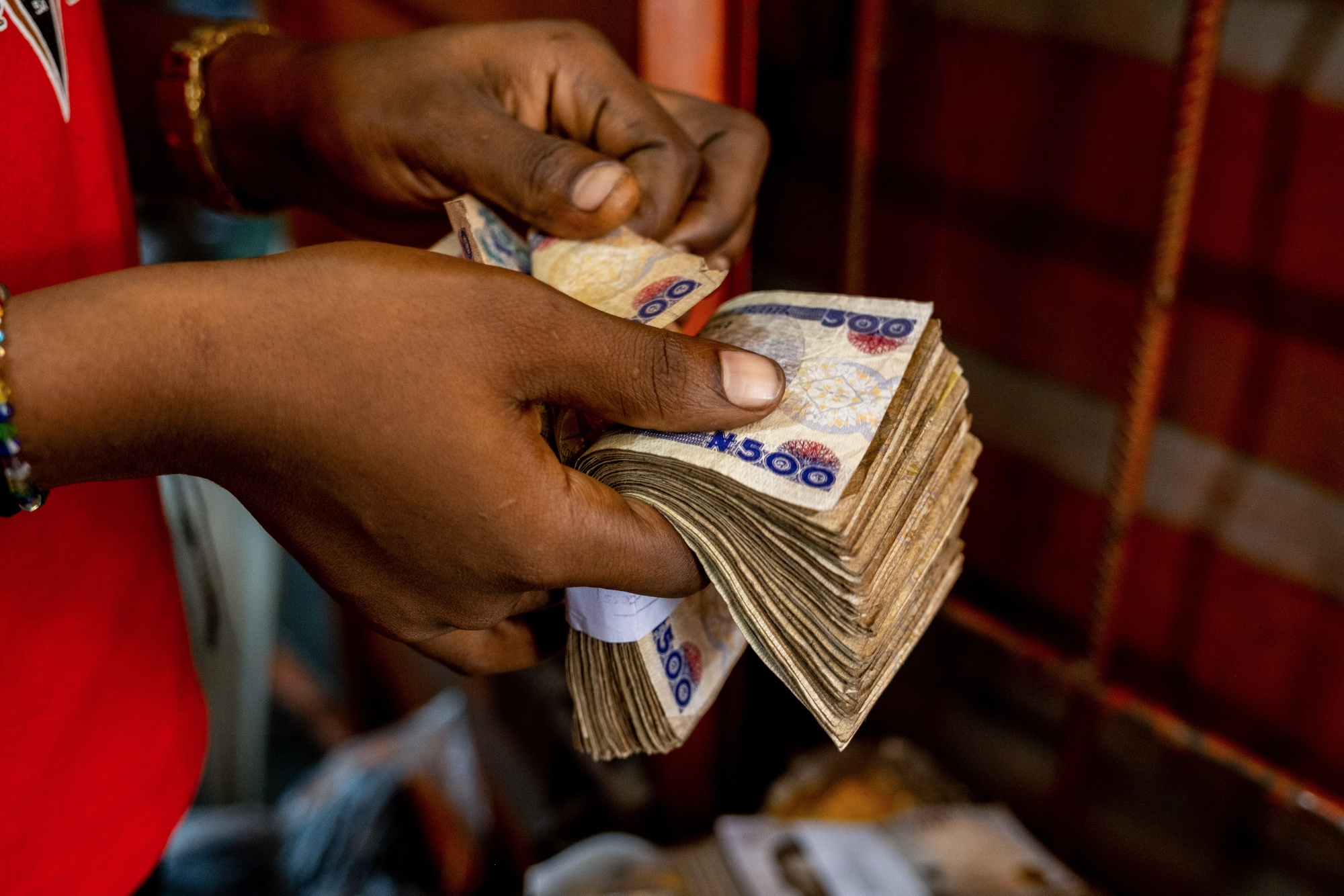
For millions of Nigerian businesses, the problem may not be that they have nothing to prove their creditworthiness.
It may be that lenders have historically been looking for the wrong proof.
For decades, if you’re talking about small-business loans in Nigeria, the discussion pretty much starts with the wrong question: “What do you own that I can claim if things go wrong?” And, when you think of all the millions of businesses that sell every single day, pay their bills weekly, and keep cash flowing through their bank accounts, payment terminals, and mobile transfers, the answer to that question is, surprisingly, often “nothing, really, financially.”
These are commercially live businesses, but they’re financially invisible.
Also Read
Back in December 2025, the World Bank said barely one in 20 Nigerian MSMEs had bank credit because of hurdles like collateral requirements, short loan terms, and expensive borrowing.
Of course, Nigeria has been working to change that: the National Collateral Registry became operational in 2016 to let businesses use things like inventory, agricultural produce, receivables, and equipment as collateral, with the Secured Transactions in Movable Assets Act 2017 later providing its statutory backing.
Open banking just takes it a step further: instead of treating something tangible as collateral (you can’t secure a loan with a history of transactions), it makes the commercial reality of a business transferable, verifiable, and useful in the lending process.
From what a business owns to how it actually operates
Nigeria’s open banking framework is built to enable exactly this shift. While the country has been somewhat slower on implementation – for example, the nationwide go-live in August 2025 didn’t materialize, with Open Banking Nigeria indicating in July 2026 that efforts are still in the transition phase from policy to practice – this technology has a game-changing future, particularly as it becomes a widely adopted infrastructure.
Whereas a traditional SME loan application will want to see audited financial statements, tax returns, and physical collateral, applying for loans based on cash flow works differently. We’re asking: how quickly does cash enter your business? Is it volatile? Are there recurring obligations that already absorb most of the cash coming in?
Bank statements already support some of this analysis, but open banking can change the process from collecting the static PDF, or manually uploading statements, into getting permissioned, structured data directly from financial institutions. The Nigerian open-banking API standard specifically contemplates access to information including account balances, transaction histories and indebtedness with the correct permissions.
Henry Obiekea, managing director of FairMoney Microfinance Bank, made a similar point in a February 2026 interview with Nairametrics. More financial information could allow lenders to distinguish between risk levels rather than pricing a large pool of borrowers almost uniformly.
A World Bank-supported digital cash-flow lending programme tried out in Nigeria with Access Bank and Sterling Bank moved credit assessment away from traditional collateral and towards business cash flow; the Bank described the initial trials as promising.
The direction is also evident in the World Bank’s $500 million FINCLUDE programme for Nigeria, approved in December 2025, which includes technical assistance to digitise loan appraisal for MSMEs using an AI-enabled platform and aims to bring 250,000 MSMEs into the debt financing market.
Better information can lead to better rejection too
But the most powerful argument for open banking is where its risk starts. When financial data is another source of creditworthiness, the companies that can access, understand and score data gain leverage to pick who gets capital.
Where the existing lending system may deny a loan because collateral was missing, the modern data–rich lending system can deny because an algorithm spots too much instability, transfers, a frowned-upon spending habit, or cash flows previously associated with non-performing loans.
That could be critical in an economy where informality is ingrained in how businesses operate. A school-related business may have highly seasonal revenue. A merchant may shift money between personal and business accounts because the business predated its accounting systems.
More data can reduce information asymmetry. It cannot automatically supply the context around the data. There’s also a distribution issue. Businesses where the bulk of income is gotten through digital means will generate higher transaction data profiles than those whose main income is in cash. If lenders come to trust lending based on the digital cash-flow evidence, it’ll switch from being easier for businesses without fixed assets to those without a legible digital track record.
Consent is only the beginning of the fairness question
The system in Nigeria had begun to prepare for some of the data risk. The Central Bank of Nigeria guidelines had stipulated that clients should be informed about which data will be required, why it’ll be required, the period and frequency it will be accessed, and how they can withdraw their permission. Consent must be explicit, and not perpetual.
While these protections are necessary, lending offers a bit more complexity than a “click yes” agreement. A business owner applying for working capital might have the legal right to deny permission to transaction data sharing, but in doing so, they acknowledge they’re likely to get no funding from the lender to evaluate it. A consent screen could be extremely clear, but the economic decision facing them is not.
If cash-flow underwriting rises to meet the importance it has the potential to solve for SME lending, businesses should understand how the main points influenced decisions made about them. Just because your business history should be accessible thanks to open banking, shouldn’t mean how lenders draw judgment from the business history is entirely a black box.
What would actually count as a success?
Open banking can add another layer: the ability of a borrower to make the behaviour of the underlying business visible across institutions, with permission.
- But the metric cannot be simply the number of APIs connected, or the speed of an automated decision. If what open banking does is allow lenders to spot problematic entrepreneurs and get them rejected quicker, that would mean better underwriting, but what about improving access? Even if you can leverage that data for lenders to more efficiently screen for businesses they were already going to lend to, and just reject and screen out complicated businesses more effectively, the outcome may be a more advanced credit system as opposed to a more accessible one.
I’ll know open banking has made a meaningful difference if credit-worthy startups that are currently not underwriteable begin to have access to appropriately priced capital, be able to make their financial history portable to new financial partners, and be provided with enough feedback, even when being rejected, to know what hindered them from securing credit.
That is the promise of cash-flow lending. What is missing with several businesses of the average entrepreneur in Nigeria, isn’t a tangible asset like landed property or machinery. It’s just credible confirmation of a capacity to be in business tomorrow, rather than right now.
Open banking is capable of providing that. To use the system as a broader gateway, however, the banks or lenders ultimately make that decision.
- Glory Chidera Madueke is a lawyer and writer covering technology, artificial intelligence, digital policy, business, and emerging regulatory issues. Her interests sit at the intersection of law, technology, innovation, and public policy, with a particular focus on how technological change affects businesses, institutions, and society.