Follow Us on Google Discover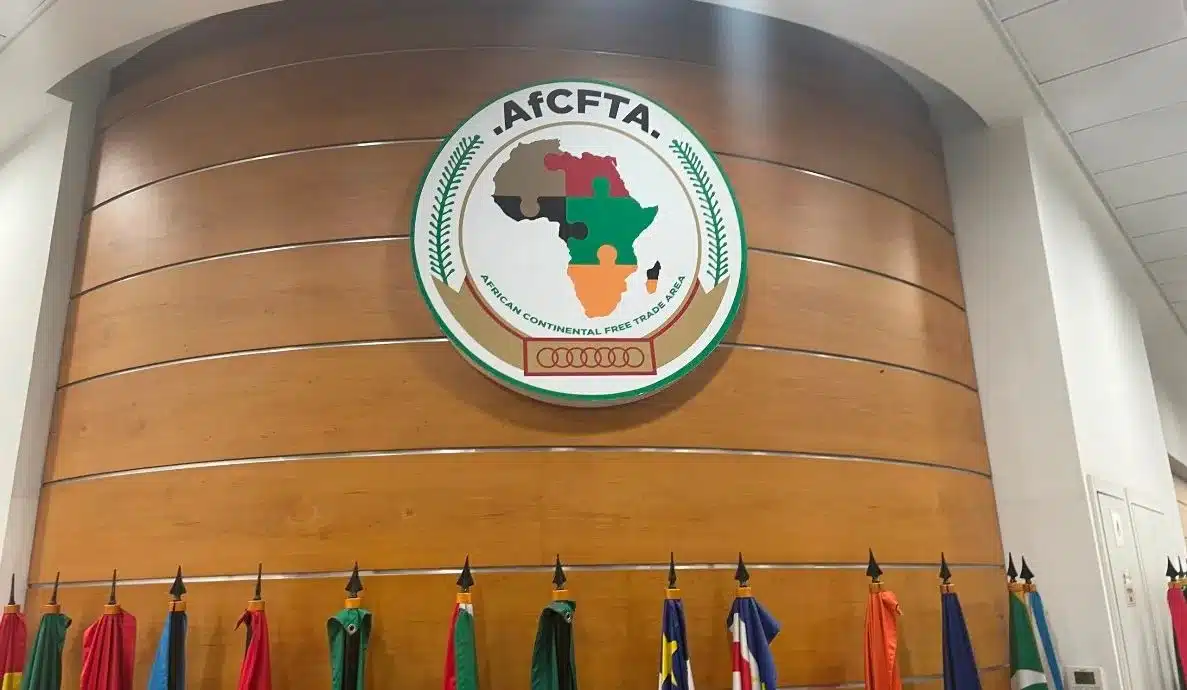
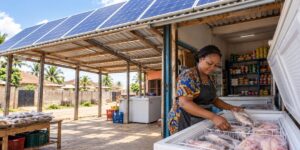
Blessing runs a small shea butter and cosmetics workshop off the Calabar-Ikom Road, and for two years she has been trying to get her cream jars onto the shelves of a cosmetics chain in Bamenda, Cameroon.
The order is not the problem; the buyer wants her product and has said so in writing. The problem is everything after the order.
Her consignment sits for the better part of a week at the Mfum-Ekok border corridor while customs officers on both sides work through paperwork that, on paper, should not exist anymore, because Nigeria and Cameroon are both signatories to an agreement that promised to erase exactly this kind of friction five years ago.
She has worked out, quite frustratingly, that it is faster and only marginally more expensive to ship the same jars to a distributor in Rotterdam than to move them about two hundred kilometres up the inland land border crossing to Bamenda. A treaty signed at dawn does not open the market gate by noon, and Blessing’s cream jars have been waiting at that gate for five years.
That gate is the African Continental Free Trade Area (AfCFTA), and this year marks five years since it graduated from paper to practice. Of the African Union’s fifty-five member states, all but Eritrea, have signed the agreement, even though the founding agreement was signed by 44 countries in Kigali in March 2018; the treaty entered into force in May 2019; and actual trading under its preferences began on January 1, 2021.
As of September 2026, fifty of the fifty-four signatories have deposited their instruments of ratification, with Somalia having approved but not yet completed the paperwork, and Benin, Libya, South Sudan and Sudan still to approve it at all.
United Nations Conference on Trade and Development (UNCTAD) puts the size of the single market AfCFTA is meant to create at $3.4 trillion, spanning more than 1.6 billion people, and the World Bank’s original 2020 modelling projected that full implementation could raise regional incomes by 7% by 2035 and lift around 30 million people out of extreme poverty not counting an estimated additional 68 million people moving out of moderate poverty (below $5.50/day).
That remains, on paper, the most ambitious integration project the continent has attempted. The honest question is how much of it Africans are actually living inside.
The architecture built to deliver on the promise is real. The AfCFTA Guided Trade Initiative (GTI), launched in October 2022, initially brought together seven countries, that is, Cameroon, Egypt, Ghana, Kenya, Mauritius, Rwanda and Tanzania, to test commercially meaningful trade under AfCFTA preferences. Tunisia subsequently joined, bringing the initial participating group to eight.
The initiative allowed participating countries to trade preferentially in products for which the applicable tariffs and rules of origin had been agreed, even while negotiations on other products and rules were still ongoing. Algeria was subsequently brought into the expanded initiative in 2023.
Dedicated air cargo corridors created under the initiative have cut freight costs by 50% to 75% into East and Southern Africa. Parallel to the tariff work, the Pan-African Payment and Settlement System (PAPSS), launched in January 2022, has quietly begun tackling another major barrier to intra-African trade such as the currency-conversion tax that used to sit on every cross-border transaction between neighbouring economies.
28 countries are connected to PAPSS as of 2026, with Afreximbank targeting thirty-eight by year end; the Bank of Central African States (BAEC) joined in July, and Kenya’s Pesalink signed on in February. PAPSS has cut foreign exchange costs by up to 27% where it operates, and transaction volumes have grown over 1,000% through digital-channel integration year on year.
And yet, for all of that architecture, the trade numbers have barely moved. Intra-African trade is estimated at around 16% of the continent’s total trade in 2026, according to Afreximbank, only modestly above its recent level and still well below the African Union’s long-standing objective of raising intra-African trade to at least 25%. In dollar terms, intra-African trade is forecast to grow 10% in 2026 to $230 billion, up from $210 billion in 2025, and manufacturing and agri-food products are expected to reach 48% to 50% of intra-African flows, up from 46% in 2025.
But growth in the value of trade is not growth in its share, and a $3.4 trillion single market still routing 84% of its commerce outside itself has not become a single market in any meaningful sense. Live tariff concessions currently cover only about half of the continent’s economies. Most tellingly, World Bank’s August 2026 report, Integrating Africa: From Threads to Hubs, found that about 60% of Africa’s trade costs arise from unilateral, ‘behind-the-border’ constraints including inefficient customs, weak logistics, transport restrictions and fragmented standards within countries rather than from the tariffs AfCFTA was designed to negotiate away.
Nigeria’s own numbers illustrate the pattern. Non-oil exports reached ₦12.36 trillion (about $9.3 billion at September 2026’s rate of roughly ₦1,330/$) in 2025, and customs processed $925.84 million in exports in Q1 2026, up 39% year on year. But in first half of 2025, cocoa beans alone account for roughly 35% of export value, alongside fertiliser and cashew nuts, meaning Nigeria’s non-oil export boom remains, structurally, a raw commodity story; the new “One Local Government, One Export Product” initiative is a genuine attempt to widen the base, but has not yet changed the composition.
South Africa, by contrast, has used AfCFTA to deepen trade in machinery, vehicles and processed materials with Nigeria, Egypt, Kenya, Algeria and Ethiopia, and remains the continent’s most industrially diversified intra-African exporter. Kenya, one of the original seven participants in the AfCFTA GTI offers the sharpest contrast: in Q1 2026, Africa accounted for more than 41% earned from merchandise exports, a direct dividend of its early, committed participation.
The gap between Nigeria’s cocoa-heavy exports and Kenya’s shilling-earning success is a story about what gets built on the ground. The African Development Bank estimates the continent’s infrastructure financing need at $130 to $170 billion a year, against an annual gap of $68 to $108 billion; broader assessments including climate resilience put the overall development-financing gap at around $400 billion a year, while climate-related investment needs alone run into the hundreds of billions of dollars annually.
The African Union’s Programme for Infrastructure Development in Africa identified 69 priority projects requiring $160.7 billion by 2030, yet implementation remains a major challenge by 2025. An October 2025 investor summit in Luanda convened to close this gap raised just $18 billion, a small fraction of what the continent’s own plans require. According to World Bank data, average customs dwell time across African borders runs to roughly 126 hours, more than five full days, and for Africa’s 16 landlocked countries, transport alone eats up 15% to 20% of the value of everything they import. A path between two farms stays bush until feet have crossed it enough times to wear it smoothly, and Africa has spent five years signing the deed to the farm without clearing the path to its neighbour’s.
Placed against the two integration projects most commonly used as comparisons, the current 16% intra-African trade cuts two ways. Association of Southeast Asian Nations (ASEAN) has run a free trade agreement since 1992, and intra-ASEAN trade still accounts for only about 21.4% of the bloc’s total trade as of 2024, essentially flat for three decades, the cautionary half: a sophisticated regional trade agreement can plateau well below its architects’ hopes, because tariffs were never the only barrier between neighbouring economies. Production networks, infrastructure, logistics, standards, investment and business integration matter just as much.
The European Union offers the opposite lesson. Internal EU trade runs at roughly 62%, built not on tariff elimination alone but on a full customs union, a common currency in euro-area members, free movement of goods and labour, and decades of structural funds that physically wired poorer member states into richer ones. Two farmers who share a fence do not automatically share a harvest, and Africa’s fifty-five economies, having only just finished raising the fence, are a long way from proving they will do what ASEAN mostly has not, and what only the EU, at enormous and sustained cost, actually did.
None of this makes AfCFTA a failure at five years old. Africa has built the legal and financial architecture of a single market, near-universal ratification, a functioning guided trading mechanism, a payment system dismantling the currency-conversion tax on cross-border trade, faster than it has built the roads, ports and customs systems that would let that architecture move goods at scale.
The World Bank’s finding that 60% of Africa’s trade costs are unilateral or sit behind national borders is both discouraging and clarifying, because it shows governments where the next five years of effort must go. Firstly, the infrastructure financing gap must be treated as the binding constraint it demonstrably is, de-risking private capital toward the $160.7 billion Programme for Infrastructure Development in Africa (PIDA) pipeline far faster than the $18 billion raised in Luanda suggests is happening.
Secondly, PAPSS, which has only connected 28 African countries and AfCFTA’s Guided Trade Initiative membership should expand from their current base of 39 countries respectively toward full continental coverage on a fixed, publicly tracked timeline. Thirdly, countries like Nigeria need to stop treating AfCFTA as a compliance exercise running alongside their real export strategy toward Europe, America and Asia, and start converting non-oil export volume into the processed, value-added composition that captures value inside Africa rather than shipping it out at the border.
This is recognizable in the way Africa exports cocoa cheaply to import relatively expensive chocolate. Fourthly, the four outstanding ratifications of Benin, Libya, South Sudan and Sudan are a small enough number for continued African Union peer pressure to close the gap within the next year or two, because a continental single market cannot credibly claim the name while four members remain outside its legal reach.
Blessing’s cream jars will most likely still take the better part of a week to cross from Calabar to Bamenda next year, because none of the fixes that matter, a customs system, a paved corridor, a harmonised standards regime, arrive in the time it takes to sign a further protocol. Five years ago, Africa signed a treaty promising to trade with itself.
The next five years will decide whether that promise becomes Africa’s version of ASEAN, a durable but shallow plateau, or the first chapter of something that eventually resembles what Europe built, slowly and expensively, once its governments decided the roads mattered as much as the treaty. Nobody in Calabar or Bamenda is waiting to find out which one it will be. They are just waiting for their goods to clear the border.
Akinola Morakinyo (Ph. D) writes on MINT economies from the Department of Economics, Finance & Quantitative Analysis, Kennesaw State University, GA, USA.