Follow Us on Google Discover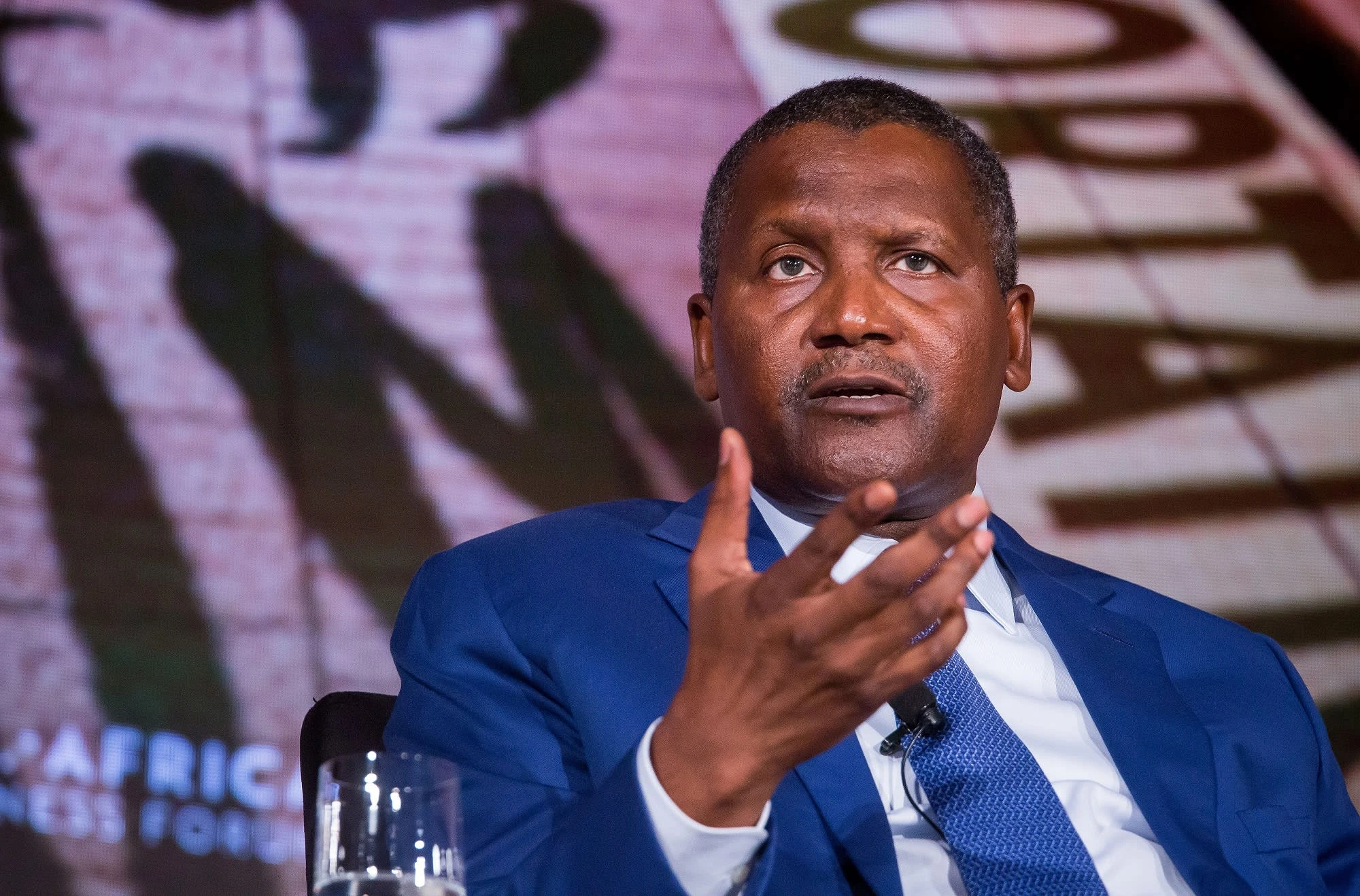
On September 2, 2026, after twelve years in the country, Uber switched off its app in Nigeria and went home.
It called the exit “a thorough review of our business.”
The truth was simpler: one of the most sophisticated technology firms on earth weighed the cost of operating in Nigeria and walked away.
Here’s the thought I couldn’t shake. Before Uber packed up, it might have asked the locals how they manage. Because not far from wherever that decision was signed, Aliko Dangote runs the largest refinery on the planet, and Femi Otedola generates power for the grid. A whole class of Nigerian builders faced the same brutal environment that just defeated Uber—and instead of leaving, built empires inside it.
Also Read
Uber could have gone to school on Dangote. Most of the world still should.
No one diagnosed this country more sharply than Chinua Achebe, who opened his 1983 book The Trouble with Nigeria with a line many of us can still recite:
- “The trouble with Nigeria is simply and squarely a failure of leadership.” — Chinua Achebe
Achebe was right—but also careful, and this is the part we forget: the failure is not only at the top. It is also the daily choices of more than two hundred million people, choices that too often carry the same contempt for order we condemn in the men who govern us.
Let me tell you about a red light.
In 2023, I was stopped at a traffic signal on Awolowo Road in Obalende, Lagos, around eight in the evening. The light was red, so I did what I’d been trained to do on the other side of the ocean: I stopped. Behind me, a danfo driver—the yellow buses that are the bloodstream of Lagos—leaned out and cursed me. Not for cutting him off. For stopping. There was no policeman in sight, no one to punish me. In his judgment, obeying an empty red light made me a fool.
In that man’s world, a law is only as real as the officer beside it. Remove the enforcer, and the rule evaporates. That driver and the leaders he curses run the same operating system. The looting at the top and the ignored red light at the bottom are the same instinct at different scales—do whatever you can get away with when no one is watching.
That is an ordinary day in Nigeria: you generate your own electricity because the grid won’t, store your own water, and queue for fuel in an oil-producing nation. Faced with all of it, most people endure it—or, like Uber and like millions in the diaspora, they leave.
Aliko Dangote did neither.
He looked at the same broken country—no reliable power, no roads, no refineries, no stage to build on—and set out to build the missing country himself. Brick by brick, road by road, refinery by refinery. That is why I say Aliko Dangote is not a businessman. A businessman operates inside an economy. Dangote is building one.
When the road isn’t there, you pour the concrete
That is not a metaphor. His cement plant at Obajana depended on a North–South route that had collapsed; rather than wait for the government, his company built it—the 43-kilometre Lokoja–Obajana–Kabba highway, the longest concrete road in the country.
Then came the Apapa–Oshodi expressway in Lagos, the artery to the ports, where gridlock had cost him tens of billions of naira. He rebuilt that too. At one point the government approved nearly 275 kilometres of concrete roads for his company to build—the largest single road award in Nigeria’s history.
Most founders treat infrastructure as a given. Dangote treats it as part of the business: if the stage isn’t there, you build the stage.
Backward integration is a worldview
He began where almost every African fortune of his generation began: trading. In 1977, with about $3,000 borrowed from an uncle, a twenty-year-old fresh from university in Cairo started trading cement, sugar and salt in Lagos. He could have stayed a trader, clipping a margin on imports—the easier money, and the trap that keeps whole economies dependent. Instead, in the 1990s, he made the decision that defines him: stop importing, start making. Dangote Cement is now the largest cement producer on the continent.
Then he aimed that worldview at the biggest contradiction in the economy—a country that pumps some of the finest crude on earth yet imported nearly all its refined fuel. He refused the paradox and built the Dangote Refinery: a roughly $20 billion complex in the Lekki Free Zone, the largest single-train refinery in the world at 650,000 barrels a day, reaching full capacity in February 2026 and now shipping fuel across West Africa.
But here is the detail that tells you everything. A refinery that size needs enormous, uninterrupted power and a way to move crude, and Nigeria’s grid could provide neither. So Dangote built his own—a 435-megawatt power plant, and the longest subsea crude pipeline in the world, more than 1,100 kilometres, to feed it. He didn’t just build a refinery; he built everything it needed to exist. If the ground beneath your dream is missing, lay it yourself.
I come from this
I will never build a refinery, and in the literal sense, I am one of those who left. But I have spent my life trying to build the bridge back. The instinct to build your own foundation rather than wait for one is why I founded the Midlothian Angel Network: a channel of capital and mentorship between the North American diaspora and founders in West Africa. Nobody handed us that infrastructure, so we are building it.
Three builders, one answer
This series has circled one question: how do you build the future when it has no blueprint? Musk answered by refusing the word impossible, inventing what did not exist. Jobs answered by editing, cutting away everything inessential. Both built inside the richest market on earth, where the ground was already there. Dangote answered from the hardest ground of all: he had to lay the ground first. One bends physics, one bends taste, one bends an operating environment to his will. None accepted the absence of a blueprint as a reason to stop.
Achebe named the trouble with Nigeria a failure of leadership. Dangote’s life reads like a stubborn reply: if the leaders will not build the country, someone else will—and he decided to be that someone. Not with a manifesto. With cement.
For the founders and investors reading this, the takeaway is not to build a refinery. It is to find the missing piece in your own market—the infrastructure everyone complains about and no one supplies—and build that. In frontier economies, the outsized value rarely sits in the product on the shelf. It sits in the shelf itself, and in the road that brought it there.
- “I wanted to build everything from scratch.” — Aliko Dangote
When Uber switched off its app, it was being rational; the environment was too hard. Dangote never had that exit—so he stopped waiting for a better environment and built one. Stop waiting for the blueprint. Pick up the pen.
- Wale Salami is the Founder of the Midlothian Angel Network, an angel investing network connecting the diaspora in North America with founders in West Africa. A U.S. Army veteran and doctoral (DBA) candidate, he writes the Zero to One newsletter on building, focus, and value creation.