Follow Us on Google Discover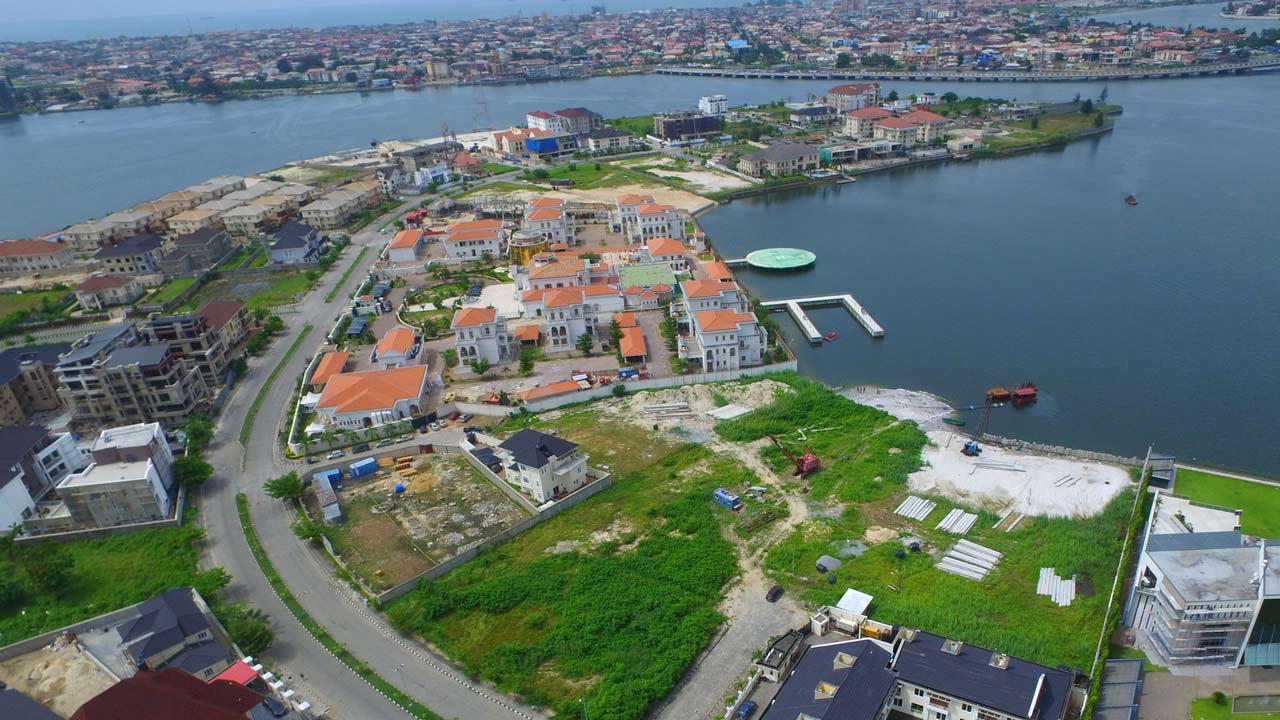
Lagos’ growing use of land reclamation may be creating more development space, but the expansion of physical land will not necessarily solve the state’s housing affordability and urban planning challenges, according to experts.
While reclamation can provide additional development areas in a city facing intense pressure on land, the experts, who spoke with Nairametrics, say it does not automatically translate into affordable housing or properly serviced communities.
The cost of reclaiming and stabilising land, providing infrastructure and managing environmental risks can also determine what type of development ultimately takes place on the new land.
They also warn that the quality and long-term sustainability of reclaimed land depend on proper engineering, planning and monitoring, with poorly executed projects capable of creating settlement, drainage and infrastructure problems beyond their immediate boundaries.
Also Read
What they are saying
Town planner Niyi Aderohunmu, co-founder and director of Goania Project Ltd., said reclamation could provide additional development space in a city facing intense pressure on land, but argued that it should be part of a broader planning strategy rather than a response to land pressure on its own.
- “Reclamation has its place, particularly for strategic waterfront developments, but it should be approached cautiously, with proper environmental assessment and infrastructure planning. It should not become a substitute for comprehensive urban planning,” Aderohunmu told Nairametrics.
Olabisi Odusanya, a real estate investment analyst, said the economics of reclamation could also determine where new land is created and the type of development that ultimately emerges on it.
- “This is really a story about access to capital, not just physical land availability,” Odusanya told Nairametrics, noting that the cost of reclamation makes it more viable in locations where demand and investment can support the expense.
For Gbenga Adigun, founder and CEO of Rebar Perfecta Ltd., the focus should also be on what happens beneath and after the newly created land. He said the quality of reclamation depends on understanding the seabed and fill material and properly managing the ground after filling.
- “The quality of reclaimed land is determined less by how much sand you pump but much more by what you know about the sand, the seabed beneath it and how you manage settlement afterward,” Adigun told Nairametrics.
Engr. Babatunji Adegoke, an infrastructure governance and sustainability advocate and multidisciplinary built-environment professional, similarly warned that reclaimed land should be assessed differently from conventional dry land because ground conditions can continue to change after reclamation and development.
- “A site can appear satisfactory soon after completion yet continue moving,” Adegoke told Nairametrics, stressing the importance of monitoring settlement and assessing the ground conditions before permanent development.
What we know about Lagos’ reclamation policy
The Lagos State Government suspended all land reclamation projects across the state in September 2025, including projects with or without Environmental Impact Assessment (EIA) approval and drainage clearance, citing concerns over flooding, coastal erosion, environmental degradation and risks to communities.
The suspension came as the state was also highlighting the scale of land reclamation in Lagos. Commissioner for the Environment and Water Resources, Tokunbo Wahab, disclosed around the same period that the state’s landmass had expanded from 3,577 square kilometres to 4,050 square kilometres due to extensive reclamation of wetlands and lagoon water bodies.
The government also directed that approved projects be documented and monitored, while ongoing and planned activities were required to undergo environmental assessment and obtain drainage clearance before proceeding.
Adigun confirmed to Nairametrics that reclamation activities did not stop completely following the September suspension. He said that by October 2025, enforcement had increasingly shifted towards unauthorised and non-compliant projects.
He described the development as a “regulatory reset”, explaining that projects with proper documentation, approved layouts, environmental approvals and drainage clearance could undergo review and regularisation, while projects blocking waterways or exceeding approved boundaries faced enforcement.
In his view, the regulatory direction is therefore not necessarily a rejection of reclamation, but an attempt to ensure that projects are properly planned, engineered and environmentally defensible.
Reclaimed land requires more than sand and filling
Reclaimed land does not become suitable for permanent development simply because a site has been filled and levelled. The condition of the ground beneath the fill, the material used for reclamation, how the fill is placed and compacted, and how the site behaves after construction all determine whether the land can safely support buildings and infrastructure.
Adigun said the process should begin with detailed surveys and investigations of the proposed site, including the seabed, water depth, soil conditions, groundwater and the source and characteristics of the material to be used as fill. These factors determine the expected level of settlement and the type of ground improvement that may be necessary before development.
- Adegoke said the original ground conditions are particularly important because reclaimed sand may sit on soft clay, mud or organic deposits that can remain compressible long after the surface has been filled.
- He said developers therefore need to establish the soil profile, groundwater conditions, strength and compressibility of the ground before reclamation, while the fill itself must also be tested to determine its engineering suitability.
- Reclamation should also involve controlled placement and compaction of the fill, removal or treatment of unsuitable material where necessary, and quality-control testing to establish that the ground is performing as designed.
The process does not end when the land reaches its intended elevation. Weak underlying soils can continue consolidating under the weight of the reclaimed platform and subsequent buildings, making settlement monitoring important before and during development.
Adigun said developers may need measures such as preloading, surcharge, vertical drains, dynamic compaction or other ground-improvement techniques depending on the soil conditions and the intended development.
- Engr. Adegoke said settlement should also be distinguished from structural failure or widespread land subsidence. Reclaimed fill can settle as it becomes denser, while the underlying soil can consolidate under the weight of the new land and buildings placed on it.
- The risk becomes more significant when settlement is uneven. Differential settlement can cause cracks, distort floors and walls, affect roads and drainage gradients and create gaps around structures, even where the building itself was properly designed.
Warning signs can include unexplained depressions, persistent ponding, uneven ground, cracks in roads and drainage channels, distorted external works and progressive movement around buildings.
More land does not necessarily mean more affordable housing
Creating more physical land does not necessarily make housing more affordable in Lagos, particularly when the cost of reclamation, infrastructure and development is high.
Odusanya said the economics of reclamation can determine where it happens and what type of development is built. She noted that formal reclamation is more likely to be viable in locations where strong demand and access to capital can support the cost of creating and developing the land.
- She argued that reclamation should not be treated as a default solution to Lagos’ housing shortage, with the state also needing to maximise existing infrastructure, encourage higher-density development and improve urban planning in underserved areas.
- Aderohunmu similarly said the suitability of land for reclamation should be determined by environmental sensitivity, ground conditions, flood risk and access to infrastructure, rather than simply by the availability of coastal or lagoon space.
- He said potentially suitable areas could include degraded coastal zones and locations with limited ecological value, particularly where adequate coastal protection and planned trunk infrastructure can support development. Active wetlands, mangroves, fish breeding grounds and low-lying floodplains that provide important flood-storage functions would be unsuitable, particularly where such areas already experience recurrent flooding.
- He also said reclamation projects should meet clear planning conditions, including catchment-level environmental and cumulative impact assessments, infrastructure provision before occupation or sales, flood-resilient design and adequate drainage, protection of public waterfront access and green spaces, and long-term monitoring and maintenance funding.
- Aderohunmu’s broader position is that reclamation should only proceed where the wider urban system has the capacity to absorb the additional development.
Adigun said this makes proper planning and monitoring important because the long-term performance of reclaimed land depends not only on the reclamation itself but also on how the resulting development is managed.
Adegoke also noted that raising or filling land can alter existing water movement, particularly where the site previously served as part of a drainage or flood-storage system. This means the impact of reclamation can extend beyond the boundaries of an individual development.
The result is that the housing value of reclaimed land depends on more than the amount of land created. It depends on whether the land is stable, properly serviced and connected to infrastructure, as well as the type of housing ultimately developed and the cost at which it reaches the market.
For Lagos, the larger question is therefore not simply whether more land can be created, but whether that land can be integrated into the city without reproducing the same shortages of infrastructure, affordability and planning that already affect existing communities.
What you should know
Lagos’ reclamation is also affecting the value proposition of existing waterfront properties. In prime locations, unobstructed lagoon or ocean views can command a premium, but new reclamation and developments can alter those views and reduce the appeal of properties that previously had direct waterfront exposure.
- Realtors told Nairametrics that some waterfront homes could become harder to sell when new developments obstruct their views or access, showing that the impact of reclamation extends beyond the newly created land to surrounding property values.
This makes waterfront planning important not only for new developments, but also for protecting the long-term value and access associated with existing properties.