Follow Us on Google Discover
The Centre for the Promotion of Private Enterprise (CPPE) has called on the Federal Government to urgently implement socially sensitive measures to cushion the impact of rising petrol prices on households and businesses across the country.
The recommendation was contained in a policy brief issued on Sunday by the Chief Executive Officer of CPPE, Dr. Muda Yusuf, who argued that targeted interventions would be more effective and fiscally sustainable than a return to the universal fuel subsidy regime.
The call follows a recent increase in petrol prices from N1,300 to N1,430.
According to Yusuf, while the increase in petrol prices poses significant challenges for consumers and businesses, restoring fuel subsidies would reverse hard-won reforms and place additional strain on public finances.
Also Read
What they are saying
Yusuf identified transportation, logistics, electricity supply, food security, healthcare, education, and social protection as key areas requiring immediate government intervention.
He said resources generated from subsidy removal should translate into tangible benefits for citizens through improved public services and infrastructure.
- “Citizens must see tangible benefits through improved public transportation, electricity, healthcare, education, food security, infrastructure and social protection.”
According to him, the conversation around fuel subsidy should now focus on accountability and the effective deployment of public resources rather than whether subsidies should be restored.
- “The issue is increasingly one of fiscal accountability and expenditure quality. Federal, state and local governments must demonstrate transparently how the additional fiscal resources arising from the reform are improving economic and social outcomes.”
Yusuf called for greater investment in mass transit systems, affordable public transportation, rail freight infrastructure, and logistics networks to reduce transportation costs and ease inflationary pressures.
He also urged authorities to accelerate the rollout of Compressed Natural Gas (CNG), solar energy projects, and other distributed energy solutions to reduce dependence on petrol-powered energy sources.
Support productive sectors, vulnerable households
The CPPE chief stressed the need for targeted support for vulnerable households and productive enterprises, particularly micro, small and medium-sized businesses (MSMEs), which continue to grapple with rising operating costs.
He advocated policies aimed at lowering energy, logistics and financing costs for businesses to improve competitiveness and sustain economic activity.
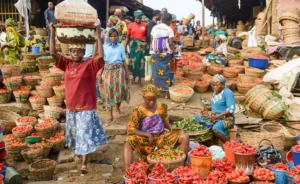
On food security, Yusuf called for increased investment in irrigation systems, rural infrastructure, agricultural logistics, and productivity-enhancing initiatives to strengthen domestic food production and moderate food inflation.
According to him, all tiers of government should share responsibility for implementing interventions designed to cushion the effects of fuel price increases.
- “The CPPE recognises that the current petrol-price escalation presents a serious cost-of-living, inflation and competitiveness challenge requiring urgent intervention.”
- “However, restoring the pre-reform universal subsidy regime is neither fiscally sustainable nor economically prudent. The appropriate policy direction is to preserve the downstream petroleum reforms while aggressively mitigating their social and economic costs.”
Calls for transparency in subsidy savings
Yusuf also urged the government to make the benefits of subsidy removal more visible through improved infrastructure, enhanced public services, and productive investments.
He argued that greater transparency and accountability in the management of additional revenues accruing to federal, state and local governments would help build public confidence in the reform process.
According to him, the national debate should move beyond whether fuel subsidies should be restored and focus instead on how the gains from the reforms can be converted into lasting economic benefits.
- “The more consequential issue is how Nigeria can convert the gains of the reform into lower structural costs, stronger domestic production, improved competitiveness, greater energy security and measurable improvements in citizens’ welfare.”
- “That is the pathway to making the reform economically sustainable and socially defensible.”
Get up to speed
The CPPE’s recommendations come amid renewed debate over the impact of fuel subsidy removal on the Nigerian economy.
- Last month, Chairman of the Nigeria Revenue Service (NRS), Zacch Adedeji, said Nigeria’s fuel subsidy bill could have risen to about N53 trillion, with the naira potentially weakening to around N3,500 per dollar, if the subsidy regime had been retained.
- Speaking during an interview on Channels Television, Adedeji argued that fuel subsidies were unsustainable because the government effectively borrowed money to purchase petrol at higher prices before selling it to consumers below cost.
He maintained that continuing the subsidy programme would have placed severe pressure on public finances and significantly increased fiscal risks.
What you should know
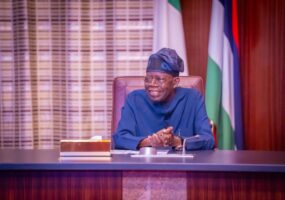
President Bola Tinubu has repeatedly defended his administration’s decision to remove fuel subsidies, describing the move as necessary to avert a fiscal crisis and restore macroeconomic stability.
According to the President, the policy helped prevent economic collapse, freed up government resources for development priorities, and created the foundation for broader economic reforms.
Tinubu has also argued that recent improvements in key sectors of the economy, including agriculture, reflect the long-term benefits of the reform programme, despite the short-term hardships experienced by Nigerians.