Follow Us on Google Discover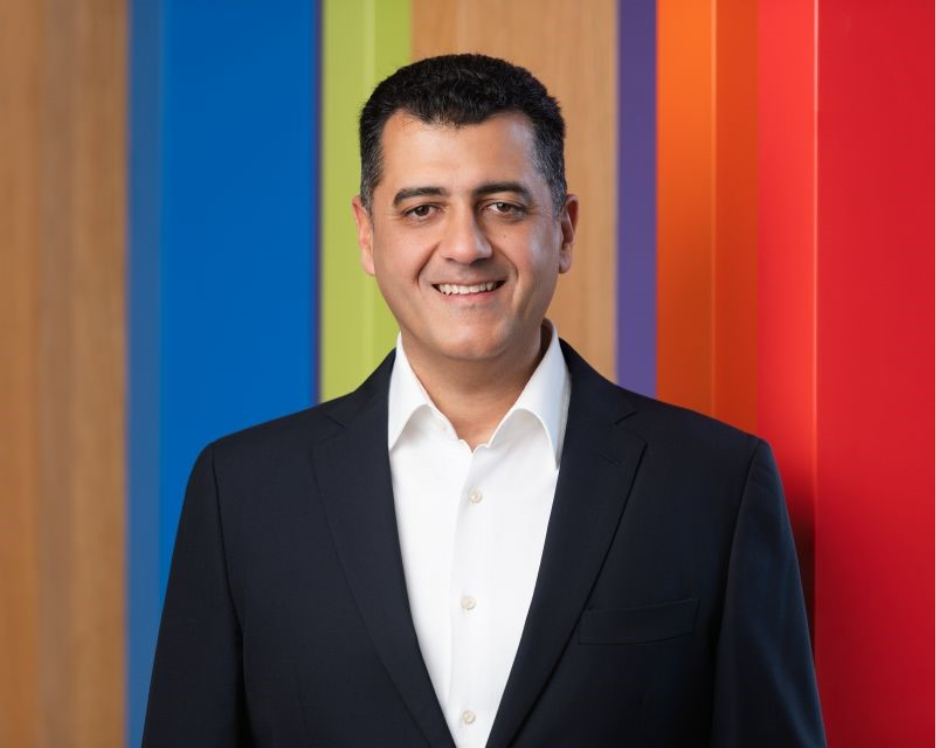
Sub-Saharan Africa could become the world’s next major growth engine as its large and youthful population creates expanding opportunities for businesses and economies, according to Mondelēz International, the parent company of Cadbury Nigeria Plc.
Hisham Ezz El Arab, Business Unit President, Sub-Saharan Africa at Mondelēz International, said the region’s 1.3 billion people across 49 countries give it a growth potential that few other parts of the world can match.
Speaking with Nairametrics on the sidelines of the Lagos Business School (LBS) Leadership Dialogue on The 5Ps of Business Transformation in Lagos, Ezz El Arab said the region’s younger population, aspirations and “massive energy” could make Africa increasingly important to the global economy, if its people are given the right environment and opportunities to grow.
What Hisham Ezz El Arab is saying
Ezz El Arab said Sub-Saharan Africa represents a major opportunity for businesses, governments and communities because of the scale and characteristics of its population.
Also Read
- “Africa can be the growth engine of the world,” he told Nairametrics.
He said the region’s 1.3 billion consumers represent an opportunity for companies operating across the region, including Mondelēz, but said the potential goes beyond the size of the consumer market.
- “The world needs Africa because there are not many other 1.3 billion consumers waiting for growth,” he said.
Ezz El Arab said the region also stands out because of its younger population, aspirations to grow and “massive energy,” characteristics he said are not easily found elsewhere at the same scale.
He said investing in people and developing talent would be critical to turning the demographic advantage into economic growth.
- “Investing in our talents, giving them the best possible environment and ecosystem to grow and thrive, nourishing them, giving them opportunities, is I think probably the only way we have to tap into this massive opportunity we have in front of us,” he told Nairametrics.
He added that the opportunity is important to Mondelēz’s global strategy, saying the company considers serving consumers across Africa “core to our global success.”
Ezz El Arab said stronger business activity should also contribute to the growth of communities and economies across the region.
Additional details
The comments were made at the LBS Leadership Dialogue, where Ezz El Arab discussed the five elements of business transformation: Purpose, People, Process, Plan and Progress.
He identified people as the most critical element, arguing that organisations need the right talent and environment to successfully implement transformation.
- Purpose addresses why an organisation needs to transform, while people focuses on those involved in the process.
- Process covers the systems and behaviours that need to change, while plan provides the roadmap for execution.
- Progress involves measuring the changes achieved and ensuring they are sustained.
Ezz El Arab stressed the importance of a practical plan, saying, “You can have great thinking and a great vision, but how does that vision become reality? It must have a plan.”
Prof. Olayinka David-West, Dean of LBS, who was represented by Uche Arthur, said businesses are operating amid rapid technological change, evolving consumer expectations, economic uncertainty and increasing competitive pressures.
She said transformation had become a continuing responsibility for organisations and that the 5Ps framework provides an opportunity to examine how businesses can make difficult choices, execute consistently and deliver sustainable results.
More insights
The demographic opportunity highlighted by Ezz El Arab is expected to become more significant over the coming decades. The World Bank projects that Sub-Saharan Africa will account for more than three-quarters of the increase in the global working-age population by 2050, adding about 625 million people to its working-age population.
- East Asia and the Pacific, by comparison, is projected to lose more than 200 million working-age people over the same period. The World Bank also said the number of young working-age people in Sub-Saharan Africa has doubled since 2000.
- By 2035, more than 330 million people aged 15 to 24 are expected to live in the region, almost 2.5 times the number recorded in 2000.
The expanding population could strengthen consumer and labour markets, but governments and businesses will need to create sufficient jobs and productive opportunities for the growing number of young people.
What you should know
The demographic potential comes amid economic pressures that could affect how quickly businesses take advantage of the expanding market. The World Bank lowered its 2026 growth forecast for Sub-Saharan Africa by 0.3 percentage points, projecting growth of 4.1%.
- The World Bank cited rising fuel and fertiliser costs and heavy debt burdens as factors weighing on economic activity.
- Heavy debt burdens and limited fiscal space have constrained governments’ ability to respond to economic shocks.
- Gulf countries have emerged as major investors in Africa, particularly in mining, renewable energy, real estate and ICT.
- Remittance flows from African migrants remain important to household incomes.
The combination of a growing consumer base and economic constraints means the opportunity identified by Ezz El Arab will depend on how effectively countries and businesses build the capacity to serve the expanding population.