Follow Us on Google Discover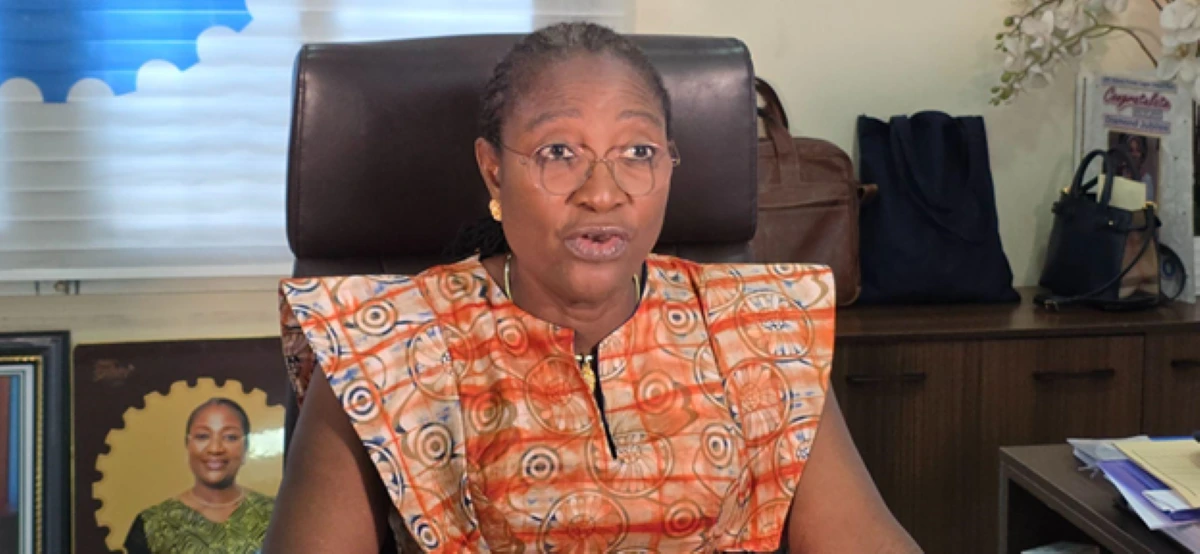
- Lagos, Nigeria’s bustling megacity, is synonymous with traffic gridlock, chaotic danfo buses, and endless hours lost in congestion. But amid the urban hustle, a quiet revolution is underway, spearheaded by the Lagos Metropolitan Area Transport Authority (LAMATA). In an exclusive interview with The Punch, Engr. Akinajo, Managing Director, LAMATA, shares insight into the flagship QBC initiative designed to inject efficiency, reliability, and sustainability into Lagos’ transport network.
Transport is at the heart of life in Lagos. Whether you are a trader at Mile 12, a banker on Victoria Island, a student in Yaba, or a worker commuting from the mainland, your daily life depends on how safely, reliably and efficiently you can move around the city.
For too long, traffic congestion has made commuting one of the major sources of stress for Lagosians, consuming precious hours that could otherwise be spent at work, with family, or resting. But transportation is about far more than moving people from point A to point B. It is about connecting people to jobs, businesses to markets, communities to opportunities, and ultimately creating a city where people can live and work more productively. This is why interventions by the Lagos Metropolitan Area Transport Authority (LAMATA), such as the Quality Bus Corridor Project, are so significant. By improving the efficiency, reliability, safety and quality of public transportation, these interventions are helping to transform the everyday commuting experience and make mobility in Lagos more dignified, predictable and productive.
Can you explain what the Quality Bus Corridor (QBC) Project entails and why LAMATA decided to prioritise it?
Absolutely. The QBC Project is an integrated redesign of Lagos’ public transportation infrastructure with a focus on creating quality, exclusive bus corridors. Basically, it involves prioritizing bus movement within mixed traffic, selective operational advantages, the construction of modern bus stops and terminals, and intelligent transport systems (ITS) for managed real-time traffic management and service. We have also sought an upgrade of road infrastructure, including traffic lights and junctions, to ensure smooth running.
LAMATA prioritized QBC because Lagos’ traffic nightmare is mind-boggling, over 20 million people ride public buses daily, and the system is clogged with congestion and time wastage. By using QBC on our existing feeder routes to mass-based transit routes, we’re addressing these pain areas head-on. Our goal is to reduce travel times by up to 50 per cent on major corridors, making travel time predictable and less stressful. It’s not just about buses; it’s about forging economic growth, reducing the environmental footprint, and improving the quality of life for every Lagosian.
Also Read
There are several packages and routes to this project. Can you expound on some of the most significant ones and why?
We have structured the Quality Bus Corridor (QBC) programme into phases to ensure that each intervention is feasible, operationally sustainable and capable of delivering optimal impact. QBC 1 comprises Package 1A, covering the Yaba–Lawanson–Ijesha–Cele corridor, and Package 1B, covering the Ketu–Alapere–Akanimodo corridor. These are major transport arteries linking densely populated areas of the mainland with key commercial and employment centres, helping to improve the movement of thousands of daily commuters.
QBC 2, covering the Abule-Egba–Iju-Ishaga corridor, addresses one of the areas particularly affected by severe peak-period congestion. The intervention is designed to improve connectivity between the western suburbs and the wider metropolitan transport network, making journeys more predictable and efficient.
QBC 3, covering the Iyana-Iba–Igando corridor, focuses on rapidly growing communities on the outskirts of the metropolis and strengthens their integration with the wider transport system, including connectivity along the Lagos–Badagry Expressway.
The selection of these corridors was guided by traffic data, population density, travel patterns and existing connectivity needs. The Yaba–Cele corridor, for instance, serves large numbers of workers, students, traders and other commuters every day. By providing dedicated or reserved bus lanes, improving junctions and introducing properly designed terminals and stopping facilities, the QBC programme goes beyond simply reducing travel time. It is creating a more organised public transport environment, improving road safety, reducing indiscriminate stopping and roadside activity, and giving commuters a safer, more orderly and dignified travel experience. Ultimately, the objective is to make public transport work better for the people who depend on it every day—and, by extension, help Lagos move more efficiently.
What are the main characteristics of the QBC that differentiate it from Lagos’s traditional bus system?
The QBC is distinguished by its user-centred, cutting-edge design. First, the roadway ensures buses do not get stuck in the same traffic congestion as individual cars due to prioritized movement at intersections and junctions, leading to predictable schedules and faster journeys. We’ve seen other models perform well in cities like Bogotá and Curitiba, and are adapting them to the specific context of Lagos.
State-of-the-art shelters and terminals are another aspect; these are not mere halts; they are provided with lighting, real-time display of arrivals, and inclusive accessibility. The Intelligent Transport Systems (ITS) feature is groundbreaking: it is equipped with GPS tracking, electronic fares, and AI-operated traffic lights providing priority to buses at crossroads.
In addition, we are also improving overall infrastructure, such as strengthening the road surface where needed and installing energy-efficient and Internet of Things-enabled LED streetlights. Ecologically, QBC prefers cleaner transport through the encouragement of travelling away from fuel-guzzling danfos to low-emitting, fuel-efficient buses. Through building, we’re creating jobs for local artisans, engineers, and workers, energising the economy through the base.
How does the QBC Project align with broader environmental and sustainability efforts for Lagos?
Sustainability is baked into the very essence of QBC. Transport is one of the main causes of Lagos’ contribution to Nigeria’s greenhouse gas emissions, with most of that coming from cars. By streamlining bus routes and cutting idling in traffic, we hope to reduce emissions by facilitating modal shifts, moving people away from private cars and onto public transport.
The project employs eco-friendly materials in construction, e.g., recycled aggregates to use on roads, green energy of bus terminals, and electric or hybrid buses in the next stages. We’ve conducted environmental impact assessments to reduce disruption to nearby ecosystems, e.g., maintaining water bodies along corridors like Iyana-Iba.
In the long term, QBC benefits Lagos’ climate action plan through pedestrian and cycling corridors surrounding terminals. It is transitioning to a cleaner city, where reduced congestion means fewer emissions and a healthier city environment for all.
What have been the hurdles for LAMATA in implementing the QBC, and how are you overcoming them?
No major infrastructure project is without its challenges, and the Quality Bus Corridor programme is no exception. One of the key challenges has been the acquisition and management of road space in densely populated areas, alongside the need to coordinate multiple stakeholders, including local governments, utility providers, transport operators and affected communities. We have also had to carefully manage the disruption that inevitably accompanies construction, while addressing funding requirements and ensuring that the public understands the long-term benefits of the project.
We have responded to these challenges through a collaborative and inclusive approach, working closely with the Lagos State Government, relevant Federal Government agencies and international development partners, including the Agence Française de Développement (AFD), which has provided valuable technical and financial support. We also recognise that no transport intervention can succeed without the understanding and support of the communities it serves. Consequently, we have engaged residents and other stakeholders through town-hall meetings, public enlightenment campaigns and targeted consultations, using their feedback to improve project implementation and address legitimate concerns.
Above all, resilience and sustainability remain central to our approach. We are not simply building for today’s transport needs; we are developing a system that can adapt to future demand and accommodate the continued growth of Lagos. The objective is to create Quality Bus Corridors that deliver immediate improvements in mobility while providing a flexible foundation for future expansion and integration with the wider Lagos transport network.
Can I have an update on project progress and delivery timelines?
There has been good, steady progress. Most advanced is QBC 1, with Package 1a (Yaba-Cele) nearly 76 per cent complete, including terminal and demarcation of lanes construction. Package 1b (Ketu-Alapere) is at about 80 per cent, with major road improvements underway. Partial benefit has already occurred, e.g., quicker journey times on trial stretches.
QBC 2 and 3 are also progressing well and the contractors are working in line with timelines given. We anticipate the 4 QBC’S will be operational by Q4-2026. Of course, timing depends on factors like weather and funding sources, but we’re committed to meeting timelines. Open monitoring allows for transparency, and we’re giving updates on our website and social media.
How will the QBC impact the ordinary Lagosian, by way of job creation and day-to-day living?
The impact will be transformative. For the average commuter, it means shorter waiting times, punctual schedules, and safer journeys, reducing a two-hour journey to one, for instance. This is time saved for family, work, or sleep, making people more productive in general.
Financially, construction phases are providing thousands of job opportunities, from skilled engineers to local merchants who supply materials. When operational, QBC will encourage business along corridors and offer opportunities for shop owners and service providers near terminals.
Socially, equality is the name of the game; connecting underprivileged communities like Igando to the BRT means greater access to healthcare, schools, and markets. We’ve got inclusivity, women, children, and disability-friendly policies factored in. Bottom line, QBC is all about commuting with dignity, turning chaos into order for millions.
Compensation to people affected by the project is a vital aspect of infrastructure growth. Can you outline LAMATA’s approach to handling compensation to individuals and properties impacted by the QBC Project, including recent events?
Compensation is indeed one of the planks of our ethics and inclusive growth pledge at LAMATA. For the QBC Project, we have a formal Resettlement Action Plan (RAP) that adheres to international best practices and Lagos State legislations to ensure that nobody is left behind. We achieve this through systematic enumeration, valuation, and transparent disbursement to tenants and landlords whose livelihoods or properties are affected by land acquisition for bus lanes, terminals, or shelters.
Our process begins with community outreach, consultations with stakeholders, including those held in Surulere in April 2024, where we present the scope of the project and listen to feedback. We then conduct revalidation and valuation by third-party professionals, e.g., Global Impact Environmental Consulting, valuing structures based on market rates, location, and asset type. Compensation not only addresses property value but also inconvenience assistance, business interruption, and, in some cases, livelihood restoration for informal operators.
Looking ahead in the longer term, what are the plans for LAMATA post-QBC, and where does this fit into the larger picture?
QBC is a cornerstone of our master plan for an integrated transport system. Following QBC, we’re considering expansions like more BRT lines, light rail integration, and even water transport improvements. We’re also investing in digital technology, like one app for trip planning and payment.
In the larger picture, QBC is working in line with Lagos’ dream of being Africa’s smartest city. By decongesting traffic, we’re being supportive of economic centres such as Lekki and Ikeja. Sustainability is still at the heart; we’re looking into green finance for upcoming projects. LAMATA believes in innovation, and we’ll keep developing a transport system Lagos should be proud of with people’s support.