Follow Us on Google Discover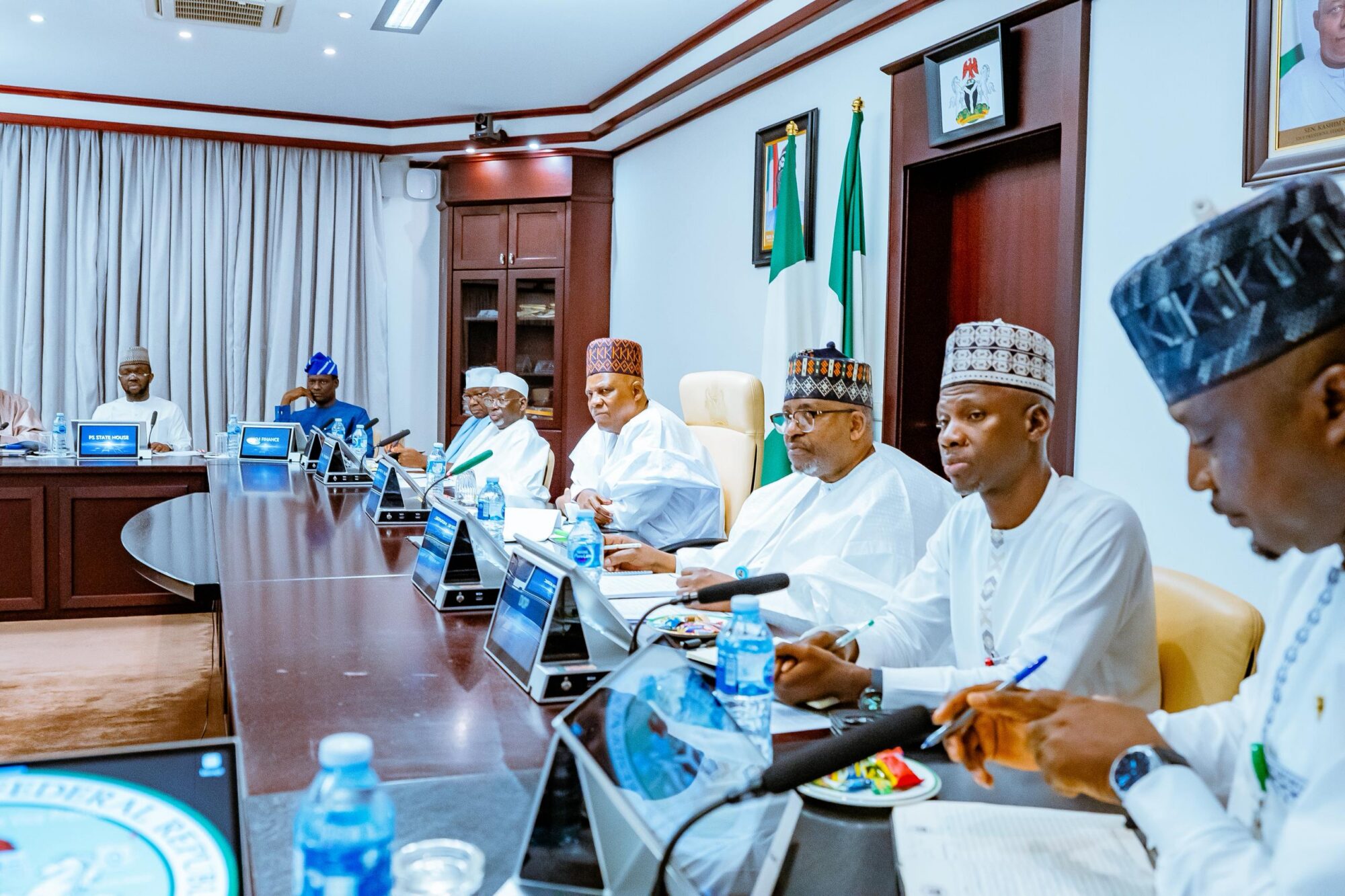
Vice President Kashim Shettima has called for “stronger accountability” over various food-systems initiatives and interventions, including the $500 million Nigeria Sustainable Agricultural Value-Chains for Growth programme (AGROW).
Shettima, Chairman of the Steering Committee of the Presidential Food Systems Coordinating Unit (PFSCU), gave the charge on Friday, according to a statement issued by the PFSCU.
The 7th meeting of the Committee was held at the State House, Abuja, and brought together governors, federal ministers, private-sector representatives and development partners to review Nigeria’s food-systems outlook and strengthen coordination around priority areas requiring action.
What they are saying
According to the PFSCU, the meeting further considered the stability and resilience of Nigeria’s food system, with emphasis on using better intelligence to identify where production, market, nutrition or security pressures are emerging.
Also Read
Relevant institutions were tasked with increasing targeted interventions in states, markets and communities where the evidence indicates the greatest need.
- The Committee also reviewed progress across major food-systems initiatives, including “the US$500 million Nigeria Sustainable Agricultural Value-Chains for Growth programme (AGROW), whose PFSCU design and coordination phase has been completed and transitioned to the Federal Ministry of Agriculture and Food Security and participating states; the National Agribusiness Policy Mechanism; development of the National Agro-Productivity System; and the National Food and Nutrition Crisis Preparedness Framework anchored in the Office of the National Security Adviser.”
Vice President Shettima “called for stronger visibility and accountability across” the aforementioned ongoing interventions, emphasising that stakeholders must ensure that available resources translate into tangible outcomes for farmers, markets and Nigerian households.
- “These initiatives are strengthening the Government’s ability to understand what farmers intend to produce, monitor in-season production, anticipate emerging risks and improve coordination across Federal and State interventions,” the statement partly reads.
Vice President Shettima stressed that under President Bola Tinubu’s leadership, the government must continue to strengthen Nigeria’s capacity to produce more of its own food while ensuring that Nigerian families have access to food at affordable prices.
He charged members of the Committee to ensure coordinated action across the Federal and State Governments, the private sector and relevant institutions to translate that vision into measurable results.
More details
The PFSCU stated that, with the main harvest period presenting an important opportunity, discussions at the meeting also focused on supporting farmers and domestic production, improving the movement of food from producing areas to consumers, strengthening strategic reserves and ensuring that government interventions are directed to where they can have the greatest impact.
The Committee was also said to have examined the role of transportation, logistics, levies, market access and other distribution factors in determining the final cost of food, underscoring the need to improve the efficiency with which food moves between producing and consuming areas.
- Also, speaking, Governor Umar Namadi of Jigawa State stressed “the importance of keeping farmers at the centre of agricultural policy through continued attention to irrigation, inputs, financing, production support and access to markets.”
The Minister of Finance and Coordinating Minister of the Economy, Taiwo Oyedele, stressed the need to align domestic production and trade policy so that they reinforce one another.
- According to PFSCU Executive Secretary, Ms Marion Moon: “Our focus is to ensure that the Government has the evidence to act early and precisely – supporting farmers, improving the movement of food, strengthening preparedness and directing interventions to where they can make the greatest difference.”
The Committee also acknowledged that trade measures can complement domestic production and help address verified supply gaps, but should be considered alongside strategic reserves, market conditions and the need to sustain incentives for Nigerian farmers and agribusinesses.
Backstory
In April 2026, the World Bank announced the approval of a $500 million International Development Association (IDA) credit for Nigeria to boost agricultural productivity, strengthen value chains and improve food security under a new programme tagged the Nigeria Sustainable Agricultural Value-Chains for Growth (AGROW) Project.
This was disclosed in a statement published on the bank’s website, where it outlined the objectives and expected impact of the initiative on Nigeria’s agriculture sector.
The financing was aimed at addressing long-standing structural challenges in Nigeria’s agriculture sector, where low productivity, climate shocks and weak market access have continued to limit output despite the sector remaining the country’s largest employer.
What you should know
The AGROW loan approval came roughly three months after the World Bank cleared a $500 million financing package to expand access to credit for micro, small and medium enterprises (MSMEs) in Nigeria, aimed at easing persistent funding constraints limiting business growth.
In an earlier statement, the lender said the funding supported the Fostering Inclusive Finance for MSMEs in Nigeria (FINCLUDE) project, structured as a blended facility comprising $400 million from the International Bank for Reconstruction and Development and $100 million from the International Development Association.