Follow Us on Google Discover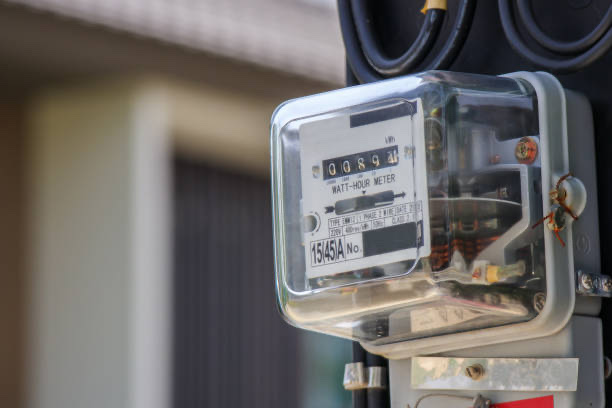
The Federal Government has deployed and installed 668,000 electricity meters on customers’ premises, representing 60% of the 1,033,000 meters delivered under the first phase of a $500 million World Bank-financed Distribution Sector Recovery Programme.
Bureau of Public Enterprises Director-General Ayodeji Gbeleyi disclosed this on Wednesday.
He made the disclosure while briefing the National Council on Privatisation at its second meeting for 2026, chaired by Vice President Kashim Shettima at the Presidential Villa in Abuja.
The meeting also heard that 17 states have established their own State Electricity Regulatory Commissions since the Electricity Act came into effect in April 2024, marking a significant step in the decentralisation of electricity regulation across the country.
Also Read
What the BPE DG is saying
Gbeleyi said the metering rollout was still in progress, with the remaining 365,000 of the delivered meters yet to be deployed.
- “We have implemented 60 per cent of the meters that have been delivered in the country out of 1,033,000. So far we have deployed and installed 668,000 meters on customers’ premises,” he said.
On the Electricity Act, Gbeleyi said the Council had directed key stakeholders to work together to streamline the federal government’s position on required amendments.
- “Council has directed that stakeholders, led by the Attorney General of the Federation, the Minister of Power, the Nigerian Electricity Regulatory Commission, and other stakeholders to engage constructively so as to streamline and harmonise the federal government’s position in terms of the required amendments to fine-tune the Electricity Act,” he said.
He cited Akwa Ibom as the most recent state to create its own electricity regulatory commission, doing so in July, while noting that some fine-tuning was still required in the implementation of the Act across states.
Minister of Power Joseph Tegbe said the government was working collaboratively across sectors to ensure Nigerians received tangible value from ongoing reforms.
- “We are working concertedly and in a very collaborative manner to ensure that we give value, either in electricity or in telecoms — whichever area — to make sure that Nigerians benefit from this government,” he said.
Get up to speed
The latest meter deployment figures come after the World Bank-backed programme faced significant implementation challenges earlier this year.
- In June, Nairametrics reported that a court injunction obtained by the Association of Meter Manufacturers of Nigeria had stalled the procurement of 1.55 million smart meters under the $500 million Distribution Sector Recovery Programme, raising concerns about further delays.
- The dispute was later resolved, with the Federal Government announcing in July that it would deploy 1.56 million meters before the end of 2026 after reaching an agreement with local meter manufacturers and securing the withdrawal of the court injunction.
Meter deployment has also been gathering pace more broadly.
Nairametrics reported in July that electricity distribution companies installed 357,495 meters in the first quarter of 2026, the highest deployment recorded in five quarters, with the DISREP accounting for more than one-third of installations during the period.
What you should know
Nigeria’s electricity sector reforms are also being accompanied by stronger regulatory interventions aimed at addressing the financial and operational weaknesses of distribution companies.
Earlier this month, Nairametrics reported that the Nigerian Electricity Regulatory Commission (NERC) intervened in Kaduna Electricity Distribution Company and dissolved its board over a debt crisis that left the utility owing about N456.5 billion in cumulative market obligations.
NERC said the intervention was aimed at preserving the company as a going concern and ensuring continuity of electricity distribution services across its network area.