Follow Us on Google Discover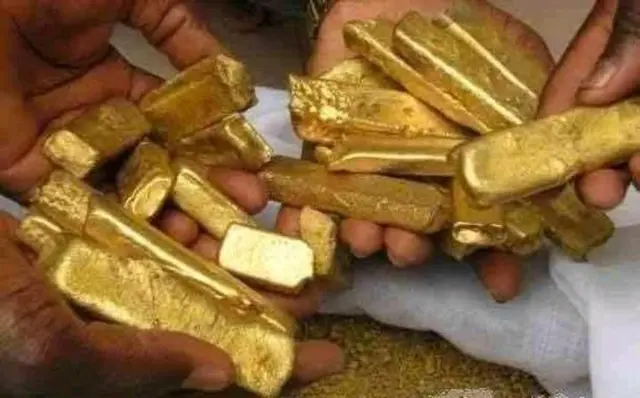
Ghana will ban the export of unrefined artisanal gold dore purchased under approved off-take arrangements from September 1, 2026, requiring the gold to be refined locally before it can be shipped out of the country.
The directive was issued by the Ghana Gold Board (GoldBod) on Monday, August 24, as the West African country steps up efforts to retain more value from its gold resources and expand domestic refining.
Gold dore is a semi-refined form of gold produced after mined ore has been processed to separate the precious metal from much of the surrounding material.
It typically contains gold alongside other metals and is sent to a refinery for further processing into higher-purity bullion.
Also Read
What they are saying
Under the new directive, artisanal gold dore purchased by self-financing aggregators under arrangements with approved off-takers cannot be exported in its unrefined form from September 1.
- GoldBod said the affected gold must first be processed at a refinery that has been approved or designated by the board before an export application can be considered.
Self-financing aggregators, which are licensed gold buyers that use their own funds to purchase gold, have also been given until August 31 to amend existing off-take agreements to include the new local-refining requirement.
- GoldBod will only approve an export after confirming that the gold has been refined in Ghana, the applicable refining fees have been paid, and the required assay, regulatory and export conditions have been satisfied. The refining cost will be borne by either the aggregator or the approved off-taker.
Failure to comply with the directive could result in sanctions, including the revocation of licences.
Get up to speed
The new export rule builds on Ghana’s efforts to develop domestic capacity to process more of the gold it produces.
- GoldBod is Ghana’s state-owned gold trading and regulatory body with exclusive rights to buy, sell, assay, value and export gold and other precious minerals. It was established under the Ghana Gold Board Act, 2025 (Act 1140) and began operations in 2025.
A year earlier, in August 2024, Ghana inaugurated the Royal Ghana Gold Refinery in Accra, its first refinery in which the state holds a stake.
- The refinery has the capacity to process 400 kilogrammes of gold a day, with artisanal and small-scale miners expected to be a major source of its raw material. The sector officially accounts for about one-third of Ghana’s annual gold production of roughly 4 million ounces.
Ghana is Africa’s largest gold producer. Its production reached a record 6 million ounces in 2025, according to recent industry reporting, further increasing the economic importance of policies aimed at capturing more value locally.
What you should know
Ghana’s latest move is part of a wider series of policies designed to use its gold production to strengthen foreign exchange reserves and retain more value domestically.
- From July 1, 2026, Ghana began purchasing 30% of the gold produced by large-scale mining companies through GoldBod under an agreement with the Ghana Chamber of Mines. The arrangement replaced an earlier framework under which the state sought to purchase 20% of miners’ annual output.
- Under the new arrangement, large-scale miners sell the 30% allocation to GoldBod in dore form at a 0.55% discount, with payments made in Ghanaian cedis using the Bank of Ghana’s reference rate. The gold is intended to be refined locally before being processed further for inclusion in Ghana’s reserves.
The country has also introduced a new sliding-scale royalty framework under which gold miners can pay royalties ranging from 5% to 12%, with the top 12% rate applying when gold prices exceed about $4,500 per ounce; lithium royalties will similarly operate on a price-linked 5%–12% scale, while other minerals retain a 5% rate.