Follow Us on Google Discover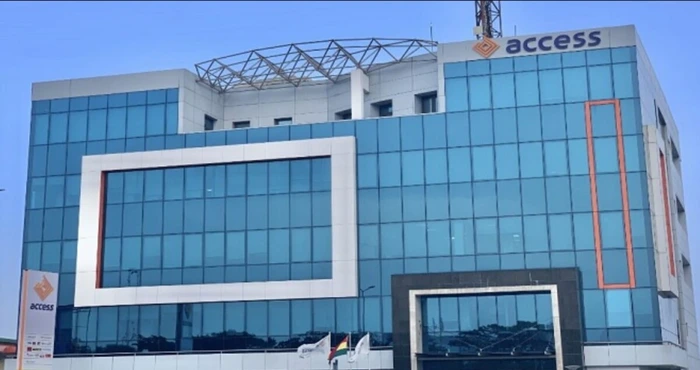
Access Holdings has grown into one of Nigeria’s largest financial institutions, with a balance sheet exceeding N53 trillion, the largest among listed Nigerian banks.
However, the market performance of the stock has not fully reflected the scale of that growth, especially when compared with some of its tier-one banking peers within the FUGAZ group.
After falling to a 52-week low of N19.90, Access Holdings shares recovered to N27 as of the close of trading last week, representing a gain of about 36%.
While the rebound has rewarded investors who bought during the decline, the stock remains below its 52-week high of N36.
Also Read
An investor who bought N1 million worth of Access Holdings shares at N19.90 would now hold shares worth N1.36 million at N27, representing a gain of nearly N357,000 or a 35.7% return.
That performance would have compared favourably with lower-risk alternatives such as Treasury bills and OMO bills over the same period.
If the stock returns to its 52-week high of N36, the same investment would be worth about N1.81 million, representing a potential gain of about N809,000 or an 80.9% return on the original investment.
However, the next phase of the stock journey will depend on whether earnings can justify the recovery.
Share price growth still trails peers
While Access Holdings has continued to grow profits and expand its balance sheet, the recent share price recovery suggests that investors are still seeking stronger evidence of sustained earnings growth and shareholders’ return.
The stock has gained about 36% from its 52-week low of N19.90, but the recovery has not fully closed the gap with some of its major banking peers.
- As of August 21, 2026, Access Holdings shares were up about 28% year-to-date, but this performance remains below some major peers, including First HoldCo (+171%), Zenith Bank (+97%), and GTCO (+40%).
Earnings are growing, but the pace needs to improve
One possible explanation lies in the pace of recent earnings growth. Access Holdings remains profitable, but the momentum has moderated compared with the exceptional expansion recorded in previous years.
- Access Holdings is yet to release its Q2 2026 results but annualizing its Q1 2026 profit after tax of N216.5 billion points to a possible full-year profit of about N866 billion, assuming the current quarterly run rate is sustained.
- That would represent 17% year-on-year growth in 2026 compared with FY2025 profit of N743 billion, but the projected growth rate remains below the bank’s five-year PAT CAGR of 47%.
The pressure is even more visible when measured on a per-share basis. While total profit has continued to rise, shareholders are yet to see earnings per share return to previous highs following the increase in shares outstanding after the capital raise.
- Annualising Q1 2026 EPS of N3.69 gives a possible full-year EPS of about N14.76, which would represent a 9.5% increase above FY2025 EPS of N13.48.
However, the projected EPS remains below the levels recorded before the capital raise, when earnings per share stood at N17.23 in 2023 and N16.71 in 2024.
So, the challenge now is not simply growing profit; it is growing profit fast enough to offset the dilution from its capital raise.
- With the current share count of about 54.4 billion shares, the bank would need to generate roughly N909 billion in profit to return to its 2024 EPS of N16.71, and about N937 billion to reclaim its 2023 EPS of N17.23.
This suggests that while annualized Q1 2026 profit of about N866 billion points to continued growth, management still has more work to do to restore the earnings-per-share levels that shareholders enjoyed before the capital expansion.
Dividend uncertainty might also have weighed on investor sentiment
Another factor that may have affected investor confidence is the suspension of dividend payments.
- The bank had built a track record of increasing shareholder distributions, with dividend per share rising from N0.52 in 2020 to N2.50 in 2024.
- However, shareholders did not receive dividends for FY2025, despite the group reporting record earnings.
- It clarified that the dividend pause was not due to weak profitability or cash flow challenges but was linked to regulatory compliance issues.
Management said dividends were recommended at both the half-year and full-year 2025 stages, but regulatory approvals were not obtained.
Commenting on the issue, Access Holdings Group Managing Director/Chief Executive Officer, Innocent Ike, said the decision was not a reflection of the bank’s financial strength, noting that:
- “Access Holdings has a strong history of consistent dividend payments, and rewarding shareholders remains a core priority for the Board and Management.”
He added that:
- “The non-payment of dividend for 2025 was not due to earnings weakness or cash flow constraints, but an alignment with regulatory and prudential guidelines.”
The outstanding issue relates to Section 19(8)(c) of the Banks and Other Financial Institutions Act (BOFIA), which restricts Nigerian banks’ investments in foreign banking subsidiaries to 10% of shareholders’ funds.
Management disclosed that it was working with regulators to close the compliance gap within the timeline provided, as resolving the issue would create room for the resumption of dividend payments.
The group has already taken steps in that direction, including the sale of a 7.44% stake in Access Bank Ghana, reducing its ownership exposure while retaining control of the subsidiary.
For investors, the next major checkpoint will be the group’s Q2 2026 results, which should provide further insight into whether earnings momentum is strong enough to support a stronger full-year performance, while also offering updates on regulatory adjustments and the possibility of restoring shareholder distributions in the second half of the year.
Valuation remains attractive, but earnings must justify a rerating
Overall, Access Holdings continues to trade at a relatively low valuation compared with its earnings capacity and balance sheet strength.
- At a share price of about N27, the stock trades at a price-to-earnings ratio of about 1.9x, meaning investors are paying less than twice the bank’s trailing 12-month earnings for ownership of the business.
- The stock also trades at about 0.4x price-to-book value, implying that investors are paying roughly 40 kobo for every N1 of the bank’s net assets.
However, the low valuation also might reflect investor concerns around the quality and sustainability of future returns, given its trend and the uncertainty around dividend payments.
Notwithstanding, some analysts believe the current gap provides room for upside.
- A review of market recommendations shows Access Holdings receiving Buy ratings from Arthur Steven, Blue Marina Research and Meristem Securities, although the wide range of target prices reflects differing views.
Overall, the next phase will depend on whether management can convert its scale into stronger earnings per share growth, renewed dividend payments, and improved investor confidence.
If earnings accelerate, the regulatory hurdles around dividend payments are resolved, and shareholders begin to see stronger returns, a likely improved investor confidence might push the share price back to its 52-week high and even beyond.
Investors can continue to track Access Holdings’ earnings performance, valuation changes, and broader market opportunities through FTM’ – Follow The Money: Nairametrics Platform.