Follow Us on Google Discover
When Sahara Energy Resources launched in 1996, its focus was petroleum-product trading. Two years later, it moved its trading operations from Lagos to Geneva, Switzerland, opening a path towards an international business.
By the early 2000s, Sahara had expanded into Ghana and Côte d’Ivoire and begun moving deeper into Nigeria’s oil and gas industry.
It acquired interests in an onshore marginal field in the Niger Delta, followed by deepwater assets OPL 284 and OPL 286 and OPL 228 in 2005. In 2007, it acquired OPL 274, later converted to OML 148.
The company subsequently expanded into power, downstream operations, shipping, infrastructure and technology, turning what began as a trading business into a diversified energy group with operations across several markets.
Beyond the 30
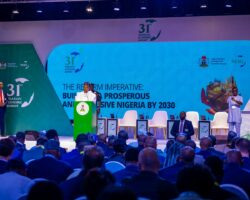
Now, at 30, Sahara is looking beyond the businesses that defined its first three decades. The company calls the next phase Beyond XXX, using XXX, the Roman numeral for 30, as a marker of its history while placing greater emphasis on what comes next.
The shift comes as Africa faces a persistent energy deficit and growing pressure to develop infrastructure while managing the transition to lower-carbon sources.
- Wale Ajibade, an Executive Director at Sahara Group, recently described Africa as “the new frontier for an energy renaissance poised to redefine global energy balance,” arguing that unlocking that potential would require “bold investments, strategic collaboration and regulatory harmony.”
Kola Adesina, Group Managing Director of Sahara Power and an Executive Director of Sahara, oversees one of its largest franchises. Following his appointment to Mission 300, an initiative aimed at connecting 300 million Africans to electricity by 2030, Adesina noted:
- “Today, about half of Africa’s population still lacks access to reliable power. Closing this gap will require coordinated partnerships, sustained private investment, and a strong pipeline of bankable projects that translate policy ambition into measurable impact.”
Sahara Power’s portfolio includes Egbin Power, First Independent Power and Ikeja Electric, as well as generation assets at Afam, Eleme, Trans Amadi and Omoku. The company has set a target of expanding its generation capacity beyond 5,000 megawatts.
For Sahara, the challenge is increasingly about how those assets operate as an integrated platform.
- Executive Director Ade Odunsi has described the company’s oilfield-services strategy in similar terms, saying: “Sahara’s vision for oilfield services extends beyond building successful businesses. We are creating platforms that redefine what is possible across Africa’s energy value chain.”
Moroti Adedoyin-Adeyinka, another long-standing executive, has held responsibilities spanning finance strategy and downstream operations, including leadership of Asharami Synergy.
Together, the executives illustrate how Sahara has evolved from a relatively focused trading company into a group with multiple businesses and leadership franchises.
What next?
The next question is whether that diversification can translate into greater scale. Sahara is targeting growth in power generation, oil and gas, energy trading and oilfield services while also pursuing a 2060 net-zero ambition.
- Its sustainability strategy includes gas infrastructure, renewable-energy integration and emissions reduction.
- Beyond XXX therefore represents more than a 30th-anniversary marker. It is a test of whether the group can turn three decades of expansion into a more integrated African energy platform.
- Sahara’s evolution has also been marked by an expanding commitment to social impact.
Over the years, the Sahara Foundation has evolved from traditional corporate social responsibility interventions towards a more intentional model focused on empowering communities through extrapreneurship.
For Sahara, the objective of Extrapreneurship is not merely to provide support, but to create platforms that enable individuals and communities to generate value, build enterprises and solve local challenges sustainably.
For a company that began by trading petroleum products, the next chapter may depend less on acquiring another asset than on making its existing portfolio work together.