Follow Us on Google Discover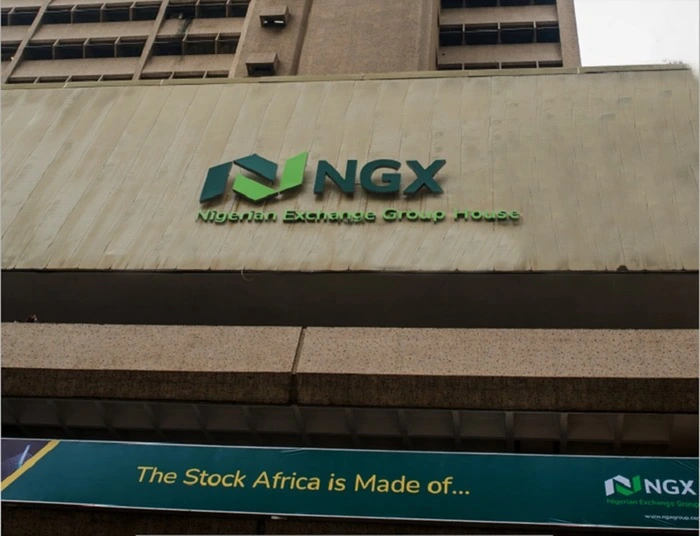
Nigeria has no shortage of businesses with the potential to become significantly larger. The bigger challenge is ensuring that these companies have access to the capital required to make the transition from promising enterprises to major Nigerian institutions.
Across sectors, entrepreneurs are building businesses with proven models, growing revenues and increasingly ambitious expansion plans. But growth eventually creates a financing question. A company looking to expand capacity, enter new markets or pursue acquisitions needs capital that can grow with its ambitions.
For many businesses, that journey begins with retained earnings and bank debt. Others bring in private equity or strategic investors. Each has an important role to play. But as companies scale, their financing needs become larger and more complex, requiring a broader range of funding options.
Nigeria’s corporate landscape already demonstrates what that journey can ultimately produce. Businesses that have grown into groups such as Dangote and BUA did not begin at their current scale. They expanded over time, building capacity, strengthening their institutions and accessing increasingly sophisticated forms of capital along the way.
Some of the companies that could become Nigeria’s next corporate champions may already be operating today, only at an earlier stage of that journey. The question is whether they have the financing pathways to make the transition.
That is where the capital market can play a larger role.
Equity markets provide companies with access to long-term capital without the same repayment obligations as debt, while creating a transparent market through which ownership can be valued and traded. Historically, however, accessing the capital market has often been associated with businesses that have already achieved significant scale.
The Growth Board of Nigerian Exchange Limited (NGX), launched in 2020, was designed around a different proposition: companies do not necessarily have to wait until they become large corporations before accessing the capital market.
Its Entry Segment accommodates companies with market capitalisation from ₦50 million to ₦500 million, a minimum free float of 10 per cent and at least 25 shareholders. The Standard Segment is designed for businesses with market capitalisation of ₦500 million to ₦4 billion, with a 15 per cent free float and at least 51 shareholders.
Companies seeking the Standard Segment through the established-business route are also expected to demonstrate cumulative revenue growth of at least 20 per cent over the preceding two years and appoint a Designated Adviser.
The structure creates an entry point into the capital market for emerging businesses while they are still on their growth journey.
Recent market performance provides some indication of the opportunity. The NGX All-Share Index gained 51.19 per cent in 2025, while total equity market capitalisation rose by more than ₦36 trillion to ₦99.38 trillion. The NGX Growth Index, which tracks companies listed on the Growth Board, climbed 257.81 per cent during the year, from 7,762.86 points to 27,776.22 points.
The performance points to growing investor appetite for companies beyond the traditional blue-chip universe, demonstrating that the market can recognise and reward businesses with credible growth prospects, strong fundamentals and compelling value.
MeCure Industries provides an interesting illustration. The pharmaceutical company listed on the Growth Board in November 2023 while still on a significant growth trajectory. By 2025, it reported revenue of ₦77.69 billion, up 69 per cent year-on-year, while profit after tax rose 177 per cent to ₦6.46 billion.
The Growth Board provided the platform, while MeCure’s subsequent market performance has been shaped by its business growth, investor confidence, market conditions and liquidity.
What makes the example significant is the trajectory. MeCure’s market capitalisation now sits far above the threshold associated with the Growth Board’s Standard Segment. It entered the capital market as a growing company and continued to expand after listing.
A successful growth segment should ultimately produce companies capable of outgrowing it. Graduation, in that sense, is evidence of progress.
Capital, however, is only part of what that transition requires. As businesses expand, reporting systems need to become stronger, corporate governance more robust and decision-making less dependent on a small number of individuals. Disclosure, board oversight and shareholder accountability can strengthen the institutional foundations required for sustainable growth.
The companies that eventually become national or African champions need capital, governance, talent, systems and credibility with investors and counterparties. A capital market listing can contribute to that institutional development while opening the business to a broader investor base.
Issuing houses, investment banks, stockbrokers, accountants and lawyers are an important part of this financing ecosystem. Beyond executing transactions, their role includes helping emerging businesses understand how different forms of capital fit into successive stages of growth.
Financing needs rarely remain static as a company expands. Bank financing, private capital and public equity can serve different purposes along that journey. The Growth Board broadens that financing spectrum by providing a pathway to the capital market for businesses at the appropriate stage of their development.
Nigeria’s private sector has produced many businesses with the potential to become considerably larger. The bigger opportunity is to build a stronger pipeline of emerging businesses capable of making the transition from successful enterprises to institutions with the capital, governance and investor base required to operate at scale.
The Growth Board provides one pathway for making that transition. Developing the pipeline around it will require a wider ecosystem of companies, advisers, investors and market institutions capable of identifying promising businesses and preparing them for the opportunities and responsibilities that come with accessing the capital market.
Not every high-growth business will need to list, nor will the capital market be the appropriate financing route at every stage of growth. But for businesses with the fundamentals and ambition to become tomorrow’s major Nigerian institutions, it should not be a conversation that begins only after they have already achieved significant scale.
The opportunity is to build that bridge earlier, creating a pipeline through which more of today’s emerging businesses can become tomorrow’s corporate champions.