Follow Us on Google Discover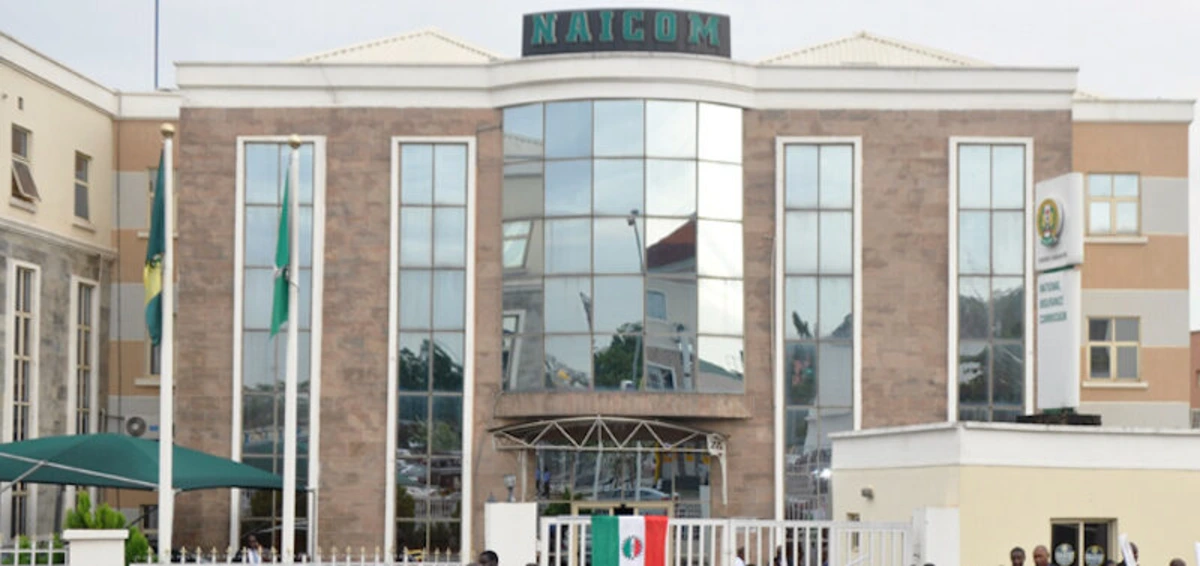
The Nigerian insurance industry has just concluded one of its biggest reforms in years, raising a total of N720 billion through a sector-wide recapitalisation exercise.
The exercise, which ran from August 2025 to July 31, 2026, saw 48 insurance companies and 2 reinsurance firms verified as compliant by the National Insurance Commission, NAICOM.
But not everyone made it. Six insurers failed to meet the new minimum capital threshold before the deadline.
While NAICOM insists it is committed to preventing the collapse of any licensed insurer and protecting policyholders, unease is growing among the affected firms.
Some of the non-compliant companies have headed to court to challenge the recapitalisation process. Others are scrambling to raise funds to meet the requirement.
Here are the six insurers that missed the deadline, and what happens next for them.
1. Goldlink Insurance Plc
Goldlink Insurance Plc is a company that sells life and general insurance to both everyday people and large corporations in Nigeria. Unfortunately, the company failed to meet the mandatory July 31 deadline to secure its financial future.
This failure is just the latest in a long line of struggles for the company, which has been fighting internal management arguments for a long time.
Because of these continuous problems, the company was officially delisted from the Nigerian Exchange (NGX) in April 2025.
Being delisted means a company is no longer allowed to trade its shares on the public stock market. Goldlink was delisted from the stock market because it repeatedly broke the rules and failed to submit its paperwork on time.
At the time it was delisted, Goldlink was valued at N909.99 million. Now that it has missed the capital deadline, the future of the company hangs in the balance.
2. Staco Insurance Plc
Staco Insurance Plc is a well-known company that provides general insurance products to retail and corporate customers across Nigeria. The firm faced a major sad event recently when its Managing Director, Wale Bannore, passed away. In January, the company appointed Nike Nihinlola as the new acting leader to help steer the company through these tough financial times.
Despite the new leadership, Staco Insurance could not meet the strict capital deadline. Because of this, its name was completely missing from NAICOM’s official list of 50 safe and approved firms.
However, the company has not given up hope and is actively taking steps to prove it can raise the necessary money.
Staco recently got permission from NAICOM for its 2024 financial paperwork and sent it to the Financial Reporting Council of Nigeria (FRCN) for approval.
The company also received the Central Bank of Nigeria (CBN) account details to deposit its safety funds. Once the final government paperwork is signed, Staco plans to hold a meeting where shareholders can vote on new ways to inject fresh cash into the business.
3. NICON Insurance Plc
NICON Insurance Plc was once a true giant and a colossus in the Nigerian insurance ecosystem, but its fortunes have severely changed. After failing to meet the new government money rules, the company has entered into a legal battle to challenge NAICOM in court over how the whole process was handled.
NICON is particularly angry about two major rules set by the commission. First, they are protesting a 1% “Capital Injection Fee” and other processing fees that add up to N305 million. Second, NICON is challenging the rule that forces insurance companies to lock up all their new capital in an escrow account at the Central Bank of Nigeria (CBN).
An escrow account is a temporary safe where money is held until certain conditions are met.
NICON argues that this rule conflicts with the NIIRA 2025 Act, which requires them to keep only 10% of their money as a statutory deposit with the central bank. Because of this disagreement, the company’s future is currently trapped in the hands of lawyers and judges.
4. Nigeria Reinsurance Corporation (Nigeria Re)
Nigeria Reinsurance Corporation is the other insurer that has decided to take NAICOM to court. Just like NICON, Nigeria Re is heavily linked to a well-known businessman and politician, Jimoh Ibrahim. Because they share the same roots, Nigeria Re has the exact same complaints against NAICOM as NICON does.
Nigeria Re is protesting the same 1% fee rule, which in their case amounts to N375 million in extra processing costs. The company strongly insists that it actually beat the July 31, 2026 deadline, claiming they successfully put N30 billion into a special account at Lotus Bank Limited, which is much more than the N28 billion the government asked them to have.
However, NAICOM does not agree with the company’s math or its methods. The commission argues that simply putting money into a bank account does not mean a company has followed all the strict safety rules of the reform. Until the court decides who is right, Nigeria Re remains on the list of unapproved firms.
5. Royal Exchange Prudential Life Plc
Royal Exchange Prudential Life Plc is a smaller branch of a much larger and older financial group called Royal Exchange Plc. Even though it has a famous and trusted name, the insurance firm failed to meet the required capital target. As a result, NAICOM left the company completely off its list of verified businesses.
To fix this problem, the parent company recently held a meeting and got permission from its owners to raise N2.7 billion. They plan to get this money by offering new shares to the public. This is an attempt to gather enough funds to meet the strict government requirements and protect their long-standing reputation.
This rush for cash comes just one year after another big company, Nexamont Company Limited, bought a huge 21.4% stake in Royal Exchange.
Nexamont bought 1.77 billion shares on the open market to become a major owner. Now, the historic institution must work even harder to ensure this new investment does not go to waste.
6. Universal Insurance Plc
The absence of Universal Insurance from NAICOM’s cleared list came as a huge shock to many people in the business world. Back in February, the company held an emergency meeting in Lagos where shareholders agreed to let the firm raise up to N15 billion in fresh capital. Despite having this permission, the firm still failed to hit the target before the July deadline.
Even though they missed the official date, Universal Insurance has a fresh plan to save itself. The company has just signed a major legal agreement with FPNG Co-Nvest Limited. Under this new deal, FPNG has agreed to give Universal Insurance N7.128 billion in exchange for a number of company shares.
Once this deal is completed, FPNG will officially become the majority owner of Universal Insurance with a 50.1% stake in the company. This private cash injection is Universal’s main strategy to finally satisfy NAICOM’s rules and regain its status as an approved insurance provider.