Follow Us on Google Discover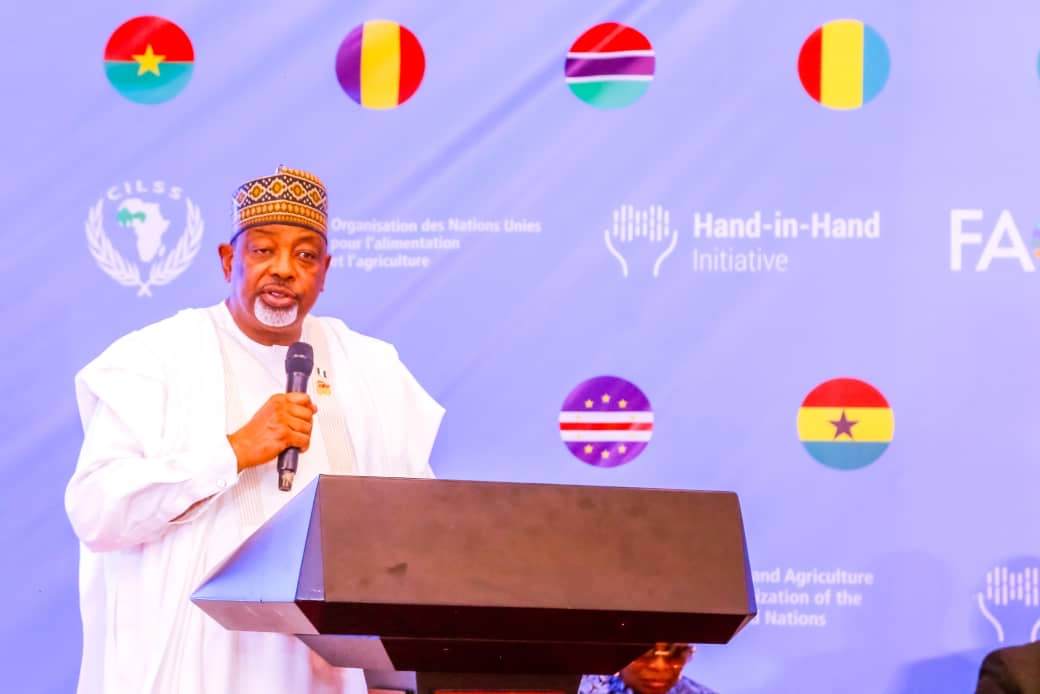
The Federal Government has unveiled the National Agricultural Mechanisation Policy and the National Agricultural Mechanisation Investment Strategy to promote sustainable mechanisation, attract private investment and boost productivity in Nigeria’s agricultural sector.
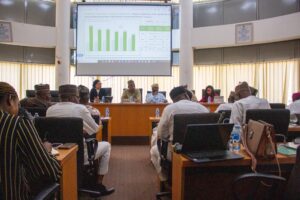
The Minister of Agriculture and Food Security, Senator Abubakar Kyari, unveiled the two policy documents on Wednesday in Abuja at a High-Level National Policy Dialogue on Agricultural Mechanisation.
The dialogue was themed, ‘Anchoring National Food Sovereignty through Sustainable Agricultural Mechanisation Policy, Innovation and Strategic Investment.’
What they are saying
Kyari said the new policy framework would shift agricultural mechanisation from a government procurement-driven model to a sustainable investment-based system capable of attracting capital, technology and entrepreneurship.
Also Read
He said food security remained critical to Nigeria’s national sovereignty, economic resilience and stability, adding that the Renewed Hope Agenda of President Bola Tinubu had positioned agriculture as a key driver of productivity, prosperity and economic transformation.
- “Our responsibility as a ministry is to translate that vision into policy architecture, institutional coherence and practical pathways for investment and delivery.
- “The opportunity before us is therefore to build an ecosystem in which capital, technology, skills and entrepreneurship converge around one objective: making mechanisation commercially viable and widely accessible,” he said.
The minister said mechanisation extended beyond tractors to cover land preparation, planting, irrigation, crop protection, harvesting, processing, storage, logistics and transportation.
According to him, the government is seeking to establish a “Mechanisation-as-a-Service” economy that will allow farmers to access agricultural technology when and where it is needed.
Government targets 4,000 tractors annually
Kyari disclosed that the government had commenced the procurement and deployment of 2,000 tractors alongside more than 9,000 assorted implements and spare parts under the Renewed Hope National Agricultural Mechanisation Programme (RH-NAMP).
He also said the investment strategy provides for the establishment of a mega tractor assembly plant capable of producing between 2,000 and 4,000 tractors annually.
According to the minister, the plant is expected to reduce Nigeria’s dependence on imported agricultural machinery, strengthen domestic industrial capacity and create jobs.
He urged young people and women to actively participate in the emerging mechanisation economy, describing agriculture as a growing opportunity for entrepreneurship, technology and wealth creation.
- “Our youths must not stand at the edge of the mechanisation economy. They must own, operate, innovate and lead it,” Kyari said.
Also speaking, Borno State Governor Babagana Zulum said agricultural mechanisation must go beyond the acquisition of machinery.
- “We must build the agriculture of tomorrow. Agriculture must be mechanised and smart,” he said.
Get up to speed
The policy unveiling comes as the Federal Government intensifies efforts to attract investment and improve productivity across the agricultural value chain.
The government’s Special Agro-Industrial Processing Zones (SAPZ) programme was recently projected to generate an internal rate of return of 30.85%, as the government seeks to attract $4.4 billion in investment and accelerate agro-industrial development.
The National Programme Coordinator of SAPZ, Dr. Kabir Yusuf, said the programme is designed to attract private-sector capital, increase exports, strengthen food security and promote value addition across agricultural supply chains.
Yusuf also cited concerns raised by Kyari over Nigeria’s annual food import bill of more than $10 billion, compared with agro-export earnings of less than $400 million annually.
He said the figures highlight the need to strengthen domestic agricultural production, processing, logistics and market access.
Yusuf also noted that post-harvest losses remain a major challenge, with an estimated 30% to 60% of farm produce lost before reaching markets.
What you should know
Earlier in the year, the Federal Government approved a N250 billion facility for the Bank of Agriculture to provide financing to smallholder farmers at a single-digit interest rate.
Kyari disclosed the facility during a Quarterly Citizens and Stakeholders Engagement Session in Abuja, describing it as part of broader efforts to strengthen agricultural financing and insurance.
The minister also highlighted the roles of institutions including the Nigerian Agricultural Insurance Corporation, National Agricultural Quarantine Service and Bank of Agriculture in supporting farmers and improving the resilience of the sector.
The latest mechanisation policy is expected to complement these initiatives by expanding farmers’ access to machinery while creating a framework for private-sector participation and long-term investment in Nigeria’s agricultural economy.