Follow Us on Google Discover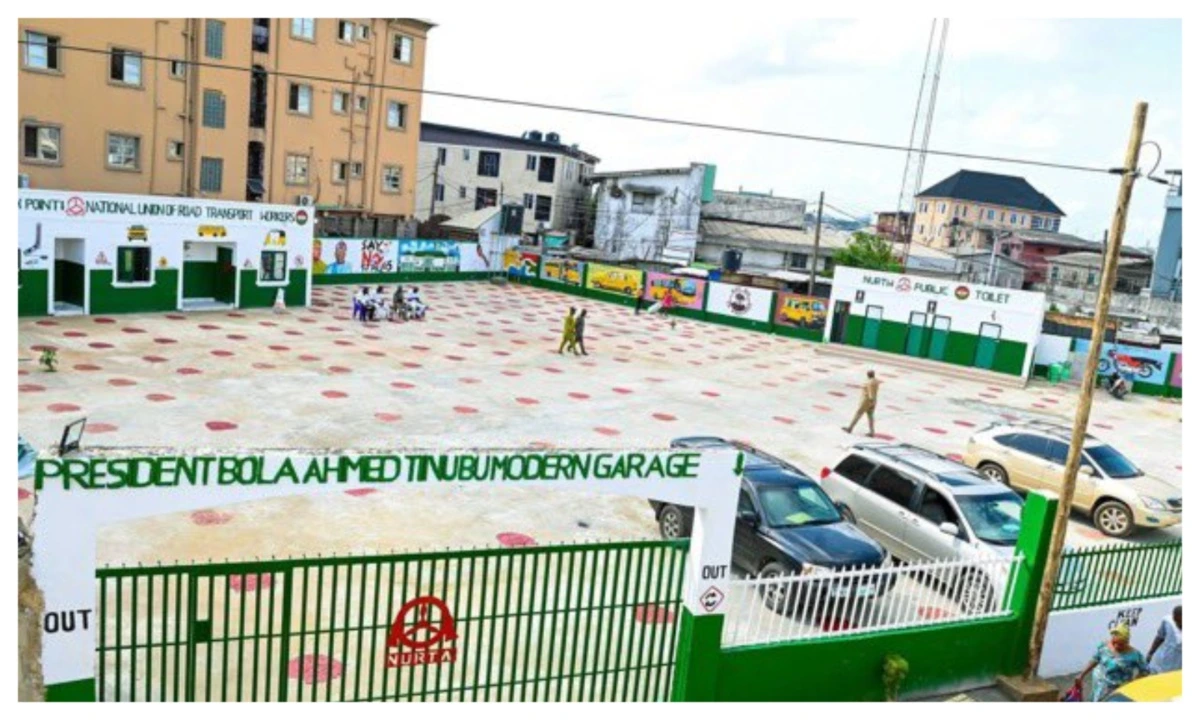
When tension and chaos interrupted Wasiu Ayinde Marshal’s annual New Year All-White Party on January 2, 2026, it did not merely spoil a celebration.
It opened a window onto the precise political economy this article examines: the National Union of Road Transport Workers (NURTW), a shadow government that commands revenues rivalling some Nigerian states, choreographs election outcomes, finances cultural celebrity, and buries its own dead largely beyond the reach of any formal authority.
The NURTW is, on paper, a registered trade union operating under the Nigeria Labour Congress (NLC). In practice, it is a territorial state within a state, organised by park, zone, and region, governing through quasi-taxation, protection services, dispute resolution, and selective violence.
Its revenue collection apparatus operates with a consistency that would make the Nigeria Revenue Service (NRS) green with envy, and the money it generates sometimes shapes who governs in Nigeria.
Also Read
The NURTW’s organisational architecture replicates the functions of a government in every practical respect: executive authority at the national level, state and zonal executives below, and park chairmen at the territorial base who govern individual loading bays with something approaching sovereign authority.
Membership is not abstract solidarity; it is a tributary relationship in which drivers, riders, conductors, cargo handlers, and park vendors contribute daily to an upward-flowing revenue stream, receiving in exchange the informal security and commercial access that the formal state has persistently failed to provide at equivalent scale.
Based on its leadership’s communication to PenCom in June 2026, the union presides over an estimated nine million members across all thirty-six states (and FCT), a national base that also constitutes a national fiscal apparatus, collecting daily levies with the kind of consistency the NRS has never managed across the informal sector.
The arithmetic establishes the problem’s scale. Approximately 75,000 commercial vehicles operate in Lagos, each paying a minimum daily levy of N1,500 to the park system, with many routes commanding N2,000 although earlier investigations reported substantially higher daily payments, in some cases N3,000 or more.
Vehicle levies alone generate a minimum of N41.06 billion ($25.98 million) per year. When loading bay charges, stall rental fees, territorial protection assessments, and election-cycle levies are incorporated, comprehensive analyst estimates of total annual extraction of well over N123 billion, particularly when you add receipts from motorcycles and tricycles.
Indeed, a 2026 World Bank document still cites the N123 billion (about $88 million) annual NURTW estimate as the 2021 benchmark.
For context, the NURTW Lagos midpoint of approximately N100 billion represents about one-third the annual full state budget of Yobe State. This is generated not through legislative appropriation but through daily territorial assertion. A park chairman collecting N500,000 per day generates more monthly cash flow than many formally registered SMEs in the same city.
Yet a substantial share of informal transport-levy activity is difficult to trace through formal tax and government revenue records.
The Lagos figures represent only one state of the republic. Lagos handles roughly 30% to 40% of Nigeria’s national road traffic and scaling the extraction rate across the full national network yields a conservative composite of between ₦308 to ₦410 billion annually, with the highest point above the 2025 budgets of at least four Nigerian states.
The consumer impact of this shadow taxation is measurable and regressive. The National Bureau of Statistics (NBS) recorded the average city bus fare at N1,431.25 per trip in May 2026 (38.63% year-on-year increase), while the average intercity fare reached ₦9,699.55 (up 21.89% year-on-year). Fuel subsidy removal in June 2023 ignited the initial surge, but the structural levy burden embedded in every fare has compounded it continuously.
When a danfo driver pays N1,500 to his park at the start of the working day, that cost is passed with markup to passengers who have no alternative modal option and no formal recourse. Applied across Lagos’s daily commuter population, this constitutes a regressive informal tax extracted from the city’s poorest working people by a system answerable to no elected body and subject to no published tariff schedule.
The state that has pressed hardest against this system has so far only confirmed how entrenched it is. Governor Seyi Makinde of Oyo State proscribed the NURTW and placed all parks under a state-managed Park Management System (PMS), an unprecedented move that produced a full legal war. The Court of Appeal in Ibadan, in a unanimous judgment delivered on September 26, 2025, nullified Makinde’s suspension of the union’s activities and ordered its restoration.
The PMS remains in operation; the NURTW is fighting to return and Ibadan Park faction clashes are usual occurrences. The governor who tried hardest to formalise the parks has, to date, only demonstrated the limits of gubernatorial authority over an institution whose revenues the political class has collectively decided to leave unaudited. Beyond Oyo, in Osun, NURTW factional conflict prompted Independent National Electoral Commission (INEC) intervention ahead of the August 15 election, highlighting the transport union’s unexpected influence over electoral logistics despite its contested leadership.
At the national level, the union’s leadership succession has generated a crisis whose resolution makes the actual hierarchy of authority in Nigerian institutional life unmistakably clear.
Musiliu Akinsanya, MC Oluomo, was elected national NURTW president in November 2024, having previously served as Lagos chairman and publicly claimed to have spent N756 million ($477,848) financing presidential campaign, a figure exceeding the declared campaign expenditure of several registered political parties in that cycle.
His rival, Tajudeen Baruwa secured a Court of Appeal judgment in November 2024 affirming his claim to the NURTW national presidency. The judgment did not resolve the practical struggle for control, however, as MC Oluomo’s rival leadership structure continued to operate.
On March 23, 2026, Baruwa’s faction took control of the NURTW national secretariat in Abuja, citing the court judgments. Police intervened, arrested Baruwa and several associates, and the secretariat returned to Oluomo’s control the following day. The court said one thing; the men with guns said another.
The guns won. The NLC brokered a fragile truce in July 2026, but the underlying legal question was deferred, which in Nigerian institutional practice is a synonym for shelved indefinitely. The 2027 election cycle is approaching, and which faction controls Lagos’ transport infrastructure may shape the organisational foundation of that election.
The human cost of the succession contest was rendered explicit on July 12, 2026, when Toba Ijaya was shot dead on Ikorodu Road in Lagos.
He was neither a chairman nor a territorial boss. He was a mid-level figure whose primary crime, some commentators say, was adjacency to the wrong person, at the wrong moment, in a factional war whose architects are too politically connected to face meaningful consequences. Weeks before Toba Ijaya’s killing, an armed incident occurred near Oshodi residence of Koko Zaria, a NURTW chieftain and Nollywood actor, highlighting cult-linked factional tensions. After Ijaya’s death, a public commentator warned Koko Zaria to leave Nigeria, citing the earlier attack and escalating violence surrounding Lagos’ transport-union conflicts.
These are the instruments by which territorial disputes are prosecuted when ordinary park arbitration cannot meet the scale of the contest. The larger the money at stake, so it seems, the more likely the adjudication tool is a weapon rather than a word.
The cultural economy through which the NURTW legitimises and circulates its power extends well beyond Fuji music performances and chieftaincy celebrations. Nollywood, which produces more than 2,500 films annually and contributed approximately N1.97 trillion ($1.4 billion) to Nigeria’s combined film and music economy in 2023, within a broader creative sector estimated at $6.4 billion, is structurally embedded in the same informal patronage networks that sustain the motor park system.
Wealthy informal patrons purchase cultural proximity, artists monetise their symbolic capital, and the question of how much this activity generates for government revenue remains, formally, unanswered. There is no publicly available authoritative estimate of Nollywood’s total annual tax contribution.
The industry’s partly informal structure, its extensive piracy, and the prevalence of cash transactions in distribution and talent compensation make the tax base very difficult to measure.
Nollywood can appear in GDP estimates while the associated income goes uncaptured in tax revenue because informal transactions that generate genuine economic value are economically real but fiscally invisible.
The creative economy mirrors the transport economy in this respect: a multibillion-Naira sector whose headline statistical presence in national output tells an observer very little about what the state actually collects from it. At the apex of this structure, the Afrobeats phenomenon compounds the irony and captures the NURTW’s informal-to-formal cultural pipeline.
Artists incubated by Lagos’ informal patronage networks go on to generate royalties and touring revenue largely retained outside Nigeria by labels and management companies domiciled in London and New York, while the high end nightlife economy VIP tables at their Lagos concerts priced between N2 million and N 5 million per table or group are bought by the same informal economy figures whose wealth flows from motor park levies invisible to the NRS. Nigeria supplies the raw material; the value-addition happens abroad.
The formalisation mathematics is not complicated. A digital levy framework at N1,000 daily per Lagos commercial vehicle would generate more than N27 billion ($17.09 million) annually in clean, auditable revenue and eliminate the structural cost burden passed to commuters through every informal and arbitrary fare.
Scaled nationally across the midpoint N360 billion informal transport economy, a conservative formalisation dividend would exceed the total federal budget of the Ministry of Transportation every fiscal year. About 92% of employed Nigerians are in informal employment according to NBS while contributing a fraction (8.4% in 2024) of their economic activity to the formal revenue base.
But the obstacles to formalisation are political rather than technical. Formalisation would strip away the discretionary power that makes the NURTW indispensable to the formal political class: the capacity to raise or reduce levies on instruction, to activate voter mobilisation on demand, and to convert territorial control into electoral outcomes. That is perhaps why it has not happened. As the INEC sought assurances from the NURTW in August 2026 that its internal crisis would not disrupt the Osun governorship election, the relationship between the shadow state and the formal one was stated, with unintended clarity, in a single institutional request: one government asking another whether it would cooperate with democracy.
Until the opportunity cost of informality, in foregone revenue, unchecked violence, courts reversed with violence, and electoral commissions hoping for cooperation with trade unions before conducting elections, exceeds the political value of the shadow state, the motor park will continue to collect its levies on schedule. The moon does not heed the barking of dogs. Neither, it appears, does the motor park.
Akinola Morakinyo (Ph. D) writes on MINT economies from the Department of Economics, Finance & Quantitative Analysis, Kennesaw State University, GA, USA