Follow Us on Google Discover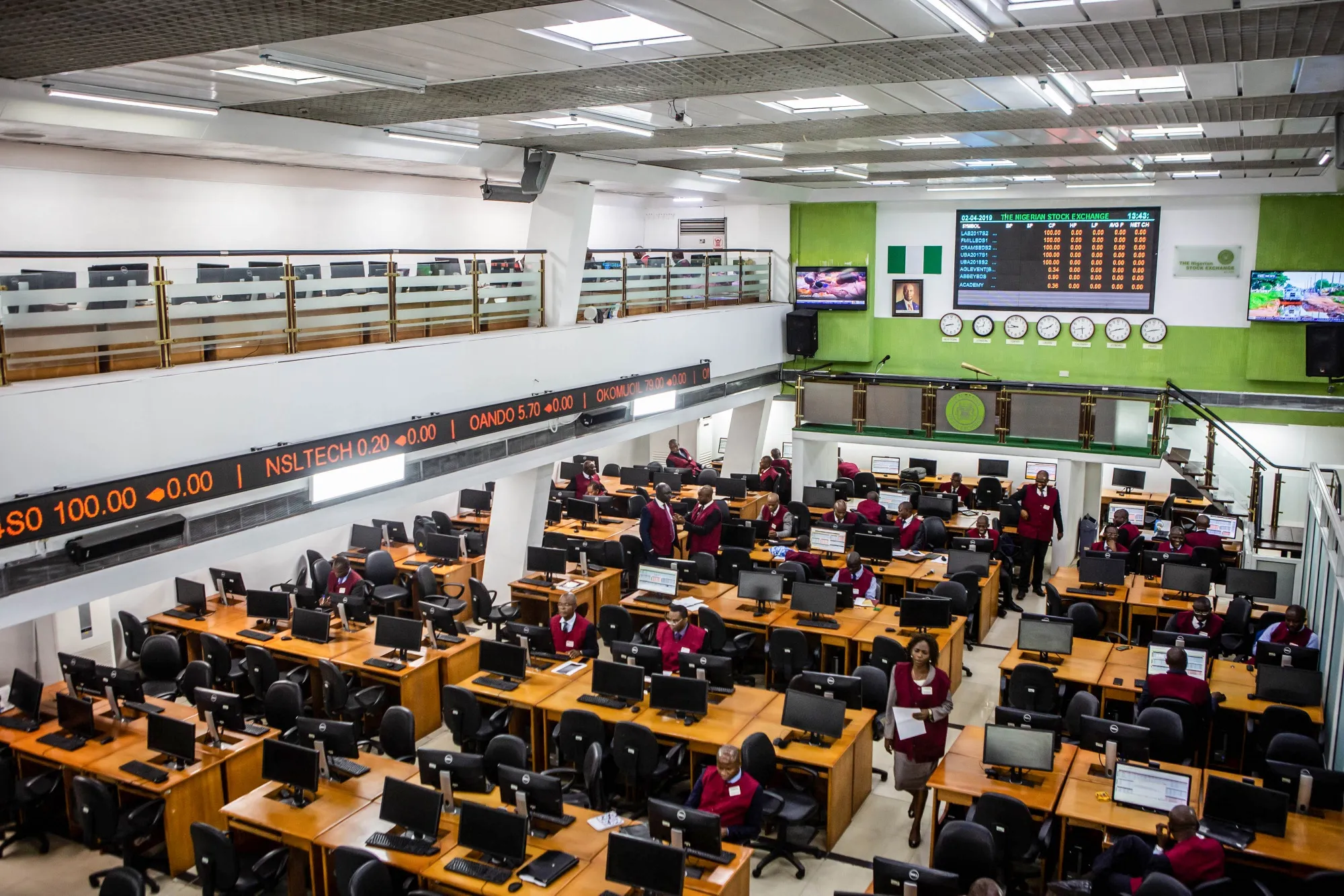
Retail investors accounted for roughly one in every four stock trades executed on the Nigerian Exchange (NGX) between January and July 2026, with Lambeth Capital Limited, through its brokerage partner, Bamboo, driving the bulk of that activity for a seventh consecutive month.
This is according to the NGX Broker Performance Report for the seven-month period ended July 31, which was obtained by Nairametrics at the weekend.
First Securities Brokers Limited emerged as the overall market leader for the period February to July 2026, garnering 13.5% weighted market share — a composite measure that gives equal weight to a firm’s activity in equities, bonds and ETFs.
Out of 17.3 million total equity deals executed on the NGX during the seven-month period, Bamboo alone accounted for 3.8 million transactions, or 22% of total deal volume, a scale of retail participation that has positioned mobile-first investing platforms as a defining force in the market’s trading activity this year.
Also Read
What the data is saying:
Nigeria’s stockbroking landscape recorded a clear divide in 2026 between institutional-focused firms handling large block trades and retail-driven platforms processing millions of smaller transactions.
- First Securities Brokers Limited emerged as the overall market leader through July 2026 with 13.5% weighted market share, driven largely by its dominance of the bond market, where its N105.6bn in traded value exceeded that of all other dealing members combined.
- Lambeth Capital Limited, Bamboo’s brokerage partner, ranked second overall with an 8.90% weighted market share, and recorded the highest number of equities deals among all top brokers at 3.85 million, despite trading a comparatively modest N262.99 billion in equity value.
- CardinalStone Securities recorded the highest equity value traded among all brokers at N1.63 trillion across 944,888 deals, the largest volume figure in the entire ranking.
The top five brokers, First Securities Brokers, Lambeth Capital, CardinalStone Securities, Meristem Stockbrokers, and Afrinvest Securities, collectively accounted for approximately 40.5% of weighted market activity, reflecting strong concentration among the leading firms.
More insights: Retail-ticket size
Lambeth’s Bamboo average ticket size stood at just N68,000 per trade, a figure that strongly suggests the transactions behind this volume are driven by retail investors rather than institutional or high-net-worth participants.
This indicates how deeply mobile trading platforms have penetrated everyday Nigerian households.
- First Securities Brokers posted the highest average ticket size among brokers with available deal data, at approximately N5.94 million per transaction, pointing to a strong institutional client base and large block trades.
- CardinalStone Securities followed with an average ticket size of about N1.73 million, supported by its market-leading equity value traded.
- Lambeth Capital’s N68,300 average, by contrast, was the smallest among the top brokers, despite handling the largest number of equities deals in the entire market.
- Meristem Stockbrokers sat between the two extremes, with an average ticket size of roughly N320,000, suggesting a blend of institutional and retail participation.
This divergence illustrates two fundamentally different business models competing for the same market: brokers built around institutional block trading, and brokers built around high-frequency retail transaction volume, a category Lambeth Capital with its Bamboo App has come to dominate almost single-handedly.
Get up to speed on broader retail investing wave
Lambeth Capital’s Bamboo dominant deal count reflects a much larger shift already visible in the latest data of NGX-wide investor participation data as of May, 2026.
- Between January and May 2026, domestic retail investors traded N2.86 trillion worth of equities, a 138% year-on-year increase, while domestic institutional investors traded N4.06 trillion over the same period, N1.20 trillion more than retail activity.
- For every N100 traded on the NGX during this period, approximately N51 came from domestic institutional investors, N36 from domestic retail investors, and N12 from foreign investors.
- Domestic investors overall accounted for N6.92 trillion, or 87.67%, of total market activity as of May 31, 2026, compared with N973.38 billion, or 12.33%, from foreign investors.
Nigeria’s Securities and Exchange Commission has attributed the retail surge to mobile trading platforms and growing financial awareness among younger Nigerians, with roughly two million new retail investors entering the market in 2025 alone.
What you should know:
Nigeria’s retail investing boom is not confined to the NGX. Fintech platforms which accept deposits in local currency have provided access to dollar-denominated CFDs and commodity-linked instruments otherwise not available locally to small-balance retail investors, now spilling into global CFD and forex trading platforms.
- CFDs (meaning Contract for Difference) are financial derivatives that allow individual investors to speculate on the price movement of an asset, like a currency pair, stock index, or commodities like crude, gold and silver, without actually owning the underlying asset itself.
- A Nigerian retail trader can use a CFD to bet on USD/NGN (Dollar/Naira) movements, Brent crude, gold and silver prices, or global stock indices like the S&P 500, none of which are directly tradeable on the NGX.
- When you open a CFD position, you are entering into an agreement with a broker to exchange the difference in an asset’s price between when you open the trade and when you close it.
- In other words, you are betting that the price of an asset will rise or fall. If you think the price will rise, you “buy” (go long). If it rises, you profit the difference; if it falls, you lose money.
- If you think the price will fall, you can “sell” (go short) instead, and if the price drops, you make a profit.
- You can trade in both directions — up or down — unlike buying a stock on the NGX, where you can typically make a profit only if the price rises, or you get paid some dividends and bonuses.
CFDs can amplify losses just as fast as gains, and they are generally considered higher-risk instruments than simply buying and holding a stock.
Fintech platforms now accept Naira deposits through their mobile wallets and facilitate transactions, including dollar-denominated instruments traded at global markets even with modest capital.
Taken together, Bamboo’s dominance of NGX deal count and the parallel rise of retail CFD trading indicate a broader structural shift: Nigerian retail investors, empowered by mobile-first platforms, are no longer marginal participants in financial markets but an increasingly significant force shaping both domestic equity trading patterns and demand for global market access.