Follow Us on Google Discover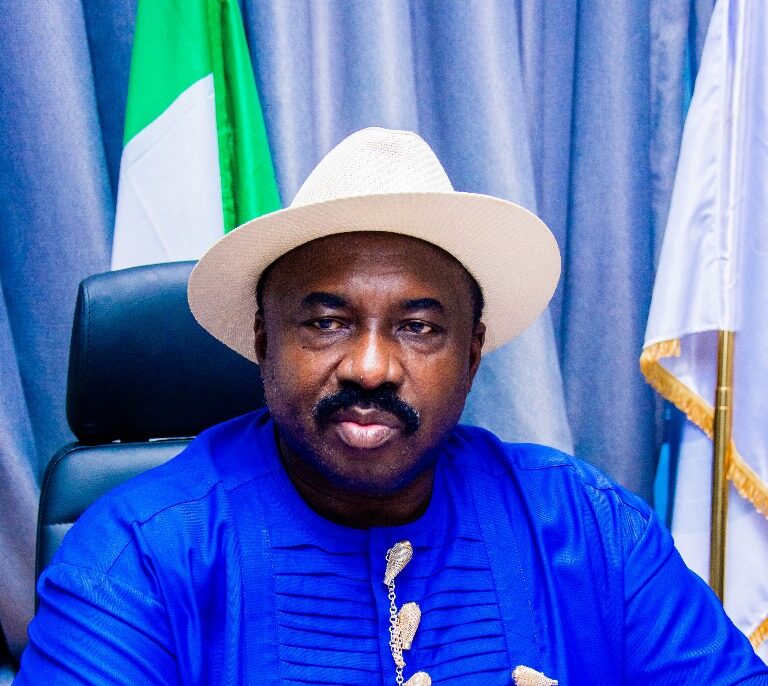
The Nigeria Civil Aviation Authority (NCAA) has opposed the proposed review of the allocation of the 5% Ticket Sales Charge (TSC) and Cargo Sales Charge (CSC), warning that reducing its statutory funding could weaken aviation safety oversight in Nigeria.
Director General of Civil Aviation, Capt. Chris Najomo, made the submission during a public hearing on the proposed review of the TSC and CSC allocation organised by the House of Representatives Committee on Aviation on Thursday in Abuja.
According to the NCAA, the TSC accounts for about 85% of its revenue, and any reduction in its allocation would weaken its ability to carry out its statutory responsibility of regulating Nigeria’s civil aviation industry.
What they are saying
Najomo said the NCAA supports adequate funding for all aviation agencies but cautioned that reviewing the current revenue-sharing formula would weaken its capacity to discharge its regulatory responsibilities.
Also Read
He noted that the Ticket Sales Charge funds about 85% of the authority’s operations, including safety oversight, certification, licensing and inspections.
- “The Director-General, Civil Aviation, Capt. Chris Najomo, has cautioned against any further reduction in the Authority’s statutory allocation, warning it could significantly undermine Nigeria’s aviation safety oversight capability,” the statement read in part.
- “While the Authority supports adequate funding for all aviation agencies, any review of the existing revenue-sharing formula will weaken the NCAA’s capacity to effectively discharge its statutory regulatory responsibilities.”
Citing the International Civil Aviation Organization’s (ICAO) Policies on Charges for Airports and Air Navigation Services (Doc 9082), Najomo said air navigation services should be funded principally by aircraft operators rather than passengers through the TSC.
He argued that the Nigerian Airspace Management Agency (NAMA), which is seeking a larger share of the levy, already generates substantial revenue from commercial air navigation charges.
According to him, if additional funding is required for NAMA, it should first come from optimising its commercial revenue, improving operational efficiency and strengthening corporate governance, while government support should be reserved for strategic infrastructure in line with ICAO policy.
Najomo warned that further cuts to the NCAA’s funding could undermine its ability to sustain the level of safety oversight required to guarantee the safety of Nigeria’s civil aviation industry.
Industry concerns
Former Director General of Civil Aviation, Capt. Musa Nuhu, and Nigeria’s Permanent Representative to ICAO, Engr. Mahmud Ben Tukur, said responsibility for aviation safety oversight rests solely with the NCAA.
They warned that treating the regulator and aviation service providers alike under the proposed funding arrangement could undermine the NCAA’s independence, stressing that an effective aviation industry depends on a strong and adequately funded safety regulator.
Speaking virtually, former ICAO Assembly President Dr. Bernard Aliu and former Director General of Civil Aviation, Dr. Harold Demuren, echoed similar concerns.
They maintained that preserving the NCAA’s financial independence is critical to sustaining Nigeria’s aviation safety oversight system and compliance with international standards.
Get up to speed
The hearing comes days after the Airline Operators of Nigeria (AON) opposed a planned warning strike by aviation unions over the alleged non-remittance of the statutory 5% Ticket Sales Charge, insisting the action was based on misinformation and should not disrupt flight operations.
- The dispute centres on the Ticket Sales Charge, a statutory 5% levy collected by airlines on behalf of the NCAA on tickets for flights originating in Nigeria.
- Under the current sharing formula, the NCAA receives 56% of the proceeds, NAMA 22%, the Nigerian Meteorological Agency (NiMet) 9%, the Nigerian College of Aviation Technology (NCAT) 7%, and the Nigerian Safety Investigation Bureau (NSIB) 6%.
- The National Assembly is considering a proposal to increase NAMA’s allocation to 40% while reducing the NCAA’s share from 56% to 40%.
While NAMA’s unions say the increase is needed to support expanding operational responsibilities, including radar surveillance, navigation systems and cybersecurity, the NCAA and former aviation leaders argue the proposal could weaken aviation oversight.
What you should know
The debate over the Ticket Sales Charge comes as Nigeria continues to face scrutiny over the cost of air travel and aviation funding.
- Earlier this year, the International Air Transport Association (IATA) named Nigeria among countries with above-global aviation charges, warning that high taxes and fees continue to increase airfares and weaken regional connectivity.
- According to the African Airlines Association (AFRAA), passengers departing from Nigeria paid some of the highest air ticket taxes and charges in Africa in 2024, ranking third in both the international and regional categories with an average of $180 per ticket.
- AFRAA also reported that West Africa recorded the continent’s highest average passenger levies at $109.5 for international departures and $97 for regional travel, above the African averages of $68 and $59.05, respectively.
IATA further disclosed that Nigeria generated $62 million in airline ticket taxes in 2024 as part of the $1.97 billion collected across Africa, reinforcing airline concerns that high charges continue to raise operating costs for carriers and passengers.