Follow Us on Google Discover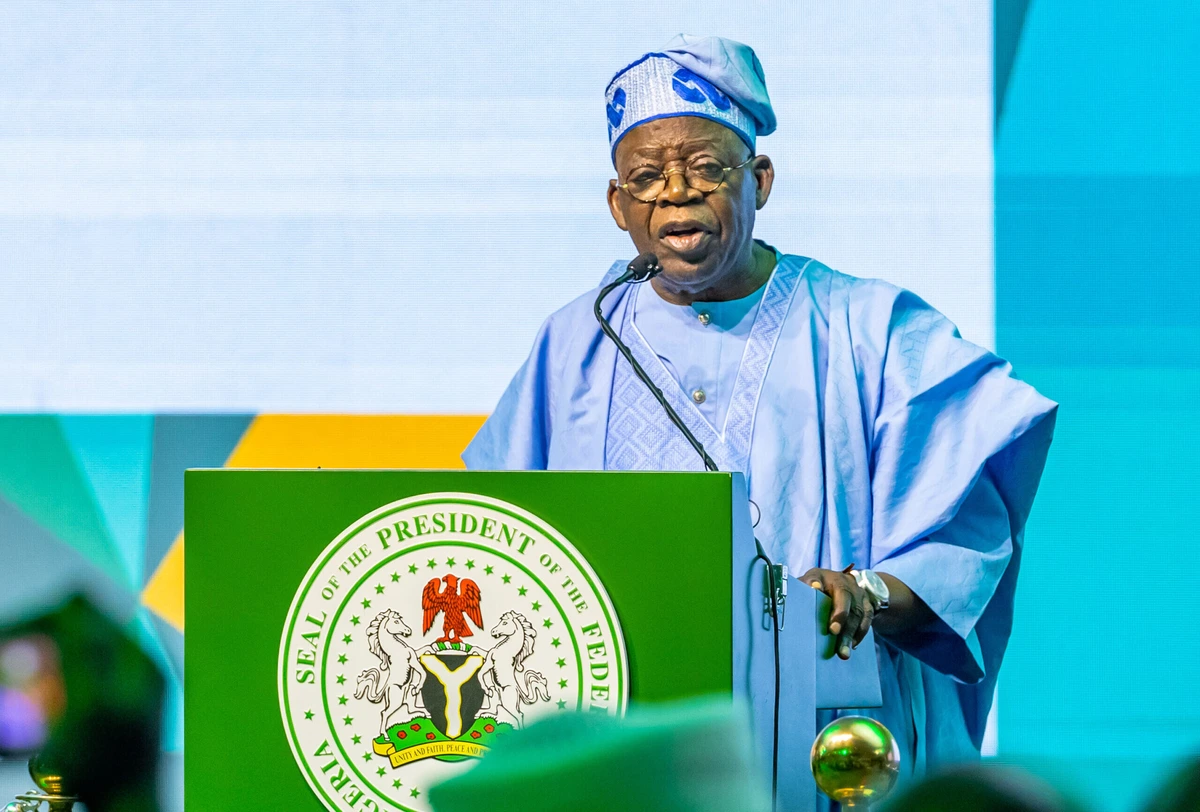
President Bola Tinubu has attributed the strong financial performance recorded by some companies listed on the Nigerian Exchange (NGX) in the first half of 2026 to the economic reforms implemented by his administration since mid-2023.
In a statement issued on Wednesday by the Special Adviser to the President on Information and Strategy, Bayo Onanuga, the Presidency said reforms including the unification of the foreign exchange market, petrol subsidy removal, banking sector recapitalisation, tax reforms, and monetary tightening have collectively improved the operating environment for businesses and boosted corporate profitability.
According to the statement, the reforms have enhanced market efficiency, strengthened macroeconomic stability, improved investor confidence, and enabled companies to plan investments and operations with greater certainty.
What they are saying
The Presidency identified the unification of the foreign exchange market as one of the most significant reforms, saying the move established a single, market-determined exchange rate that improved price discovery and allowed companies with significant foreign currency exposure to more accurately reflect the value of their dollar-denominated revenues.
Also Read
It noted that export-oriented and foreign exchange-earning firms such as Aradel Holdings and Seplat Energy have particularly benefited from the policy, as their revenues are largely tied to international oil prices and settled in foreign currency.
The statement also linked the improved performance of both companies to the administration’s approval of key upstream oil transactions.
These include the Renaissance Africa Energy consortium’s acquisition of Shell Petroleum Development Company assets, in which Aradel Holdings is a consortium member, as well as Seplat Energy’s acquisition of the assets of Mobil Producing Nigeria Unlimited.
- “By facilitating the transfer of mature onshore assets to well-capitalised indigenous operators, the administration strengthened investor confidence, accelerated domestic participation in the petroleum sector, and positioned both Aradel and Seplat to capture higher production volumes, stronger revenues, and improved earnings before tax,” it said.
According to the Presidency, the approvals expanded the reserve base, production capacity, and long term growth prospects of both companies while eliminating regulatory uncertainty surrounding two of the country’s largest upstream oil and gas transactions.
Get up to speed
Nairametrics earlier reported that Aradel Holdings Plc posted a pre-tax profit of N752.71 billion for the six months ended June 30, 2026, representing an increase of 293% from N191.31 billion recorded in the corresponding period of 2025.
Aradel’s performance was driven by a sharp expansion in crude oil production and sales, which remained the dominant contributor to group revenue.
- Crude oil generated N1.98 trillion, accounting for approximately 79% of total revenue, while gas contributed N512.10 billion and refined products contributed N129.44 billion.
- Similarly, for the six months ended June 30, 2026, Seplat Energy Plc reported a 74.1% year-on-year increase in profit before tax to N790.4 billion from N454.1 billion.
The company’s earnings improvement was supported by stronger revenue growth, lower cost of sales, improved production, a supportive commodity price environment, and reduced finance costs.
Local refining, manufacturing also benefited
The Presidency also cited the government’s naira for crude policy, saying it has strengthened local refining capacity and enabled Dangote Refinery to become a net exporter of premium motor spirit and aviation fuel.
Manufacturing companies including Dangote Cement, BUA Cement, and HBM, formerly Lafarge Africa, were also identified as beneficiaries of improved access to foreign exchange under the unified exchange rate framework.
According to the statement, improved foreign exchange availability has enabled manufacturers to better plan production, procure imported inputs more efficiently, reduce supply chain bottlenecks, and increase production volumes, resulting in stronger revenue growth and improved profitability.
What you should know
Despite the improved financial performance recorded by listed companies, several manufacturing companies are crumbling under the weight of high production costs driven by persistent inflation, elevated energy costs and high interest rates.
According to the latest Purchasing Managers’ Index (PMI) tracked by Nairametrics, the Manufacturing PMI stood at 50.10 in June, from 49.6 in May.
The latest reading indicates that more manufacturers recorded declines in output, new orders and production activity than those reporting growth, extending the sector’s weak performance after a strong start to the year.