Follow Us on Google Discover
Artificial Intelligence (AI) has become the defining technology of the 21st century. From impacting and disrupting healthcare and financial services to redefining marketing, manufacturing and education, AI is rapidly reshaping how businesses operate and how economies compete.
Yet, while global conversations have largely centred on the capabilities of the technology itself, Chibuike Goodnews believes Africa should be asking the more fundamental question of how the continent can become a creator of AI-driven value rather than just a consumer of AI solutions.
It is a question that has increasingly defined the thinking of the founder and Chief Executive Officer of Dochase Adx, one of Africa’s leading advertising technology companies. Over the years, Goodnews has built a reputation as an innovator in digital advertising and marketing technology. Today, however, his vision extends beyond helping brands optimise advertising campaigns. He is contributing to the broader conversation about how Artificial Intelligence can become a catalyst for economic development across Africa.
For Goodnews, AI is far more than just another technology trend. He describes it as the next great economic revolution, one that presents Africa with both an extraordinary opportunity and a great responsibility.
Also Read
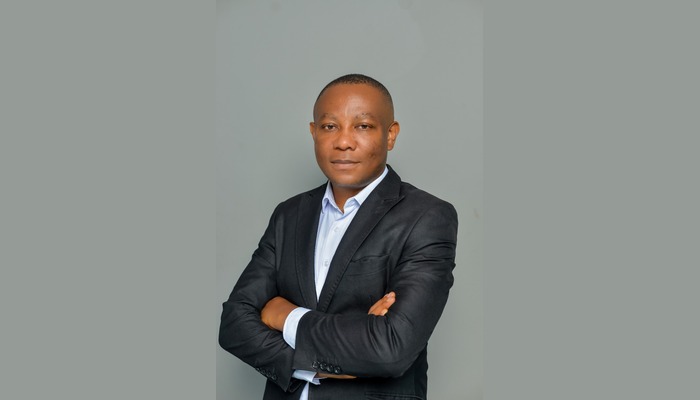
“We’re witnessing one of the biggest technological shifts in human history,” he says. “The question is whether Africa will simply consume AI innovations developed elsewhere or deliberately position itself as a contributor to the technologies that will shape the future.”
Having spent years at the intersection of technology, data and digital marketing, Goodnews has observed how businesses are increasingly moving from intuition-driven decision-making to intelligence-driven operations. The rise of AI, he believes, represents the natural evolution of that transition.
Beyond the AI Hype
Artificial Intelligence has become one of the most talked-about technologies in boardrooms and business conferences. Yet Goodnews argues that many organisations still misunderstand its true value.
“Many people still see AI as a futuristic concept or a collection of tools that can automate routine tasks,” he explains. “In reality, AI is becoming the engine that will power how businesses make decisions, understand customers, improve productivity and unlock new opportunities.”
Rather than viewing AI primarily through the lens of chatbots and content generation, he believes organisations should see it as an enabler of better strategy, operational efficiency and innovation. This thinking has informed the evolution of Dochase Adx itself. As an advertising technology company, the business has increasingly leveraged data intelligence, automation and machine learning capabilities to help brands deliver more personalised, measurable and effective marketing outcomes.
For Goodnews, AI is not replacing human creativity. Instead, it is enhancing human capability. “The businesses that will succeed are not necessarily those with the biggest budgets,” he says. “They will be the organisations that learn how to combine human creativity with intelligent technology.”
It’s Africa’s AI Moment
Despite the rapid adoption of AI worldwide, Goodnews believes Africa still has time to define its own place in the emerging global AI economy. His optimism is rooted in the continent’s entrepreneurial energy and growing technology ecosystem. According to the Global System for Mobile Communications Association (GSMA), Africa’s digital economy is projected to contribute nearly US$180 billion to the continent’s GDP by 2025, while the number of technology startups continues to grow across major innovation hubs such as Lagos, Nairobi, Cape Town and Cairo.
For Goodnews, those developments show that Africa possesses the talent required to compete globally. “The capability already exists,” he says. “What we need now is intentional investment in infrastructure, research, education and innovation.”
He frequently draws lessons from history. During the Industrial Revolution, Africa supplied many of the raw materials that fuelled global industrialisation but captured relatively little of the economic value. Goodnews believes the AI revolution presents an opportunity to rewrite that narrative but only if governments and businesses invest deliberately in building indigenous capabilities.
Today, Africa contributes immensely to data generation, digital services and the supply of critical minerals essential for semiconductor production. Yet much of the intellectual property, advanced computing infrastructure and commercial value remain concentrated elsewhere.
“We cannot afford to repeat history,” he says. “Africa must move beyond supplying inputs into the global AI ecosystem and begin building technologies that solve our own challenges while competing internationally.”
Why CEOs Must Lead the AI Conversation
While technology teams are often responsible for implementing AI solutions, Goodnews insists that the responsibility for AI adoption cannot be delegated entirely to IT departments. He believes chief executives and business leaders must personally understand the implications of AI for their organisations. “Artificial Intelligence is no longer a technology conversation alone,” he says. “It is a leadership conversation.”
That conviction aligns with global trends. A recent McKinsey Global Survey found that organisations achieving the greatest returns from AI are those where senior leadership is directly involved in AI strategy and governance rather than treating it as a standalone technology initiative.
For Goodnews, this means executives must cultivate curiosity, embrace continuous learning and develop the confidence to integrate AI into strategic decision-making. “The leaders who thrive over the next decade will not necessarily be those who know how to write code,” he says. “They will be those who understand how AI creates competitive advantage.”
Responsible Innovation
Even as enthusiasm for AI grows, Goodnews acknowledges legitimate concerns surrounding ethics, misinformation, privacy and workforce disruption. He believes these challenges should encourage responsible innovation rather than resistance to technological progress.
Artificial Intelligence, he argues, should augment human capability rather than diminish it. “Technology should make people more productive, more creative and more capable,” he says. “It should not be viewed simply as a replacement for human potential.” That philosophy extends to policy.
Building an African AI Future
Looking ahead, Goodnews envisions an Africa that is recognised not just as a market for AI products but as a source of globally competitive AI innovation. He believes the continent’s youthful population, entrepreneurial mindset and rapidly expanding digital economy provide a strong foundation for achieving that ambition. However, success will depend on long-term investments in education, digital infrastructure, research and innovation ecosystems capable of nurturing world-class talent.
For business leaders, the message is equally clear: the AI revolution is no longer approaching—it has already begun. “The companies that embrace AI thoughtfully today will define the markets of tomorrow,” Goodnews says. “The real opportunity isn’t simply using Artificial Intelligence; it’s understanding how to create value with it.”
As businesses across Africa grapple with rapid technological change, voices like Chibuike Goodnews are helping shift the conversation from fear to possibility. For a continent that has often watched previous industrial revolutions unfold from the sidelines, Goodnews belief that the age of AI offers a rare opportunity to participate differently is one that is heartwarming. The challenge now is ensuring that Africa does not simply adopt the future, but help shape it.