Follow Us on Google Discover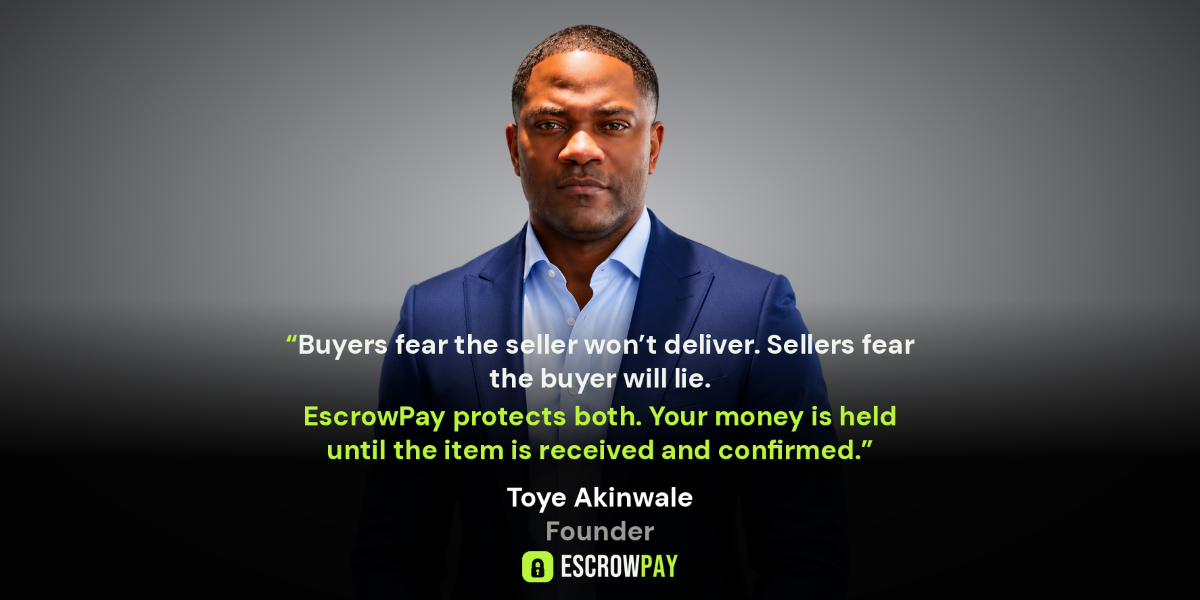
Nigeria’s digital economy is one of the most vibrant in Africa. Millions of people buy and sell every day on Instagram, WhatsApp, Jiji, and countless vendor pages. On paper, the conditions for an ecommerce boom are all there: a young, connected population, rising smartphone use, and a culture of hustle and enterprise.
And yet, something keeps holding it back. Ask almost any Nigerian why they hesitate to buy from an online vendor they don’t know, and you’ll hear the same answer: “What if I get scammed?”
That single question is one of the biggest brakes on Nigerian ecommerce. It isn’t a technology problem. It’s a trust problem.
The real bottleneck isn’t payments. It’s trust
Nigeria has made enormous progress on digital payments. Transfers are instant. Fintechs have made moving money easier than ever. But moving money was never the hard part. The hard part is this: in any online transaction between strangers, someone has to go first.
Also Read
The buyer pays first and hopes the seller is honest and actually ships. Or the seller ships first and hopes the buyer actually pays. Whoever moves first carries all the risk, and in a market where scam stories are common, neither side wants to be that person.
This is the trust gap. And it quietly imposes a cost on the entire economy:
- Buyers abandon purchases they’d otherwise make, because the risk feels too high.
- Sellers lose sales because cautious customers walk away.
- Honest vendors are penalised for the actions of dishonest ones, tarred by the same suspicion.
- Everyone defaults to “cash on delivery” or dealing only with people they already know, which severely limits how far and how fast commerce can grow.
The result is an ecommerce sector operating well below its potential, not because Nigerians don’t want to buy online, but because they can’t be sure it’s safe.
Why the usual fixes fall short
The market has tried to patch the trust gap in various ways, but each has limits.
Cash on delivery reduces buyer risk, but it’s logistically expensive, doesn’t work at distance, and shifts the risk onto sellers and dispatch riders.
Reviews and ratings help, but they’re easy to fake and only useful once a seller already has a track record. No help for new or small vendors.
“Trust me” culture, doing business only with known contacts, works but caps growth. You can’t scale a business on the people you already know.
Chargebacks and disputes exist in card ecosystems, but most Nigerian social commerce runs on direct bank transfers, where there’s no built in protection at all.
None of these solve the core issue: someone still has to go first, and trust still has to be assumed rather than guaranteed.
The solution is older than the internet: escrow
The most effective answer to the trust gap isn’t new. It’s escrow, a mechanism that has underpinned high value transactions for centuries.
The idea is simple. Instead of the buyer paying the seller directly, the buyer’s money is held by a neutral, trusted third party. The seller ships the goods. Only once the buyer confirms they received exactly what they ordered is the money released to the seller. If something goes wrong, the buyer is protected and can be refunded.
Escrow removes the need for anyone to go first on trust. The seller can ship with confidence, knowing the money is genuinely there. The buyer can pay with confidence, knowing their money is safe until they’re satisfied. The scammer’s entire advantage, exploiting the moment when one party is exposed, disappears.
The challenge has always been access. Traditional escrow was formal, slow, and expensive, reserved for property deals and large contracts, not the everyday ₦20,000 transaction between an Instagram vendor and a customer. For social commerce, it simply wasn’t practical.
That’s the gap now being closed.
How EscrowPay solves it, on WhatsApp
Solving the trust problem at scale means meeting people where they already transact. In Nigeria, that increasingly means WhatsApp, the app where a huge share of buying and selling already happens, through DMs, catalogues, and vendor broadcasts.
This is exactly where EscrowPay operates. EscrowPay is Nigeria’s first WhatsApp native escrow service. Instead of asking anyone to download a new app or learn a new process, it builds bank backed escrow directly into the channel Nigerians already use to do business.
Here’s how a safe deal works:
- A buyer and seller agree on a transaction and start it through EscrowPay on WhatsApp.
- The buyer pays, and the money is held securely by a licensed bank, not by an individual, not in an unregulated wallet.
- The seller sees that the funds are secured, and ships with confidence.
- Once the buyer confirms they’ve received exactly what they ordered, the money is released to the seller.
- If something goes wrong, the buyer can be refunded.
Two things make EscrowPay different from simply “being careful” online.
First, the money is held by a licensed bank. This isn’t an individual promising to hold funds. It’s proper, regulated custody, so both parties know the money is real and safe throughout.
Second, both buyer and seller are identity verified. Scammers depend on being anonymous, hiding behind fake names and disposable accounts. On EscrowPay, everyone in a deal is verified, so there’s nowhere for bad actors to hide, and honest people can deal with strangers as safely as they’d deal with someone they know.
There’s no app to download. A deal begins with a simple message on WhatsApp, which means the safety layer fits naturally into how commerce already happens, rather than asking people to change their behaviour.
EscrowPay is a product of EscrowLink Technologies Limited (RC 9473181) and is registered with the Nigeria Data Protection Commission (NDPC) as a Data Controller and Processor, so both your money and your data are handled properly. The company’s guiding idea is simple, summed up in three words: we process trust.
It was built for a personal reason, too. EscrowPay grew out of a familiar Nigerian experience, watching someone close fall victim to an online scam, and the conviction that buying and selling online shouldn’t require anyone to gamble with their money.
Want to try it? You can start a safe deal right now by sending “Hello” on WhatsApp to 0705 500 0705.
What solving the trust problem unlocks
The trust gap isn’t just an inconvenience; it’s a ceiling on growth. Remove it, and the effects ripple outward.
- New and small vendors can compete on a level field, because they no longer need a long track record to be trusted. The system provides the trust.
- Buyers transact more freely, and with more people, expanding the market beyond their existing circle.
- Commerce extends across distance and between strangers, which is the whole promise of the internet in the first place.
- Confidence compounds. Every safe transaction makes the next one more likely.
Nigeria doesn’t have a shortage of buyers, sellers, or ambition. What it has lacked is a reliable way for strangers to transact without fear. Close that gap, and a great deal of latent commercial energy is set free.
The trust problem has held Nigerian ecommerce back for years. The tools to solve it now exist, and with EscrowPay, they’re finally as simple to use as sending a message.
Ready to buy or sell without the fear?
Start a safe deal in seconds. Send “Hello” on WhatsApp to 0705 500 0705, no app to download, and let a licensed bank hold the money until you confirm you got exactly what you ordered.
Because online, nobody should have to go first on trust.