Follow Us on Google Discover
What Changed in the Economy?
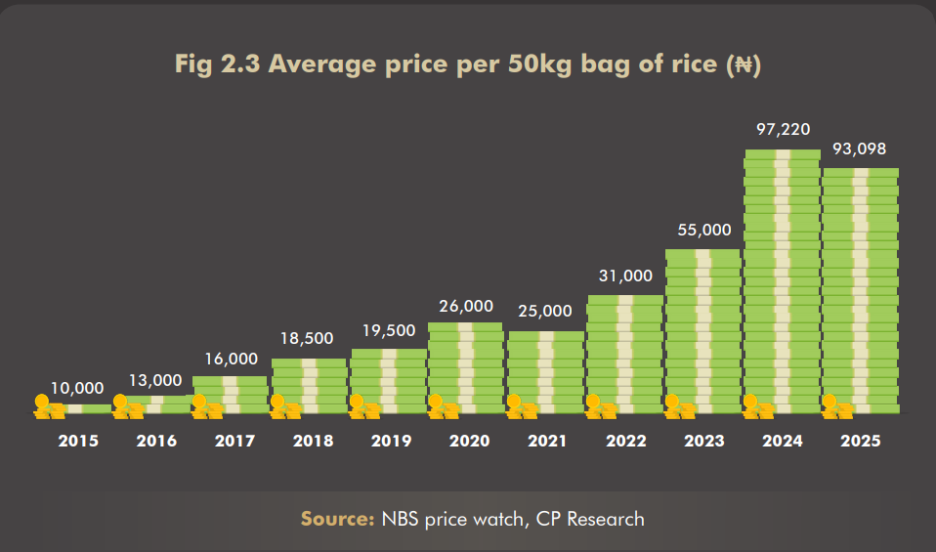
The Purchasing Power Collapse: A decade ago, N10,000 covered a week of transport for most urban Nigerians.
A pot of soup costs a fraction of today’s price. Rent increases were occasional events, not annual certainties.
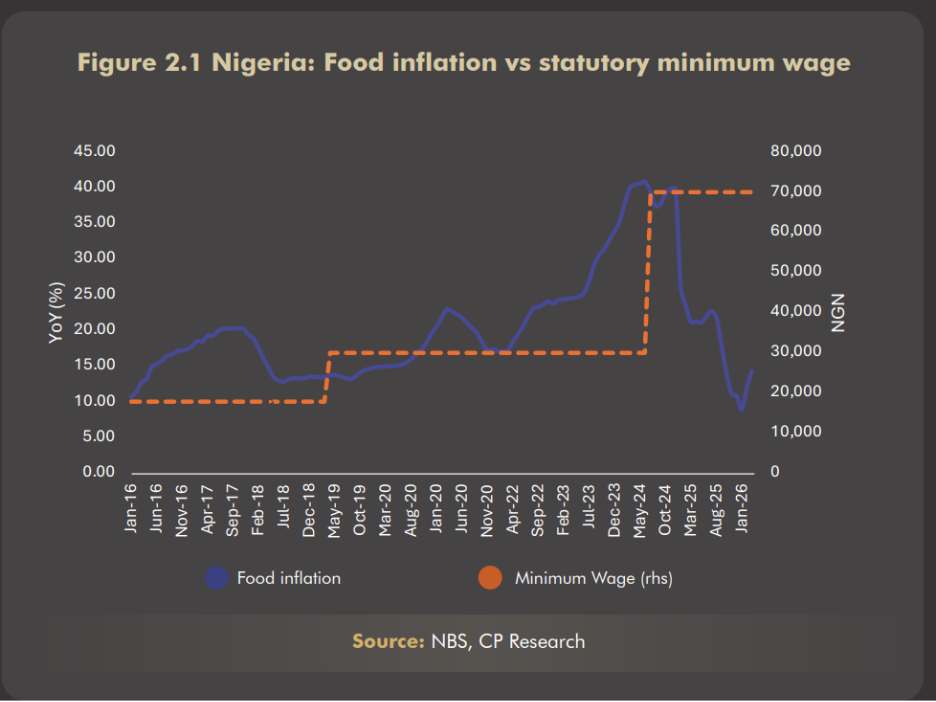
By 2024, none of those benchmarks held. The core paradox: Nigerians earned more naira but could buy less with them. The minimum wage moved from N18,000 to N30,000 in 2019, then to N70,000 in 2024. But food inflation, which directly accounts for 72% of monthly household spending on groceries (Piggyvest, 2025 survey), outpaced every wage adjustment.
Also Read
The structural driver: insecurity in the north and Middle Belt kept farmers off their land, disrupting supply. Fuel subsidy removal raised transport costs, which in turn raised logistics costs, which in turn raised the price of every tomato transported from Jos to Lagos.
From 2022 to 2024, food inflation rose from the low-20% range to a peak of about 40%. During most of that period, the minimum wage remained fixed at N30,000 until it was raised to N70,000 in 2024. Even with this increase, the timing and scale of food-price growth show that wages had lagged significantly behind inflation for much of the period. When the CPI was rebased in 2025, the base year shifted from 2009 to 2024, the basket expanded from 740 to 934 items, and reported food inflation fell sharply. However, this does not mean food became cheaper in absolute naira terms; it means the measurement framework changed.
The Naira’s Long Decline
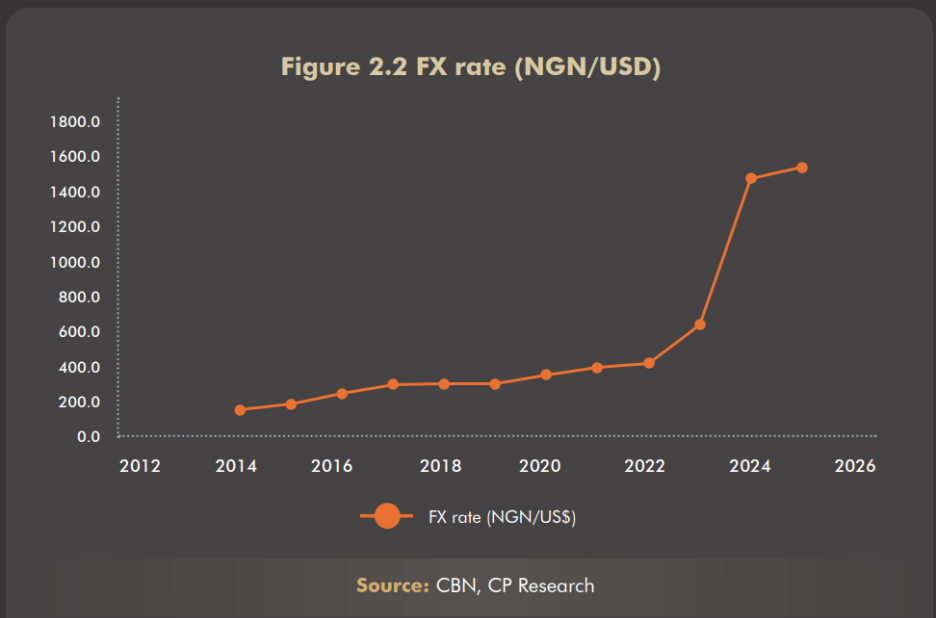
In 2015, N100,000 was worth roughly $520–630 at the official rate. By 2024, the same amount bought was less than $70, an 89% erosion in dollar value in under a decade. The story behind this is not just a number; it is a sequence of regime changes, each intended to improve market efficiency, each producing, at least initially, a sharp step-down in the naira’s value.
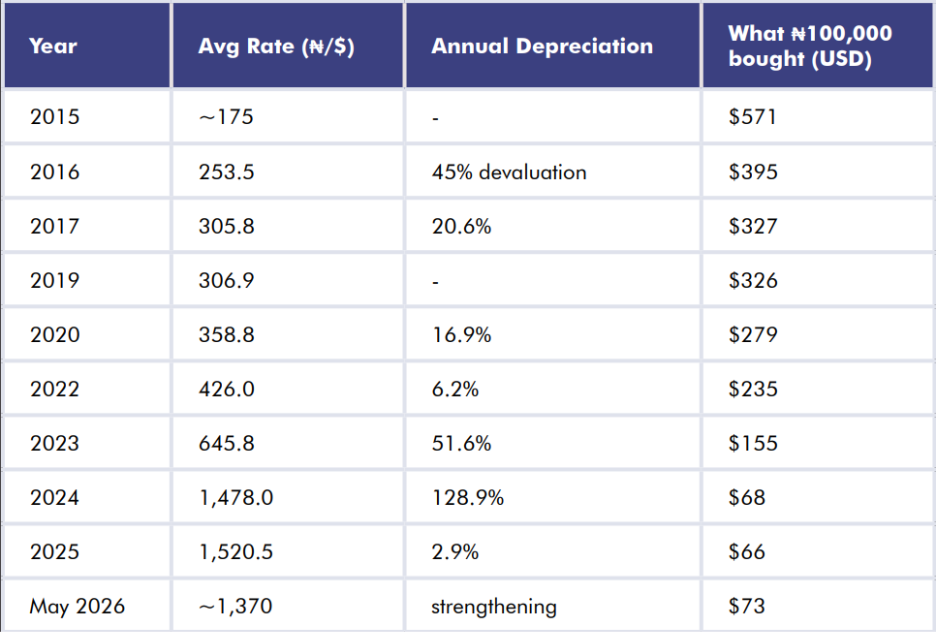
The real-world translation: a $30,000 school fee abroad cost N5,250,000 in 2015. By 2024, it will cost over N44,340,000. A manufacturer importing raw materials faced the same naira-cost surge even when the dollar price held steady. Because Nigeria’s economy runs on imported inputs, fuel, machinery, medicine, electronics, and food ingredients, the FX rate became the central driver of the cost of living.
“Money no get value again” is not hyperbole. It reflects a rational recalibration by millions of people who learned, over ten years, that what they earned today would buy less tomorrow.
External Shocks, Local Consequences
Deeper globalisation meant that external shocks abroad increasingly translated into pressure at home. Three events defined the decade’s external dimension.
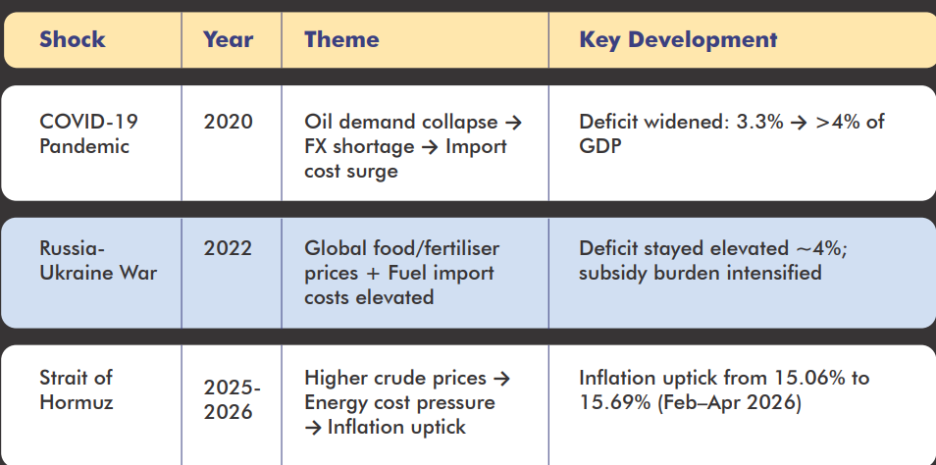
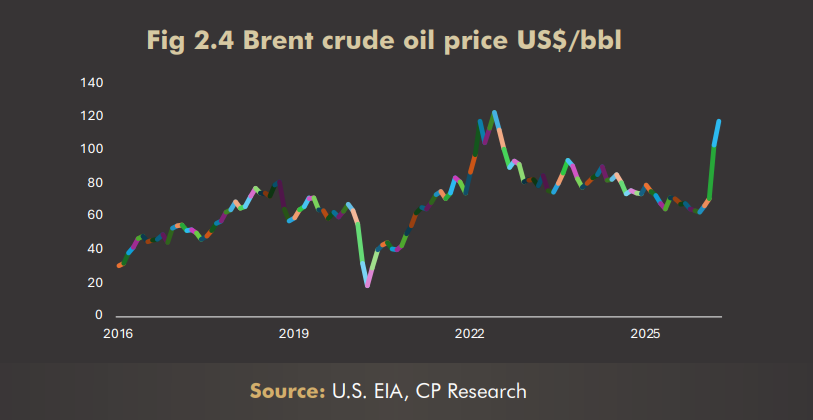
Geopolitical shocks, from the Russia-Ukraine war to recent tensions in the Middle East, have kept crude prices high. For Nigeria, that should mean stronger oil revenue. But weak production, oil theft, underinvestment and limited refining capacity have reduced the upside. A critical nuance on the 2022 oil windfall: higher crude prices should have benefited Nigeria.
The Era of Expensive Money
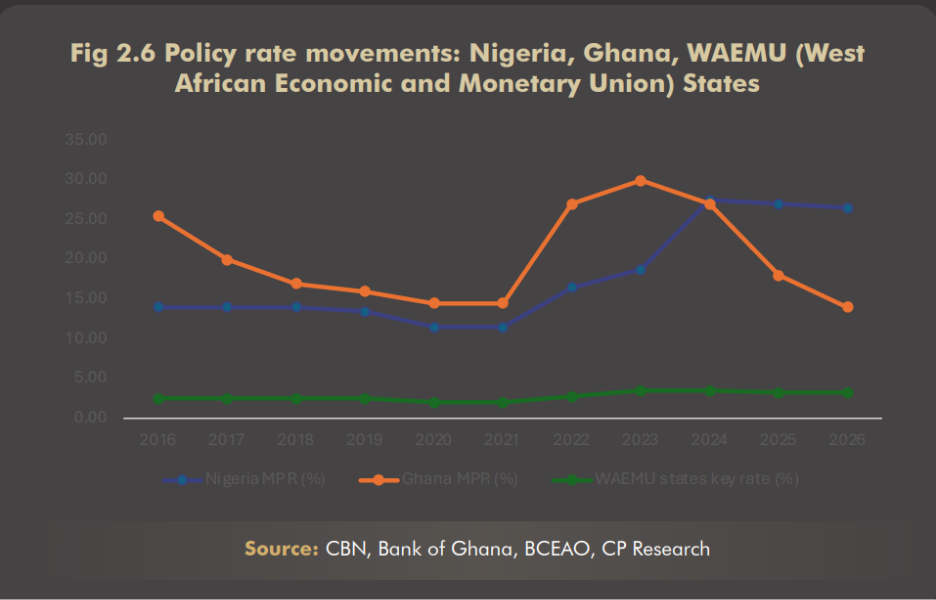
Between 2022 and 2024, the MPR was raised by 1,600 basis points, from 11.5% to 27.50%. This was among the most aggressive tightening cycles across any African central bank in the period. The effect was felt not in policy announcements but in declined loan applications, deferred business expansions, and mounting debt-service burdens.
The decade created a structural bifurcation in the financial system: high Treasury bill yields made financial assets attractive, pulling capital away from productive investment. Businesses that needed to borrow faced lending rates well north of 30%. Those already indebted faced mounting debt-service burdens on loans taken in a lower-rate environment.
Money circulated freely in financial markets. In factories, farms, and small businesses, it barely moved.
For the government, higher rates meant higher borrowing costs on a debt stock that had ballooned from ₦27.4 trillion in 2019 to N46.25 trillion by the end of 2022. Every additional naira spent on debt service was a naira not spent on infrastructure, health, or education. The constraint was especially binding in Nigeria, where public revenue remains low relative to GDP.
The Subsidy Reckoning
Nigeria’s fuel subsidy regime was one of the most consequential economic arrangements in the country’s modern history. For decades, the government kept pump prices below market levels, absorbing the difference through NNPC. The stated logic: Nigeria produces oil; Nigerians should pay less for petrol. The actual result: perennial scarcity, endemic smuggling to neighbouring countries, agonising queues at filling stations, and a ballooning fiscal burden.
Subsidy payments were deducted before FAAC distributions, meaning states and local governments received less revenue than they were constitutionally due. The money was effectively siphoned upstream before it could reach the people it was meant to help. On May 29, 2023, President Tinubu declared the subsidy gone. Petrol prices surged. Transport costs followed. Then food prices. Then nearly everything else. The removal was necessary. The immediate costs were unevenly distributed and brutally real for millions of Nigerians who had built their livelihoods around the assumption that fuel would remain affordable.
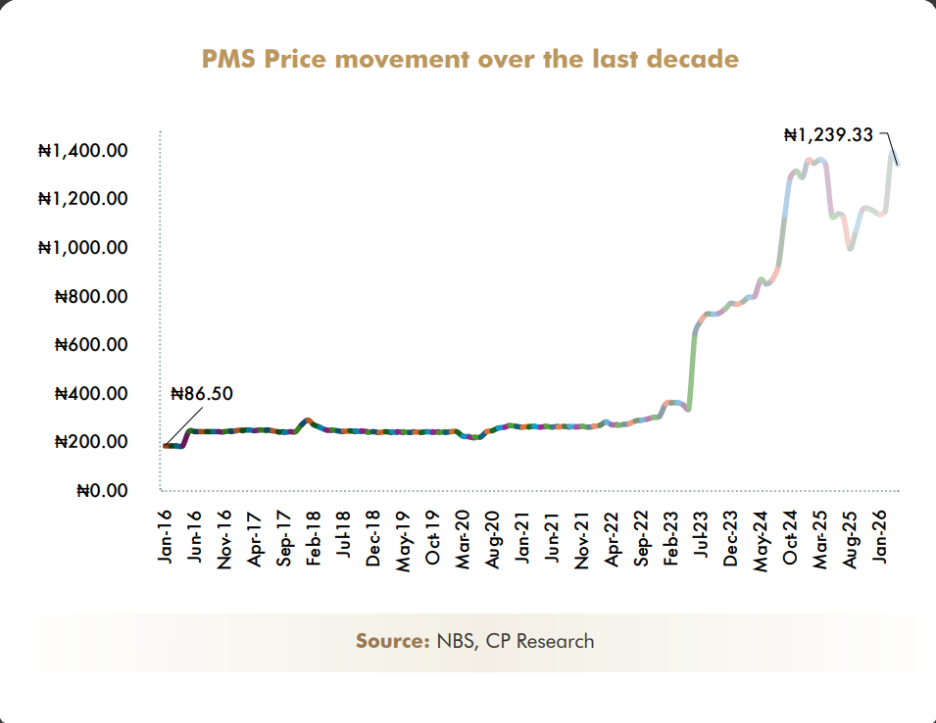
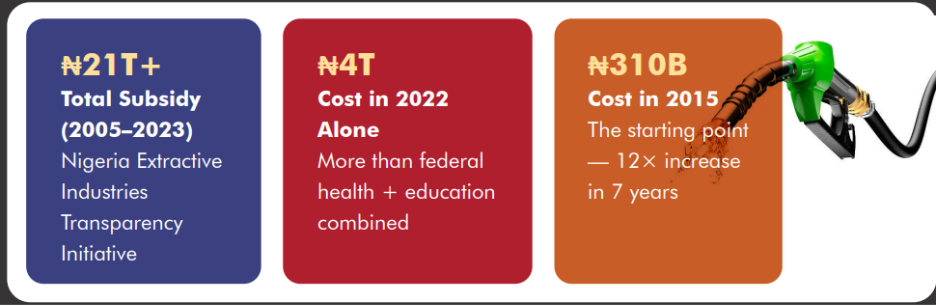
For the government, subsidies were a crippling, unsustainable burden because it severely depleted revenues, increased national debt and stifled spending on critical public services like healthcare, education and infrastructure. According to the Nigeria Extractive Industries Transparency Initiative (NEITI), a statutory agency under the Presidency, Nigeria spent over ₦21 trillion on fuel subsidies between 2005 and 2023, with costs jumping exponentially from roughly ₦310 billion in 2015 to ₦4 trillion in 2022. It didn’t just affect federal government finances.
Subsidy payments were deducted at source before oil revenues were shared by the Federation Accounts Allocation Committee (FAAC). Therefore, it significantly reduced the distributable fund available to state and local governments. Over time, the system became unsustainable as large portions of public revenue were increasingly directed towards it. A look at subsidy spending relative to budget allocations to key sectors from 2012 to 2022 clearly portrays the situation and led to the conclusion that the subsidy regime was unsustainable.
To be continued…