Follow Us on Google Discover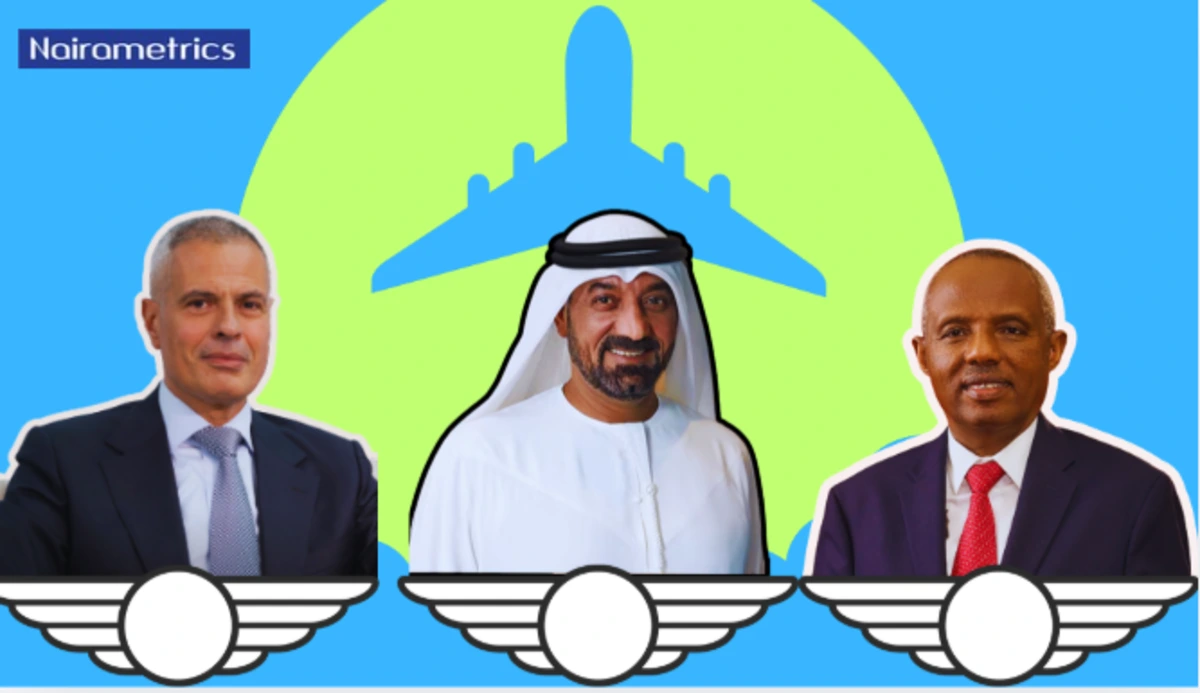
Africa’s aviation industry is gaining altitude, driven by rising passenger demand, expanding route networks, and airlines investing heavily in fleet growth.
According to OAG’s July 2026 Africa Aviation Market Update, the continent’s total scheduled airline capacity climbed 7.5% year-on-year to 26.3 million seats, with international services accounting for 79% of the market.
Domestic travel also posted strong momentum, with capacity increasing 11.1% as airlines responded to growing demand across key markets.
The recovery is also reflected in passenger traffic. The International Air Transport Association (IATA) reported that African airlines recorded an 8.9% year-on-year increase in international passenger demand in May 2026, making the region one of the strongest-performing aviation markets globally. Passenger load factors also improved to 73.4%, even as global demand fell 2.2% due to disruptions caused by the conflict in the Middle East.
Also Read
Behind this growth are executives shaping the future of African aviation. From engineering veterans and former pilots to finance experts and tourism strategists, these leaders are expanding fleets, opening new international routes, strengthening regional connectivity, and positioning their airlines to compete on the global stage.
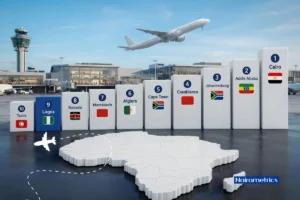
Based on July 2026 seat capacity, here are the CEOs leading the continent’s largest airlines and the executives steering Africa’s aviation industry through its next phase of growth.
10. Allen Onyema -CEO/Founder Air Peace

- No of passenger seats: 360,200
Allen Ifechukwu Onyema is the founder and Chief Executive Officer of Air Peace, Nigeria’s largest airline and one of Africa’s fastest-growing carriers. Since launching the airline in 2013, Onyema has overseen its expansion from a domestic operator into an international airline.
A trained lawyer, Onyema studied law at the University of Ibadan before being called to the Nigerian Bar. Before venturing into aviation, he built a successful legal career and became known for his involvement in conflict resolution, peace advocacy, and humanitarian initiatives across Nigeria.
Driven by a vision to improve air connectivity within Africa and reduce dependence on foreign airlines, Onyema founded Air Peace with commercial operations beginning in October 2014. Under his leadership, the airline has grown into West Africa’s largest carrier by fleet size, operating more than 30 domestic, regional, and international routes. The airline has also invested heavily in fleet expansion, acquiring Boeing 777s, Embraer E195-E2 jets, and other modern aircraft to support its growth strategy.
Onyema gained widespread recognition during the COVID-19 pandemic when Air Peace operated evacuation flights that brought thousands of stranded Nigerians home.
Nigeria’s Air Peace recorded the fastest capacity growth among the top 10 airlines serving Africa, increasing its available seats by an impressive 50.6% year-on-year.
9. Paul Terstegge- CEO, Transavia France

- No of passenger seats- 393,200
Paul Terstegge is the Chief Executive Officer of Transavia, the low-cost airline owned by the Air France–KLM Group. He assumed the role on February 1, 2026, succeeding Marcel de Nooijer as the airline embarks on a new phase focused on network expansion, operational efficiency, sustainability, and customer experience.
Before becoming CEO, Terstegge served as Executive Vice President of Inflight Services at KLM, where he led one of the airline’s largest operational divisions.
His experience extends beyond the Netherlands, having held senior management roles abroad as well as strategic positions in Paris within the Air France – KLM Group.
As CEO, Terstegge has been tasked with leading Transavia through its next stage of growth. The airline plans to expand its European route network while modernising its fleet with quieter and more fuel-efficient aircraft as part of its sustainability goals. At the same time, the company is focused on improving operational reliability and maintaining its position as a leading low-cost carrier in Europe.
French low-cost airline Transavia.com maintained steady growth in Africa, increasing seat capacity by 6.1% year-on-year. The airline expanded from 370,600 seats in July 2025 to 393,200 seats in July 2026.
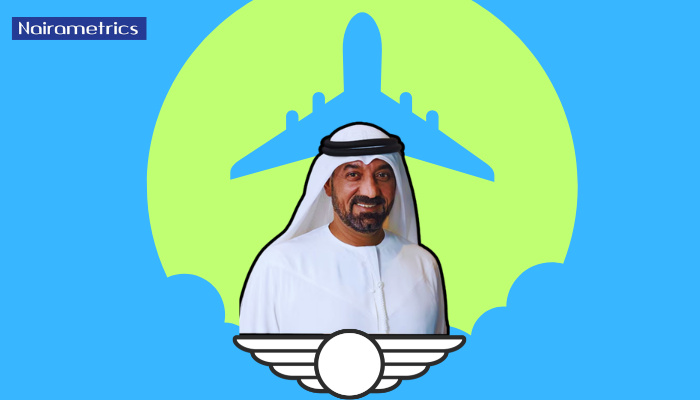
8. HH Sheikh Ahmed-Group CEO, Emirates
- No of passenger seats-429,400
HH Sheikh Ahmed bin Saeed Al Maktoum is the Chairman and Chief Executive of Emirates Airline & Group, the aviation conglomerate behind Emirates Airline and ground handling giant dnata. Widely regarded as the architect of Dubai’s rise as a global aviation hub, he has led the Emirates Group since its inception in 1985, transforming a start-up airline with just two leased aircraft into one of the world’s largest international carriers.
Sheikh Ahmed is a member of Dubai’s ruling Al Maktoum family and holds a degree in political science from the University of Denver in the United States. His aviation career began in 1985 when he was appointed President of the Dubai Department of Civil Aviation, the same year he became chairman of the newly established Emirates Airline.
Dubai-based Emirates increased its Africa seat capacity by 8.9%, growing from 394,300 seats in July 2025 to 429,400 seats in July 2026.
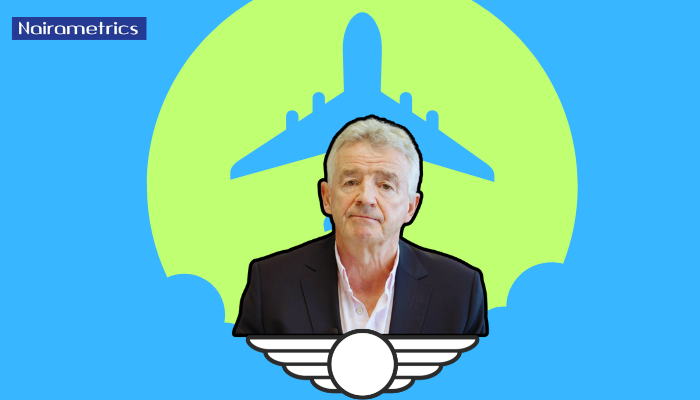
7. Michael Kevin O’Leary-Group CEO, Ryanair
- No of passenger seats: 505,700
Michael Kevin O’Leary has spent nearly four decades transforming Ryanair from a struggling regional airline into Europe’s largest low-cost carrier.
O’Leary studied business and economics at Trinity College Dublin before beginning his career as a trainee accountant with Stokes Kennedy Crowley, later part of KPMG. During his time there, he met aviation entrepreneur Tony Ryan, founder of aircraft leasing company Guinness Peat Aviation (GPA), whom he advised on tax matters.
In 1988, Ryan recruited O’Leary as his personal financial adviser, the same year he joined Ryanair as Chief Financial Officer. At the time, the airline was struggling financially, and O’Leary reportedly recommended shutting it down. Instead, Ryan tasked him with helping turn the business around.
O’Leary became Ryanair’s Chief Executive Officer in 1994, leading a dramatic transformation inspired by the low-cost model pioneered by Southwest Airlines in the United States.
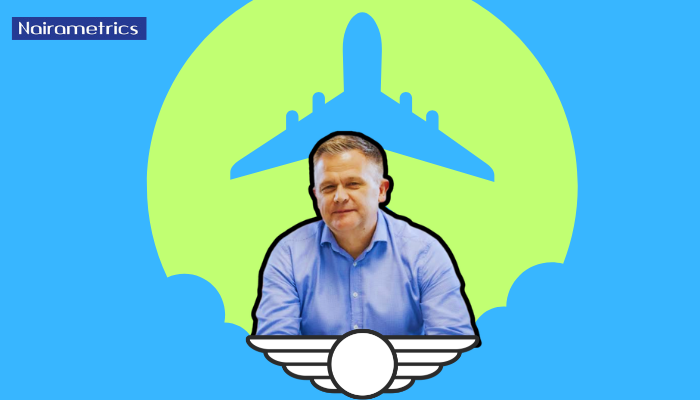
6. De Villiers Engelbrecht- CEO Airlink
- No of passenger seat – 557,000
de Villiers Engelbrecht is the Chief Executive Officer of Airlink, South Africa’s leading privately owned regional airline. A seasoned finance executive with more than two decades of experience, he assumed the CEO role in 2025 after serving as the airline’s Chief Financial Officer for over 12 years, becoming only the second CEO in Airlink’s history.
Engelbrecht joined Airlink in 2011 as Executive Manager for Corporate Services before being appointed Financial Director and Chief Financial Officer in December 2012. During his tenure as CFO, he played a pivotal role in strengthening the airline’s financial position, supporting fleet renewal, expanding regional operations, and helping the carrier navigate one of the aviation industry’s most challenging periods during the COVID-19 pandemic.
Before joining Airlink, Engelbrecht spent 11 years at Coronation Capital, where he served as a finance executive and gained extensive experience in corporate finance, investment management, and strategic planning.
South African regional carrier Airlink grew its capacity by 5.8%, increasing available seats from 526,300 in July 2025 to 557,000 in July 2026. Airlink has steadily expanded its regional network, linking major cities and underserved destinations across Southern Africa.
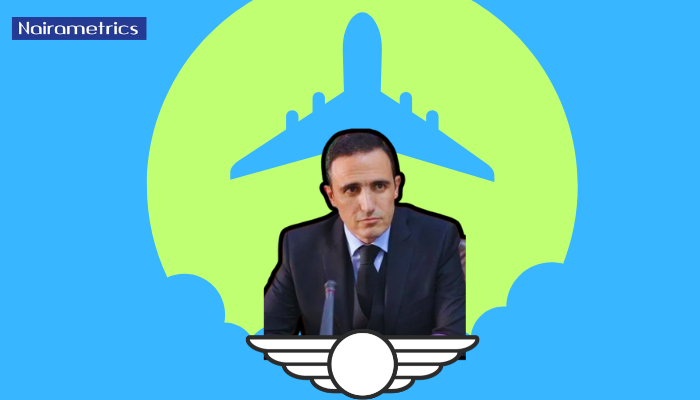
5. Hamza Benhamouda- CEO Air Algérie
- No of passenger seats -758,900
Hamza Benhamouda is the Chief Executive Officer of Air Algérie, the national carrier of Algeria. He assumed the role in February 2024, succeeding Yacine Benslimane following a leadership reshuffle approved by Algerian President Abdelmadjid Tebboune.
Before taking the helm at Air Algérie, Benhamouda served as Director-General of Algeria’s National Civil Aviation Agency (ANAC), where he oversaw aviation regulation, safety, and sector development. His appointment brought extensive regulatory and industry experience to the airline at a time when Algeria was seeking to strengthen its aviation sector and expand international connectivity.
Benhamouda inherited an airline that had begun recovering from the severe financial impact of the COVID-19 pandemic. Under his predecessor, Air Algérie had stabilized operations and returned to profitability after years of disruption that significantly affected passenger traffic and revenues.
Algeria’s national carrier posted a healthy 9.8% increase in seat capacity, rising from 691,200 seats to 758,900 over the year.
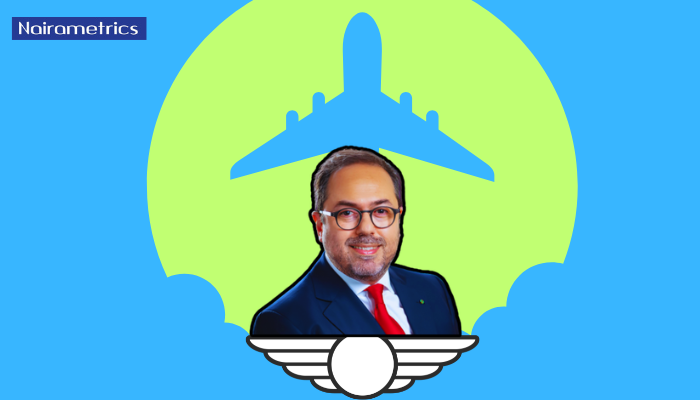
4. Abdelhamid Addou-CEO/Chairman Royal Air Maroc
- No of passengers seat: 852,300
Abdelhamid Addou has spent nearly three decades building a career across consumer goods, telecommunications, tourism, and aviation, emerging as one of Africa’s most influential airline executives. As Chairman and Chief Executive Officer of Royal Air Maroc (RAM), he is leading an ambitious transformation aimed at turning the Moroccan flag carrier into a major global aviation hub ahead of the 2030 FIFA World Cup, which Morocco will co-host with Spain and Portugal.
Addou began his career in 1997, holding senior management roles at multinational companies including Procter & Gamble, Coca-Cola, and telecommunications operator Meditel, now Orange Morocco. In 2008, he was appointed by King Mohammed VI to lead the Moroccan National Tourism Office (ONMT). During his five-year tenure, Addou played a central role in developing and implementing Morocco’s Vision 2020 tourism strategy, a national blueprint designed to position the country among the world’s leading travel destinations through increased investment, infrastructure development, and international promotion.
His success in tourism paved the way for another royal appointment in 2016, when he became Chairman and CEO of Royal Air Maroc Group.Royal Air Maroc recorded one of the strongest growth rates among Africa’s largest airlines, expanding seat capacity by 16.4% to 852,300 seats in July 2026.
3. Captain Ahmed Adel-CEO/Chairman EgyptAir
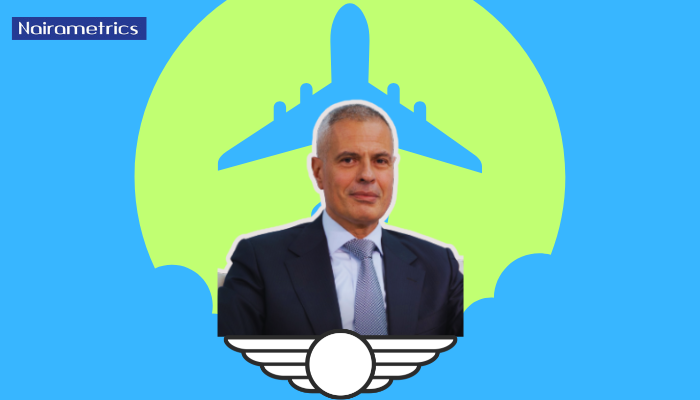
- No of seats-870,800
Captain Ahmed Adel is Chairman and Chief Executive Officer of EgyptAir Holding Company. He was appointed in June 2018.
Adel joined EgyptAir as a pilot in 1988 and built his reputation as an experienced aviator and instructor. By 2007, he had become an Instructor Pilot and Examiner on the Airbus A330 and A340 fleets, and in 2012 earned certification as an inspector from the Egyptian Civil Aviation Authority (ECAA), reflecting his expertise in flight operations and aviation safety.
Throughout his career, Adel has held several key leadership positions within the EgyptAir Group. He served as General Manager of Flight Training in 2009, where he led the modernization of pilot training programs, before becoming Deputy Vice President of Operations in 2010. In 2013, he was appointed Vice Chairman of EgyptAir Express.
Later that year, Adel was promoted to Vice Chairman of EgyptAir Holding Company, overseeing strategic committees, driving quality improvements across the group’s subsidiaries, and working closely with Egyptian airports to enhance passenger services. Beyond operational leadership, Adel served as EgyptAir’s official spokesperson until his appointment as CEO and chaired the airline’s crisis management team following the tragic EgyptAir Flight MS804 incident in 2016
EgyptAir increased its available seats by 9.5% year-on-year, growing from 795,500 seats in July 2025 to 870,800 in July 2026.
2. Elmar Conradie-CEO Safair
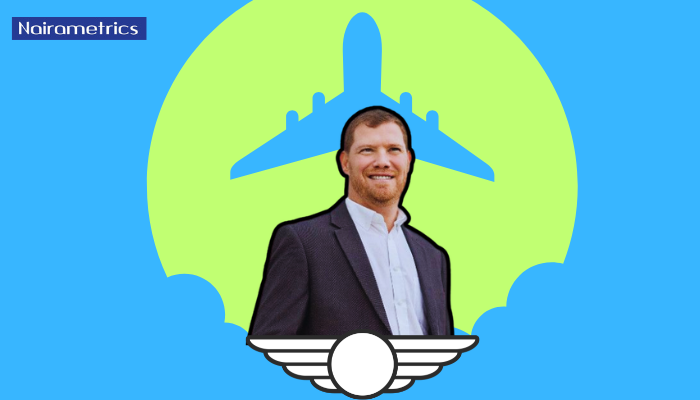
- No of passenger seat- 1,014,200
Elmar Conradie is the Chief Executive Officer of Safair and its low-cost subsidiary, FlySafair, where he has overseen one of Africa’s most successful aviation growth stories. Since becoming CEO in March 2015, Conradie has transformed FlySafair from a relatively new entrant into South Africa’s leading domestic airline.
Conradie joined Safair Operations in 2005 as Financial Director and Chief Financial Officer, bringing deep expertise in corporate finance and aviation.
Prior to Safair, Conradie built a career in investment banking and aviation finance. He worked as an analyst at Macquarie before serving as Group Chief Financial Officer at Aergo Capital, an aircraft leasing company, and as Aviation Division Group CFO at Imperial Group. A Chartered Accountant (CA(SA)) and Certified Information Systems Auditor (CISA), Conradie combines financial expertise with operational leadership.
South Africa’s Safair retained its position as the continent’s second-largest airline by seat capacity despite recording a modest 2.1% annual increase.
1. Mesfin Tasew-Group CEO, Ethiopian Airlines
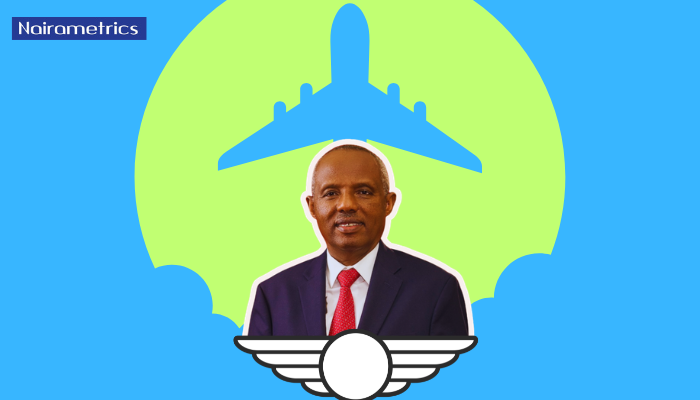
- No of passenger seats- 2,136,300
Mesfin Tasew is the Group Chief Executive Officer of Ethiopian Airlines, Africa’s largest and most profitable airline. Appointed in March 2022, he brings nearly four decades of experience within the airline, having risen through the ranks from an entry-level engineer to the top leadership position.
Tasew joined Ethiopian Airlines in 1984 as an associate engineer after earning a bachelor’s degree in Electrical Engineering from Addis Ababa University. He later earned a master’s degree in Electrical Engineering from Addis Ababa University and an MBA from the Open University in the United Kingdom.
Throughout his career, Tasew has held several strategic positions that have shaped Ethiopian Airlines’ growth. He served as Director of Operations and Technical Systems Support in 1997 before becoming Chief Information Officer in 1999, where he helped strengthen the airline’s technology infrastructure. In 2006, he was appointed Vice President of Maintenance and Engineering, overseeing one of Africa’s largest aircraft maintenance operations.
From 2010 to 2021, Tasew served as Chief Operating Officer, playing a central role in the airline’s rapid expansion into a global aviation powerhouse. He later became Chief Executive Officer of ASKY Airlines, the Ethiopian-backed West African carrier, before returning to Addis Ababa in 2022 to lead Ethiopian Airlines as Group CEO.
Ethiopian Airlines remained Africa’s largest airline by seat capacity, surpassing 2.1 million seats in July 2026 after recording a 12.1% year-on-year increase.