Follow Us on Google Discover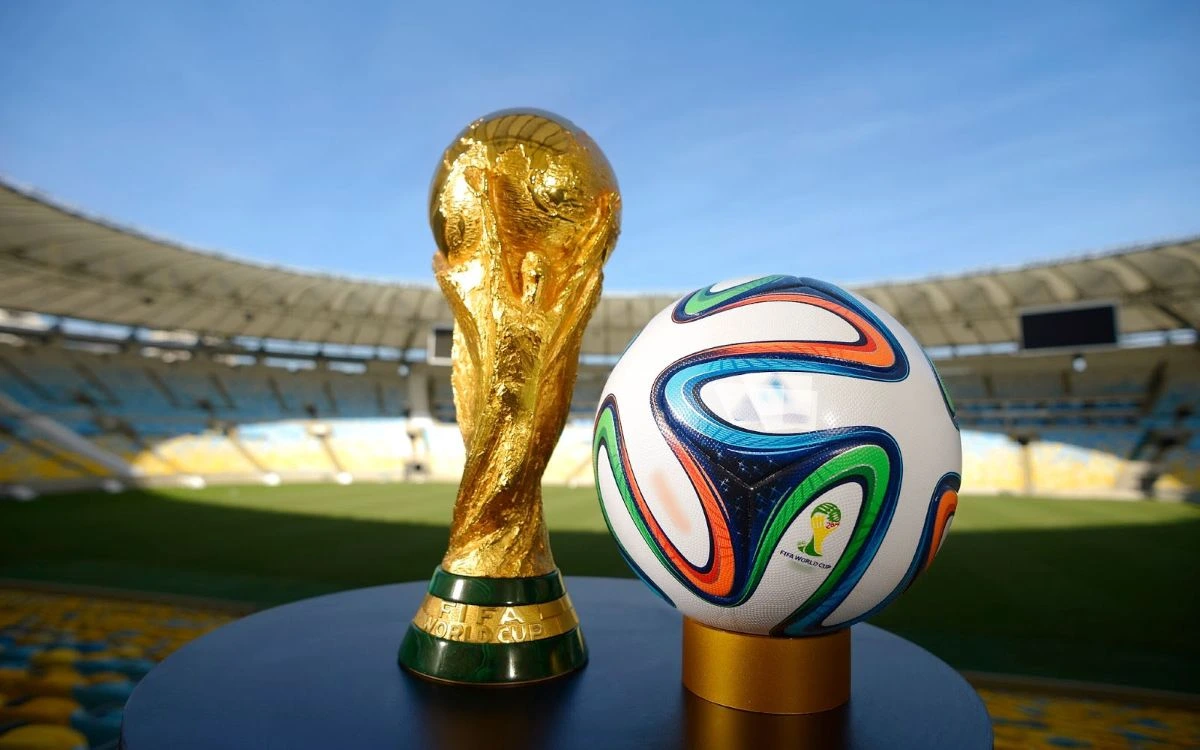
The 2026 FIFA World Cup will conclude this weekend with more than football glory at stake, as Spain and Argentina prepare to battle for a record $50 million winner’s prize in Sunday’s final.
It has been a dramatic and enthralling five weeks, and the tournament’s 104th and final match arrives after 102 games have already been played, with France and England first contesting Saturday’s third-place playoff, the 103rd fixture of the competition.
Those two matches will bring the curtain down on the biggest FIFA World Cup in history. For the first time, 48 nations qualified for the tournament, which expanded from 64 matches to 104 across three host nations: the United States, Canada and Mexico.
The expansion has also brought with it significantly greater financial rewards.
Also Read
FIFA set aside a record prize fund of $727 million for the tournament, a 50% increase from the prize pool for the 2022 World Cup in Qatar. Every nation that qualified is guaranteed earnings, but the biggest reward is reserved for the country that lifts the trophy on Sunday.
For Spain and Argentina, victory in the final means more than becoming world champions. It also comes with a $50 million payout, the highest winner’s prize in the history of the FIFA World Cup.
Record prize money on offer
The winner of the final will receive $50 million, while the runners-up will earn $33 million.
Before then, France and England will contest the third-place playoff, where the winners will receive $29 million and the losing side $27 million.
The figures complete FIFA’s largest-ever World Cup prize structure, reflecting the commercial growth of the tournament following its expansion to 48 teams.
According to FIFA, the governing body expects the tournament to generate more than $10 billion in revenue, with the increased commercial returns allowing it to significantly raise prize money across every stage of the competition.
The winner’s cheque alone is $8 million higher than what Argentina received after winning the 2022 World Cup in Qatar.
A fitting finale
Beyond the financial rewards, Sunday’s final also brings together two of the tournament’s standout performers.
It is the first time the teams ranked first (Argentina) and second (Spain) in the FIFA World Rankings will meet at any stage of a FIFA World Cup, let alone in the final. It is a fitting occasion for what promises to be one of the most significant matches in the FIFA World Cup history.
The final will also mark the first meeting between the reigning Copa América champions and the reigning European champions in a FIFA World Cup final.
Spain arrives in the final unbeaten, having eliminated Portugal, Belgium and France in the knockout rounds. Luis de la Fuente’s side have combined control in possession with attacking efficiency throughout the competition, conceding just once since the group stage while scoring freely against some of Europe’s strongest sides.
Argentina’s route has been equally impressive. They have a 100% record. The defending champions have overcome Cape Verde, Egypt, Switzerland and England to reach a second consecutive World Cup final, with Lionel Messi once again leading the charge.
Argentina arrives as the defending world champions and, after lifting the trophy in Qatar in 2022, have the opportunity to become only the third nation to retain the World Cup, following Italy (1934 and 1938) and Brazil (1958 and 1962).
Spain, meanwhile, come into the final as the reigning European champions and are chasing a second World Cup title, having first won the competition in South Africa in 2010.
With both teams already guaranteed at least $33 million for reaching the final, the final match of the tournament will determine not only who lifts football’s biggest prize but also who leaves North America with a record $50 million winner’s cheque.
Every team leaves with millions
Every country that qualified for the 2026 FIFA World Cup is guaranteed a significant payout.
Nations eliminated during the group stage will receive a total of $10.5 million, made up of $9 million in prize money and an additional $1.5 million from FIFA to cover preparation costs.
- Teams knocked out in the Round of 32 earn $11 million.
- Countries eliminated in the Round of 16 receive $15 million.
- The four quarter-finalists who failed to progress to the semi-finals, Morocco, Belgium, Norway and Switzerland, each will receive $19 million.
For the semi-finalists, earnings increase further.
The team that finishes fourth receives $27 million, while the third-place nation earns $29 million.
The runners-up in Sunday’s final will leave with $33 million.
Only one team will collect the tournament’s maximum payout of $50 million.
Bigger tournament, bigger business
The tournament expanded from 32 to 48 participating countries, creating 40 additional matches and opening the competition to more markets than ever before.
More teams meant more broadcasters, more sponsors, more ticket sales and more commercial inventory across 16 host cities in North America.
That commercial expansion is expected to push FIFA’s revenues beyond $10 billion from the tournament alone, making this the governing body’s most lucrative World Cup.
The increased prize fund represents only a fraction of those revenues but marks another step in FIFA’s efforts to distribute more income to participating member associations.
What you should know
While the prize figures attract global attention, the money is not paid directly to players.
Instead, FIFA pays the prize money to each country’s football federation or association.
Individual federations then determine how the funds are shared between players, coaching staff and football development projects.
Many associations use part of their World Cup earnings to fund grassroots football, youth academies, infrastructure, women’s football and other long-term programmes, while players often receive performance bonuses based on agreements reached before the tournament.
For countries with smaller football economies, a successful World Cup campaign can significantly improve funding for football development over the coming years.