Follow Us on Google Discover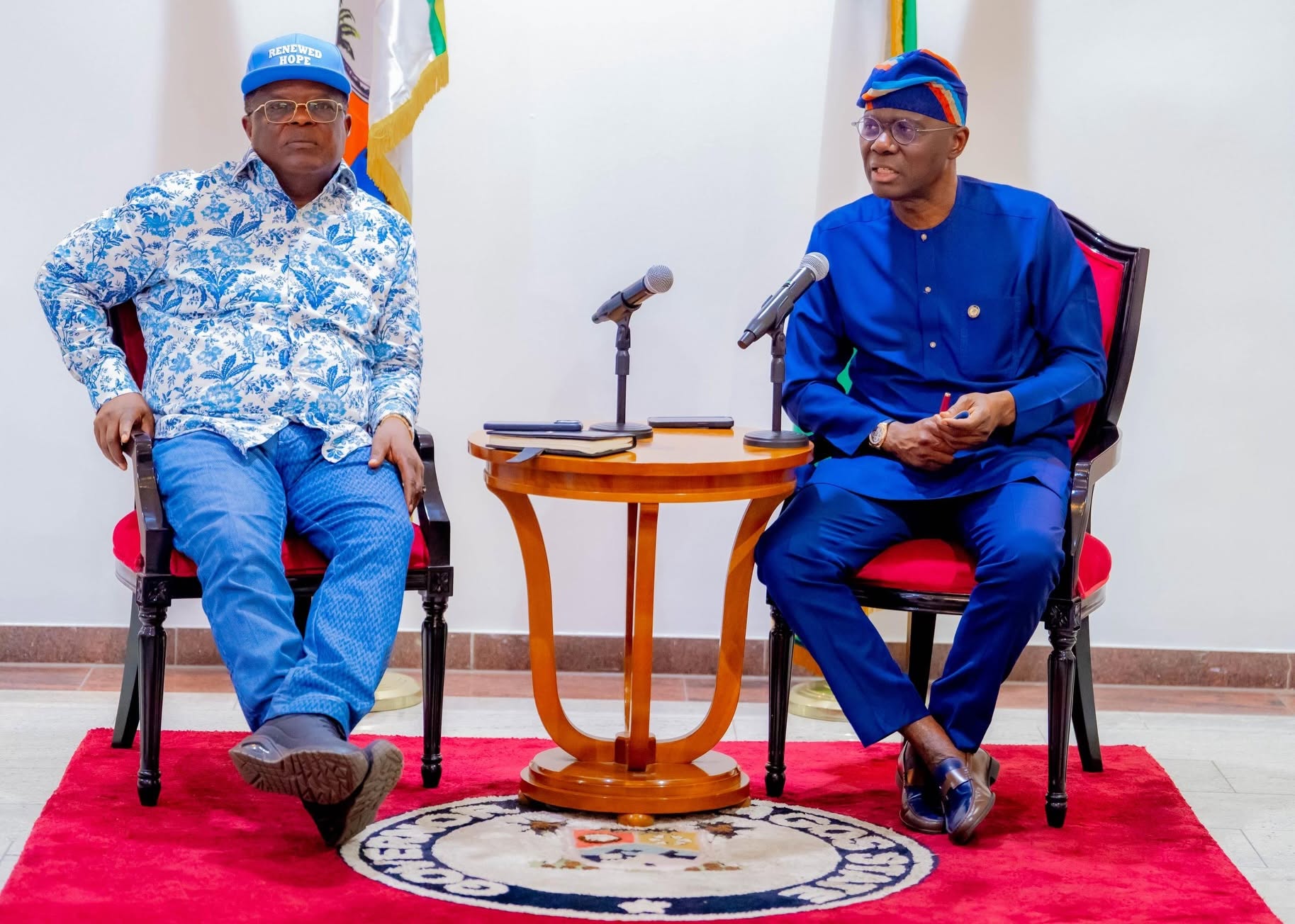
Lagos State Governor Babajide Sanwo-Olu and the Minister of Works, David Umahi, have dismissed claims that the ongoing Lagos-Calabar Coastal Highway is responsible for flooding in parts of Lagos, describing the narrative as misinformation circulating on social media.
The clarification came during a courtesy visit by the Minister of Works and members of the National Assembly to the Lagos State Governor.
Their comments followed reports suggesting that the coastal highway contributed to the recent flooding experienced in parts of the Lekki axis.
What they are saying
Governor Sanwo-Olu commended the Federal Government for embarking on what he described as a transformative infrastructure project that would improve Nigeria’s economy and enhance the quality of life of citizens.
He said the Lagos-Calabar Coastal Highway, which many initially dismissed as a political promise, has become a reality.
- “Two years ago, it felt like it was just a political conversation, but today people are already using the road. We thank Mr. President for this landmark project. Lagos has been the first major beneficiary, and we are indeed grateful because it will enhance the quality of life of our people and improve the economy of the country.”
- “Lagos is a coastal city. When people say Lagos has flooded, without mincing words, we will always experience some level of flooding. We only pray that it will not be severe. These are natural occurrences associated with coastal environments across the world.”
- “We cannot allow social media to define who we are. That does not mean we ignore our challenges. Whenever there are problems, we must confront them and solve them, but we must also understand the realities of our environment.”
- “We were concerned about the negative narrative on social media claiming that the Coastal Highway caused flooding in Lagos. The President directed us to come with members of the National Assembly to assess the situation ourselves.”
Sanwo-Olu maintained that Lagos’ coastal geography makes seasonal flooding inevitable, while Umahi insisted that the highway project is not responsible for the recent flooding witnessed in parts of the state.
More insight
The governor blamed indiscriminate refuse disposal for worsening flooding in Lagos, while the Minister of Works explained that the highway was designed with flood resilience in mind. Both officials also outlined measures being taken to strengthen drainage infrastructure around the project corridor.
- Sanwo-Olu said blocked drainage channels caused by indiscriminate waste disposal remain one of the major contributors to urban flooding across Lagos and disclosed that additional environmental regulations would soon be introduced.
He added that the state had begun a major clean-up of the Lagos-Badagry Expressway and reaffirmed the government’s zero-tolerance stance against activities that damage roads and drainage infrastructure.
- Umahi explained that the Lagos-Calabar Coastal Highway was deliberately elevated to withstand ocean surges and protect the corridor from flooding over the next 20 to 30 years, noting that the affected areas were naturally swampy before construction began.
The minister disclosed that the Federal Government and the Lagos State Government would collaborate to construct additional drainage channels and service roads along the highway, although some structures would have to be removed to accommodate the infrastructure.
Umahi also commended the Lagos State Government’s drainage master plan, noting that more than 80 per cent of the drainage evacuation channels leading into the lagoons have already been completed.
What you should know
The Lagos State Government has consistently attributed worsening flash floods to environmental abuses, particularly indiscriminate waste disposal and blocked drainage channels. It has also intensified enforcement efforts to protect drainage infrastructure across the state.
- The Lagos State Government recently blamed indiscriminate refuse disposal for worsening flash floods experienced in parts of the state during periods of heavy rainfall.
- Commissioner for the Environment and Water Resources, Tokunbo Wahab, said the government had invested significant public resources in restoring drainage corridors and would continue monitoring them to prevent a recurrence of illegal activities.
The state has repeatedly warned residents against dumping refuse into drainage channels, maintaining that blocked drains significantly increase the risk of flooding during heavy rainfall.
Lagos authorities have also intensified environmental enforcement and public awareness campaigns as part of broader efforts to improve flood management across the state.
The latest clarification by Governor Sanwo-Olu and Minister Umahi comes amid growing public scrutiny of the Lagos-Calabar Coastal Highway project, with both officials insisting that improved drainage management—not the highway itself—remains the key to addressing flooding challenges in Lagos.