Follow Us on Google Discover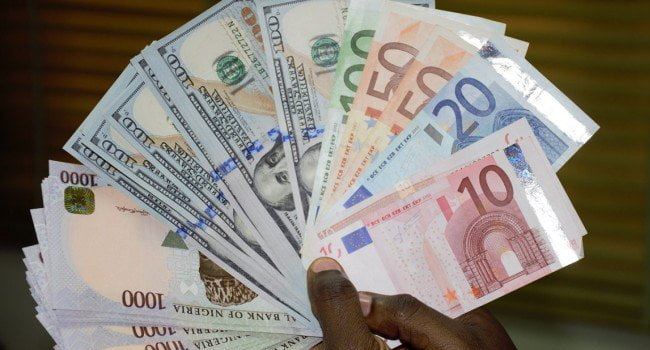
Nigeria’s foreign exchange market witnessed a significant improvement in liquidity during the first half of 2026, with daily turnover regularly exceeding $500 million, several trading sessions crossing the $900 million mark, and a record $1.82 billion changing hands in a single day.
The surge in trading activity points to a much deeper and more liquid official foreign exchange market, strengthening price discovery and allowing the naira to absorb demand pressures more efficiently despite intermittent bouts of volatility.
Analysis of data from the Central Bank of Nigeria’s (CBN) website shows the naira appreciated from N1,431/$ at the start of the year to N1,376/$ on June 30, representing a gain of N55, or 3.8%, over the six-month period.
While the currency’s appreciation attracted attention, market analysts say the more important development was the sharp rise in official FX turnover, which reflects growing confidence in Nigeria’s foreign exchange market following reforms introduced by the Central Bank of Nigeria (CBN) nearly three years ago.
What the data is saying
Available NFEM data show that more than $31 billion worth of foreign exchange was traded in the official market between March and June 2026, underscoring a substantial improvement in market depth.
Unlike previous periods when liquidity depended largely on periodic interventions, turnover remained consistently strong throughout the second quarter, with daily trading frequently ranging between $500 million and $1 billion.
Some of the busiest trading sessions during the period included:
- May 12: $1.82 billion (highest daily turnover on record under the NFEM framework)
- March 10: $1.14 billion
- March 13: $1.13 billion
- June 30: $1.07 billion
- June 15: $985.6 million
- March 23: $984.1 million
- April 8: $966.4 million
- June 25: $923.6 million
- June 29: $910.8 million
Market analysts note that the sustained increase in turnover is more significant than isolated spikes because it indicates broader participation by buyers and sellers, reducing pricing distortions and improving overall market efficiency.
Liquidity strengthened through H1
Trading activity gathered momentum as the year progressed.
Although complete turnover data were unavailable for January and February, activity accelerated sharply from March as confidence returned to the official market.
- March recorded three trading sessions with turnover above $980 million, while April maintained strong liquidity with transactions reaching $966.4 million on April 8 and $802.4 million on April 29.
- May emerged as the busiest month of the first half after recording the record $1.82 billion traded on May 12.
- June sustained the momentum, producing four trading sessions above $900 million, suggesting that improved liquidity had become increasingly structural rather than event-driven.
The interbank foreign exchange market also deepened during the period, with daily turnover generally ranging between $70 million and $250 million. One of the strongest sessions occurred on April 29, when interbank transactions approached $250 million, while several June sessions exceeded $170 million.
Trading activity also broadened considerably.
Several sessions recorded more than 350 individual transactions, while April 8 posted 515 deals, reflecting wider market participation and reducing the influence of large individual trades on exchange-rate movements.
Greater liquidity coincided with a more stable naira
The improvement in liquidity coincided with a moderation in exchange-rate volatility.
After strengthening from N1,431/$ in early January to around N1,340/$ in February before weakening briefly in March, the naira traded within a relatively narrower band of roughly N1,356/$ to N1,389/$ during most of the second quarter.
Analysts say deeper liquidity enabled the market to absorb temporary demand pressures without triggering the sharp price swings that characterised earlier periods.
What experts are saying
According to Mallam Muftau Yusuf, an analyst at Kwik Securities Ltd, stronger turnover reflects a broader supply base rather than reliance on CBN interventions.
- “The improvement in FX liquidity reflects a broader supply base rather than heavy reliance on CBN interventions. Higher yields on Nigerian fixed-income securities have continued to attract foreign portfolio investors, while stronger inflows from oil and gas exporters, non-oil exporters, international oil companies repatriating export proceeds, diaspora remittances and increased intermediation by commercial banks have all contributed to improving liquidity.”
He added that sustaining these inflows would be critical to maintaining exchange-rate stability in the second half of the year.
However, improved liquidity has come despite weak foreign direct investment.
According to National Bureau of Statistics data, FDI declined to $135.08 million in the first quarter of 2026 from $357.80 million in the previous quarter.
Yusuf said the first-half performance suggests the CBN’s foreign exchange reforms are beginning to improve market efficiency.
- “The first-half performance of the naira suggests the foreign exchange market is becoming more liquid and increasingly driven by market forces. The improvement in turnover indicates that confidence is gradually returning to the official market.”
Forex analyst Maruf Babafemi noted that turnover alone cannot guarantee a stronger naira, adding that oil production, capital inflows and external reserves will ultimately determine the currency’s direction.
Economist Dr. Femi Ojelabi described the increase in turnover as one of the clearest signs that confidence is returning to Nigeria’s official FX market.
- “Deeper liquidity enhances price discovery, reduces opportunities for speculation and makes the market more resilient.”
What you should know
Nairametrics earlier reported that the naira closed June at N1,376/$, ending the month slightly weaker than where it began, despite significant intra-month volatility.
- Nigeria’s external reserves recently climbed above $51 billion, their highest level since 2009.
- External reserves increased by more than $1 billion during the first half of June, supported by stronger foreign exchange inflows.
Analysts say stronger FX liquidity, rising turnover and broader market participation suggest Nigeria’s official foreign exchange market is becoming deeper, more transparent and increasingly resilient as reforms mature.