Follow Us on Google Discover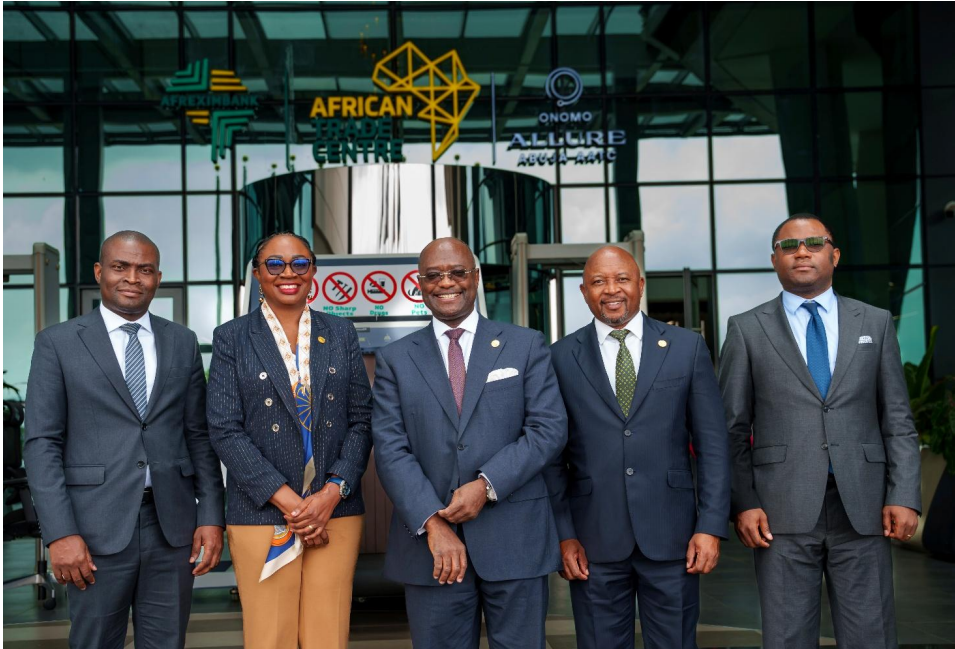
The President and Chairman of the Board of Directors of the African Export Import Bank (Afreximbank), Dr. Dr George Elombi, has defended the bank’s decision to terminate its relationship with Fitch Ratings, arguing that the agency’s assessment failed to reflect the institution’s unique mandate and evolving funding strategy.
Speaking during an interactive session with Editors in Abuja, Elombi said Afreximbank’s disagreement with Fitch stemmed from fundamental differences over how the rating agency evaluated the bank’s liquidity, funding diversification, and risk profile.
According to him, the bank’s decision was not unprecedented, recalling that it had similarly ended its relationship with Standard & Poor’s (S&P) in 2014 over disagreements about the bank’s development mandate.
What the Afreximbank MD is saying
Elombi said S&P had initially assigned Afreximbank a low rating because it viewed trade finance as having limited developmental impact and considered the bank too small to influence Africa’s economic growth.
Also Read
- “We disagreed fundamentally with what S&P thought about the relevance of Afreximbank. At the time, their view was that Afreximbank was too small, it wouldn’t have impact and, in any event, trade finance could not be the basis of development,” he said.
According to him, the bank considered that assessment inconsistent with its founding treaty, which established trade finance as its core mandate.
He noted that after years of engagement, S&P eventually revised its position as Afreximbank expanded its role in financing trade and supporting economic development across the continent.
Elombi argued that Fitch similarly failed to appreciate Afreximbank’s strategy of diversifying its funding sources beyond traditional Western capital markets.
He explained that while the bank previously relied heavily on European funding, it has increasingly sourced capital from Africa, Asia, and the Middle East to better align with changing global trade patterns.
- “The trade pattern itself had moved. We were importing more from China and Asia, so what is better than getting the money from the places where you’re buying from, using their currencies to pay for those goods?” he said.
According to him, the bank also launched a central bank deposit programme that attracted deposits from African central banks and corporate institutions, further strengthening its liquidity position.
Elombi disclosed that about 38% of the bank’s funding now comes from Africa, another 38% from Asia, around 12% from the Middle East, while dependence on Western funding sources has fallen to approximately 12%.
Despite this diversification, he said Fitch viewed the reduced reliance on European capital markets as a weakness.
- “When you were concentrated, they said your liquidity was excellent. When you diversify, they say it is weak. That’s not making sense,” he said.
More insights
The Afreximbank president also challenged Fitch’s liquidity assessment, noting that the bank deliberately maintained excess liquidity after anticipating disruptions in global markets.
According to him, Afreximbank raised additional funding ahead of potential market shocks to ensure it could continue supporting African governments and commercial banks during periods of financial stress.
- “There was no need for us to borrow again because we had anticipated a crisis coming. We decided to borrow more so that we could respond when states and commercial banks needed liquidity,” he said.
He argued that despite acknowledging the bank’s strong liquidity position, the rating agency still downgraded its liquidity assessment because it had not recently issued debt in European markets.
Elombi also criticised the methodology used by international rating agencies, saying they often publish ratings without adequately explaining how conclusions are reached.
He likened the process to a teacher awarding examination scores without showing how the marks were calculated.
- “We wish the way they wrote the rating reports was more transparent, so that people can understand both Afreximbank’s position and the rating agency’s position before reaching a conclusion,” he said.
The Afreximbank president further argued that international rating agencies continue to apply excessive risk discounts to African institutions simply because they operate on the continent.
He noted that while the bank maintains strong collateral coverage, with about 80% of its loan portfolio backed by collateral, ratings are often reduced because the assets are located in Africa.
According to him, this broad perception of Africa as a high-risk environment unfairly lowers the bank’s overall credit rating, despite the quality of its assets and capital.
He maintained that Afreximbank would continue engaging with rating agencies where necessary but stressed that assessments should better reflect the bank’s business model, diversified funding base, and contribution to financing trade and economic development across Africa.
What you should know
Despite concerns raised by Fitch, Nairametrics reported that Afreximbank raised over $800 million from international markets in 2025.
The funds were raised through Samurai and Panda bond issuances in Japan and China, respectively.
Afreximbank said the successful fundraising highlighted its resilience and strong access to global capital markets.