Follow Us on Google Discover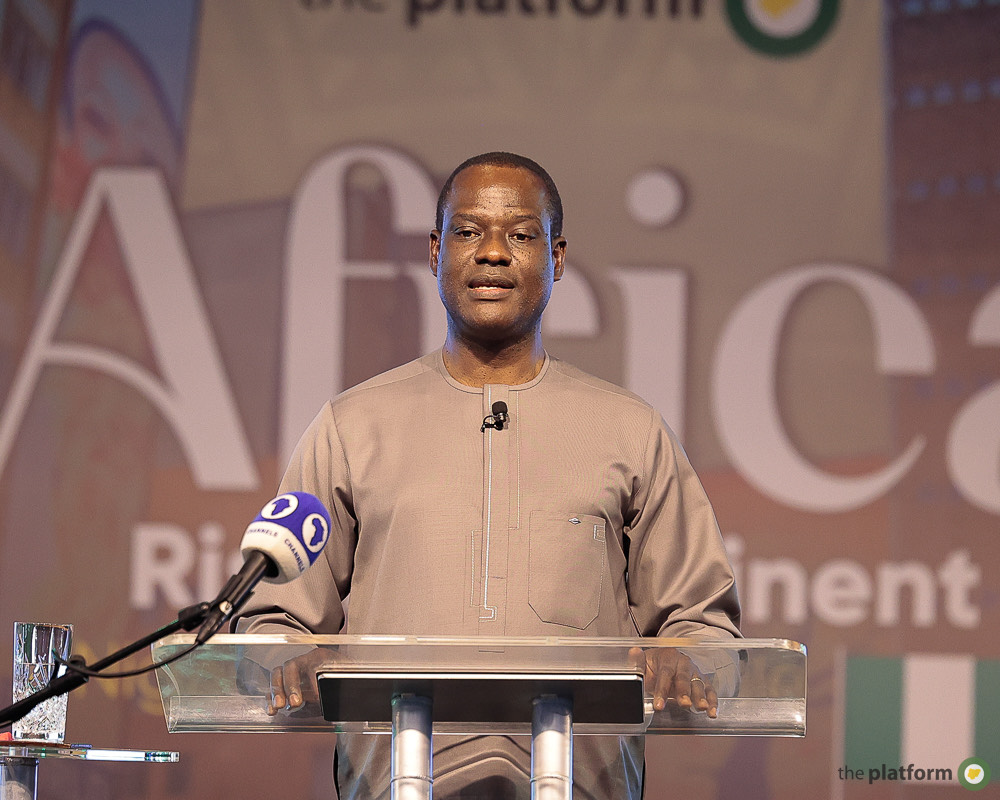
Nigeria’s Minister of Finance and Coordinating Minister of the Economy, Mr. Taiwo Oyedele, has proposed the establishment of a specialised Commercial Dispute Resolution Tribunal to accelerate the resolution of business disputes, saying faster justice delivery is essential to attracting long-term investment and deepening Nigeria’s capital market.
An emailed release by the Securities and Exchange Commission (SEC) disclosed that Oyedele made the proposal while delivering an inaugural lecture as a Fellow of the Capital Market Academics of Nigeria (CMAN) on Tuesday during the association’s Second Biennial Conference in Abuja.
The conference was themed, “The Nigerian Capital Market as a Catalyst for Equitable and Inclusive Growth.”
The minister said commercial disputes currently take an average of 15 years to pass through the High Court, Court of Appeal and Supreme Court, creating uncertainty that discourages investors and raises the cost of doing business.
Also Read
He said the proposed tribunal would complement existing investment protection mechanisms by providing a faster and more efficient platform for resolving disputes involving businesses, suppliers, financiers, and other commercial entities.
What they are saying:
Speaking at the conference, Oyedele said virtually every financial instrument is built on enforceable contracts, making efficient dispute resolution critical to capital market development. To address existing delays, he proposed a specialized tribunal staffed by judges and arbitrators with expertise in commercial, financial, and capital market matters.
- “The tribunal should operate with digital case management systems and mandatory timelines to ensure speedy resolution of disputes.”
- “The relevant question is never simply how much debt there is. It is always debt for what, at what cost, against what return and repayable on what terms,” Oyedele said.
He argued that governments and businesses should not be criticized simply for borrowing, but rather for how borrowed funds are utilized.
According to him, debt used to finance productive assets capable of generating returns above the cost of capital represents a rational financial decision.
The minister also challenged Nigerian entrepreneurs to rethink their reluctance to dilute ownership by bringing in outside investors.
He said owning 100% of a small business often creates less value than owning a significant stake in a much larger and better-capitalized company.
Oyedele further outlined what he described as the “seven laws of capital attraction,” stressing that investors are attracted by trust, policy consistency, strong institutions and the rule of law rather than generous tax incentives.
- “Capital hates uncertainty more than taxation,” he said, attributing investor hesitation to policy reversals, regulatory inconsistencies, foreign exchange uncertainty and weak contract enforcement.
He maintained that long-term investment requires credible institutions, efficient justice delivery, policy consistency, and stronger communication of economic reforms.
Meanwhile, Director-General of the Securities and Exchange Commission (SEC), Dr. Emomotimi Agama, called for stronger collaboration between regulators and academics, describing research-driven policymaking as essential for strengthening Nigeria’s capital market.
- “I have long believed that good regulation begins with good thinking. The policies we make at the Securities and Exchange Commission are only ever as strong as the evidence and the ideas that inform them,” Agama said.
He added that the Commission remains open to research, constructive debate and fresh ideas capable of improving market regulation and investor confidence.
More insights:
The proposed Commercial Dispute Resolution Tribunal represents one of the most far-reaching institutional reform ideas aimed at improving Nigeria’s investment climate.
- If implemented, it could significantly shorten the time required to resolve commercial disputes while reducing legal uncertainty for investors.
- The proposal comes as Nigeria continues implementing major capital market reforms, including the Investments and Securities Act 2025 and the 10-year Capital Market Master Plan.
According to Oyedele, improving market accessibility requires more than attractive returns.
He said investors increasingly prioritise policy certainty, efficient institutions, predictable regulations and effective contract enforcement when making long-term investment decisions.
The minister also urged government officials, professionals and the media to communicate economic reforms more effectively, arguing that Nigeria often suffers a “perception premium” because positive policy changes are poorly communicated to global investors.
SEC’s emphasis on evidence-based regulation also aligns with ongoing reforms designed to improve market efficiency, strengthen investor protection and align Nigeria’s capital market with international best practices.
What you should know:
The Capital Market Academics of Nigeria (CMAN) led by its president, Prof. Uche Uwaleke, has been at the forefront of capital market development advocacy, consistently urging for stronger collaboration between academia and the financial services industry.
- Taking the advocacy a notch further during the event, Prof. Uwaleke urged the Federal Ministry of Education and the National Universities Commission (NUC) to recognise industry experience alongside academic publications in the appointment and promotion of lecturers in professionally oriented disciplines.
- Uwaleke also proposed structured sabbatical programmes for academics within financial sector regulators and recommended the establishment of a Financial Markets Research Partnership involving government, regulators, universities and industry players.
He said stronger collaboration between academia, regulators and practitioners would improve policy formulation, strengthen financial markets and support Nigeria’s long-term economic development.
The conference brought together policymakers, regulators, academics and market operators to examine how Nigeria’s capital market can play a stronger role in promoting equitable and inclusive economic growth through research-driven reforms and stronger institutions.