Follow Us on Google Discover
A total of 20 Nigerian states will receive a combined $27 million in performance-based grants under the World Bank-supported Human Capital Opportunities for Prosperity and Equity (HOPE) Governance Programme after meeting key reform targets in education, healthcare and public financial management.
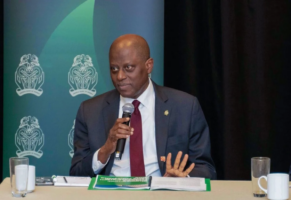
The disbursement was announced on Tuesday by the National Coordinator of the HOPE Governance Programme, Dr. Assad Hassan, during a retreat for Commissioners, Permanent Secretaries and Directors of Budget and Planning in Abuja.
The HOPE Governance Programme is a $500 million World Bank-backed initiative domiciled in the Federal Ministry of Budget and Economic Planning.
It is designed to improve financing for basic education and primary healthcare while strengthening transparency, accountability and workforce management across the two sectors.
Also Read
What they are saying
Hassan explained that the incentives were awarded based on states’ performance against the programme’s Year Zero Disbursement-Linked Results (DLRs), a set of reform milestones that participating states must achieve before becoming eligible for funding.
The benchmarks include adopting comprehensive planning guidelines for basic education and primary healthcare, implementing harmonised local government budget guidelines and publishing citizens’ budgets to improve transparency in public spending.
Following an assessment by the Interim Independent Verification Agent (IVA), the programme approved funding for states that successfully met the required targets.
- Bayelsa, Borno, Kano, Kebbi and Yobe each qualified for $1.5 million after meeting the requirements under DLR 2.1, which focused on adopting comprehensive guidelines for preparing and submitting consolidated basic education work plans.
- The same five states also earned an additional $1.5 million each for achieving DLR 2.2, relating to the adoption of comprehensive guidelines for consolidated primary healthcare work plans.
- Under DLR 2.3, which required local governments to adopt harmonised budget guidelines and a standard chart of accounts, Adamawa, Bayelsa, Borno, Delta, Gombe, Kano, Plateau, Taraba and Yobe will each receive $500,000.
- Meanwhile, Abia, Bayelsa, Borno, Edo, Ekiti, Enugu, Imo, Jigawa, Kano, Kebbi, Kogi, Nasarawa, Ondo, Plateau and Yobe qualified for $500,000 each under DLR 4.1 after publishing their 2025 Citizens’ Budgets for basic education and primary healthcare.
According to Hassan, other participating states did not qualify because they failed to meet the stipulated requirements, missed submission deadlines or did not publish the required documents on their official websites.
Backstory
The Federal Government and the World Bank formally commenced implementation of the $500 million HOPE Governance Programme in December 2025 to strengthen financial management and human resource systems across Nigeria’s basic education and primary healthcare sectors.
- Of the total financing, $480 million has been earmarked for performance-based grants to states that achieve agreed reform targets, while the remaining $20 million is dedicated to technical assistance, institutional strengthening and implementation support.
- The programme is being implemented through a broad partnership involving state governments, the Universal Basic Education Commission (UBEC), the Federal Ministry of Health and Social Welfare, the Basic Health Care Provision Fund oversight structures and the Federal Ministry of Budget and Economic Planning.
The World Bank approved the programme in September 2024 following negotiations concluded a month earlier. Nigeria’s Federal Executive Council subsequently approved the financing agreement in February 2025 before it was countersigned in April and declared effective in September 2025.
What you should know
The programme comes at a time when Nigeria continues to face significant challenges in the quality of its education and healthcare systems.
- According to the 2025 State Performance Index (SPI), fewer than 30% of Nigerians are satisfied with public healthcare services, making healthcare one of the weakest-performing areas of governance nationwide.
- Concerns also persist within the education sector. The United Nations Children’s Fund (UNICEF) in late 2024 reported that about 70% of schools and 88% of health facilities across Nigeria lack access to basic sanitation services, highlighting persistent infrastructure and service delivery gaps.
The HOPE Governance Programme is expected to help address some of these longstanding challenges by encouraging states to improve planning, budgeting, transparency and the delivery of basic education and primary healthcare services through a performance-based funding model.