Follow Us on Google Discover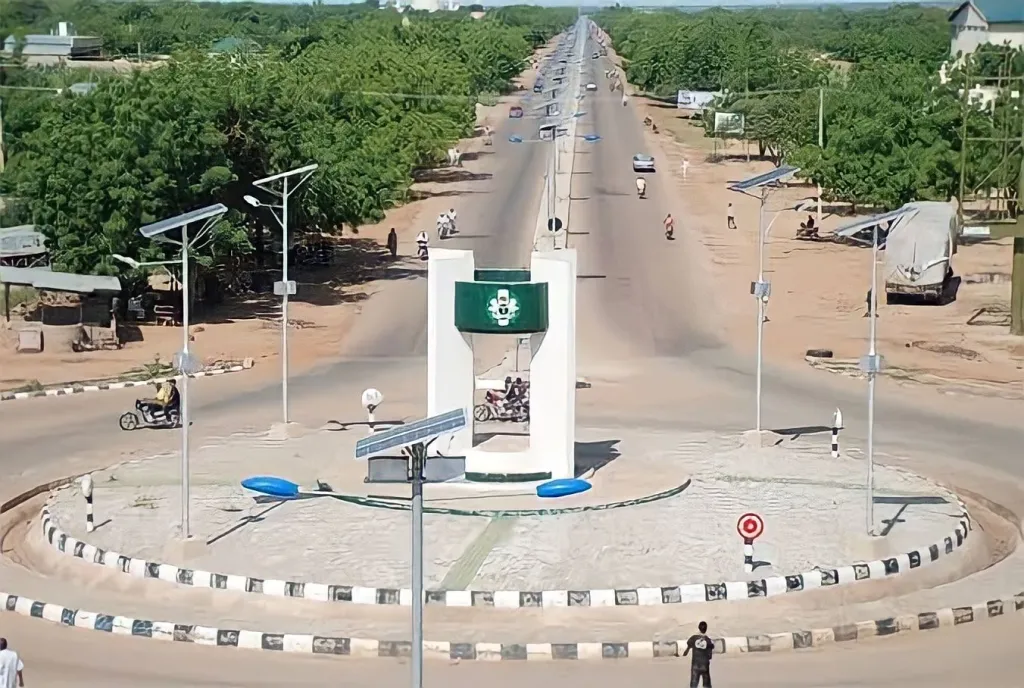
Nigeria’s headline inflation rate rose to 15.93% in May 2026, up slightly from 15.69% in April 2026, according to the latest Consumer Price Index (CPI) report released by the National Bureau of Statistics (NBS).
The report showed that the CPI increased to 140.7 in May 2026, compared to 138.3 in April, representing a 2.4-point rise.
This indicates continued upward pressure on consumer prices across the economy, despite a marginal slowdown in the month-on-month inflation rate.
Overall, Nigeria’s cost-of-living environment remained elevated in May 2026, with widespread inflationary pressures recorded across several states. Both northern and southern regions featured prominently among the most expensive locations in the country, reflecting broad-based price increases in goods and services.
Also Read
Below are the top 10 states with the highest year-on-year inflation in May 2026, highlighting where cost-of-living pressures were most intense across the federation:
10. Zamfara — 20.2%
In Zamfara, the inflation rate stood at 20.2% in May 2026, down from 22.0% in April 2026, indicating a modest easing in price pressures across the state.
Food inflation also declined, falling to 19.4% in May from 22.0% in April, suggesting a slowdown in the pace of increases in the prices of food items.
While there is no recent publicly available evidence of specific policies by the administration of Governor Dauda Lawal aimed directly at curbing inflation, the state government has introduced a number of interventions designed to cushion the impact of rising living costs on residents.
These measures have focused on alleviating economic hardship and supporting vulnerable households amid broader national inflationary pressures.
9. Enugu — 20.4%
Enugu ranked as the 9th most expensive state in Nigeria in May 2026, recording an annual inflation rate of 20.4%, up from 17.0% in April 2026.
Despite the increase in headline inflation, food inflation in the state eased to 27.8% in May from 32.7% in April, indicating a slowdown in the pace of food price increases.
In response to rising living costs, the administration of Governor Peter Mbah has pursued a series of economic initiatives aimed at boosting productivity and easing inflationary pressures. Central to these efforts is the implementation of a multi-year N1.62 trillion budget, with approximately 80 percent allocated to capital expenditure, reflecting the government’s focus on infrastructure development and long-term economic growth.
The state government has also established a N100 billion revolving fund to support Micro, Small and Medium Enterprises (MSMEs) and agro-allied businesses. The initiative is designed to expand access to affordable financing, stimulate local production, strengthen supply chains, and reduce production costs for businesses operating within the state.
In addition, the administration has continued to advance state-owned aviation and investment initiatives as part of its broader strategy to improve connectivity, attract investment, create jobs, and stimulate economic activity. These measures are intended to strengthen the productive capacity of the state economy and mitigate the impact of inflation on businesses and households.
8. Benue — 20.6%
Benue emerged as the 8th most expensive state in Nigeria in May 2026, recording an annual inflation rate of 20.6%, a significant increase from 14.9% in April 2026.
Food inflation in the state also rose, climbing to 22.7% in May from 20.1% in April, highlighting continued pressure on household food expenses.
In response to rising prices, the administration of Governor Hyacinth Alia has introduced measures aimed at reducing production costs and supporting economic activity.
In June 2026, the state government launched its farm input sales and distribution programme, under which fertilizer is being sold to farmers at a subsidised rate of N28,000 per bag, with the government absorbing an additional N28,000 per bag. The initiative is being implemented across all 23 local government areas and is intended to lower agricultural production costs, boost food output, and improve food security.
The state has also pursued reforms to improve the business environment. In March 2026, the Benue State House of Assembly passed the Consolidation and Harmonisation Bill, a measure designed to eliminate multiple taxation, streamline revenue collection, and enhance the ease of doing business within the state.
7. Akwa Ibom — 21.5%
Akwa Ibom ranked among the states with the highest inflation rates in Nigeria in May 2026, recording an annual inflation rate of 21.5%, up from 17.7% in April 2026.
Food inflation in the state also increased slightly, rising to 14.0% in May from 13.2% in April, reflecting continued pressure on food prices despite ongoing government interventions.
To address economic challenges and improve living conditions, the administration of Governor Umo Eno has adopted an investment-driven approach focused on infrastructure development and private sector growth.
The state government earmarked N31 billion to support Small and Medium Enterprises (SMEs) across its local government areas, with the objective of stimulating job creation, expanding local production, and improving access to goods and services.
Akwa Ibom’s N1.585 trillion 2026 budget is also heavily focused on capital development, with more than 75 percent allocated to capital expenditure. The investment programme, valued at over N1 trillion, is being channelled into strategic infrastructure projects, including the construction and rehabilitation of hundreds of kilometres of roads aimed at linking rural communities and farmlands to urban markets. The government believes improved connectivity will reduce transportation costs, strengthen agricultural value chains, and support economic activity across the state.
The scale of implementation is already evident in public spending figures. According to the state’s First Quarter Budget Performance Report for 2026, the Akwa Ibom State Government expended N201.73 billion during the first three months of the year, underscoring its commitment to executing development projects and stimulating economic growth.
While inflation remains elevated, the government’s focus on infrastructure, SME financing, and market access is expected to enhance productivity and help moderate cost pressures over the medium term.
6. Delta — 21.5%
Delta recorded an annual inflation rate of 21.5% in May 2026, up from 20.7% in April 2026, placing it among Nigeria’s most expensive states for the period under review.
Food inflation in the state showed a marginal change, easing slightly to 23.8% in May from 23.9% in April, indicating a near-stable but still elevated pressure on household food costs.
In response to rising prices and broader economic challenges, the administration of Governor Sheriff Oborevwori has focused on large-scale fiscal interventions aimed at strengthening infrastructure and improving productivity.
Central to this strategy is the implementation of a N1.729 trillion 2026 budget, with approximately 70% (about N1.21 trillion) allocated to capital expenditure. The significant capital allocation is intended to stimulate job creation, expand infrastructure, and enhance local production capacity across the state.
5. Bauchi — 22.0%
Bauchi recorded an annual inflation rate of 22.0% in May 2026, down slightly from 22.5% in April 2026, indicating a mild easing in headline price pressures.
However, food inflation in the state moved in the opposite direction, rising to 25.4% in May from 23.7% in April, reflecting continued increases in the cost of essential food items despite the moderation in overall inflation.
There is limited publicly available information indicating recent targeted anti-inflation interventions by the Bauchi State Government specifically aimed at price stabilization. Nonetheless, the administration of Governor Bala Mohammed has implemented broader fiscal measures through its 2026 budget framework.
The governor signed an N877 billion 2026 budget, with approximately 65% allocated to capital expenditure, a strategy designed to stimulate economic growth, create jobs, and improve food security across the state. The capital-heavy spending plan is expected to support infrastructure development and agricultural productivity, which could indirectly help ease inflationary pressures over time.
4. Abia — 22.2%
Abia recorded an annual inflation rate of 22.2% in May 2026, a sharp increase from 15.6% in April 2026, reflecting significant upward pressure on prices within the period.
Food inflation in the state, however, eased slightly to 17.7% in May from 18.4% in April, indicating a marginal slowdown in the pace of food price increases despite the broader rise in overall inflation.
Since April 2026, the administration of Governor Alex Otti has intensified efforts to mitigate inflation and reduce the cost of living through targeted economic reforms and infrastructure-driven interventions.
A key initiative includes the deployment of customised electric buses aimed at reducing intra-state transportation costs, thereby easing pressure on commuters and improving urban mobility.
The state is also implementing its N1.016 trillion 2026 “Budget of Acceleration and New Possibilities”, with approximately 80% allocated to infrastructure, agriculture, and Micro, Small and Medium Enterprises (MSMEs). The budget is designed to stimulate job creation, boost local production, and strengthen supply chains as part of broader efforts to address inflationary pressures and improve economic resilience.
3. Sokoto — 22.6%
Sokoto recorded an annual inflation rate of 22.6% in May 2026, down from 25.7% in April 2026, indicating a notable easing in headline price pressures during the period under review.
Food inflation in the state also declined sharply, falling to 12.2% in May from 18.7% in April, reflecting a significant slowdown in the rate of increase in food prices.
In response to rising cost-of-living pressures, the administration of Governor Ahmed Aliyu allocated approximately 72% of its N758.7 billion 2026 budget to capital expenditure. The budget prioritises infrastructure development, agricultural expansion, and job creation as key drivers of economic stability and productivity.
Despite these fiscal interventions, data from the NBS shows that Sokoto continues to experience relatively high headline inflation, underscoring the persistence of cost pressures even amid policy efforts aimed at easing economic hardship.
2. Anambra — 23.3%
Anambra recorded an annual inflation rate of 23.3% in May 2026, up from 19.7% in April 2026, indicating a notable increase in overall price pressures within the state.
In contrast, food inflation in the state eased to 16.9% in May from 20.8% in April, suggesting a slowdown in the rate of food price increases despite the broader rise in headline inflation.
To address economic pressures and improve productivity, the administration of Governor Chukwuma Soludo has prioritised large-scale capital investments and market reforms.
The state’s N766 billion 2026 budget allocates approximately 79% (N595 billion) to capital expenditure, focusing on road infrastructure, industrial parks, and other strategic projects aimed at reducing the cost of doing business and stimulating economic growth.
In addition, the state government passed the Market Bill 2026, which designates 40 major markets as economic zones requiring daily operations (excluding Sundays). The policy is intended to stabilise the supply of goods, improve market efficiency, and reduce price volatility across the state.
1. Yobe — 24.9%
Yobe recorded the highest inflation rate in Nigeria in May 2026, standing at 24.9%, up from 20.4% in April 2026, indicating a sharp increase in overall price pressures during the period.
Food inflation in the state also rose significantly to 19.4% in May from 13.6% in April, reflecting mounting pressure on household food costs.
In response to these economic challenges, the administration of Governor Mai Mala Buni has adopted a combination of social support interventions and fiscal measures aimed at cushioning the impact of inflation on residents.
Key interventions include targeted livelihood support programmes, early payment of salaries and pensions, and the implementation of the state’s 2026 “Budget of Economic Growth and Infrastructural Transformation.” These measures are designed to provide immediate relief while also strengthening long-term economic stability.