Follow Us on Google Discover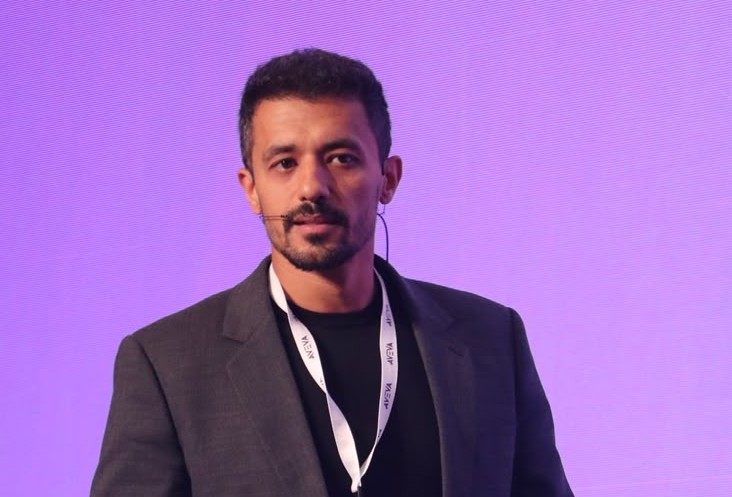
As industrial software giant, AVEVA, deepens its expansion across Africa, Nigeria has emerged as one of its most strategic markets.
The company says the country’s youthful population, growing digital economy, oil and gas expertise, and ongoing government-led transformation initiatives make it a natural fit for its next phase of growth on the continent.
Speaking in an interview with Nairametrics on the sidelines of AVEVA Day Nigeria, the company’s Vice President for Africa, Khaled Salah, outlined the company’s plans for local investment, industrial AI adoption, university partnerships, and the broader opportunities within Nigeria’s manufacturing and energy sectors.
He also explained why AVEVA believes Africa requires a different operational model tailored to local realities rather than imported global templates.
Also Read
Nairametrics: Why is AVEVA expanding to Nigeria and why now?
Khaled Salah: As you know, AVEVA is an industrial software company and we help our customers utilize their data to drive efficiency and put data into context to improve operations.
Since January, we took the decision at AVEVA to separate the legacy Middle East and Africa market into two standalone markets, the Middle East and Africa. I took over leadership for Africa and I am focusing on six major countries: Egypt, Morocco, Algeria, Nigeria, South Africa, and Kenya.
The reason we are focusing on those six countries is because we see significant potential in terms of talent and the maturity of industries that we can build on to help those countries achieve their goals.
When it comes to Nigeria specifically, the country is really at the heart of digital transformation in Africa for several reasons. First is the population. A large percentage of Nigerians are young people, and they have the right skills and energy to take the country to another level.
The second factor is Nigeria’s experience in oil and gas. There are major oil and gas companies here that we can support in accelerating their transformation journey. We also see strong government initiatives.
The NIN programme, for example, is quite impressive. There is also progress around data regulation and the government’s broader gas and export programmes.
All these factors motivated us to get closer to Nigeria and invest in the market. By investment, I mean strengthening our presence. Today, we had almost 15 people from AVEVA in Nigeria, and I will be coming back with more leaders very soon.
I am also investing in local sales leadership to get closer to customers. One point I would like to highlight is that Africa should be managed differently. Africa should be “Africa for Africa.”
What that means is that we must prioritize what the continent actually needs. We cannot simply bring global standards and push them into Africa without adaptation. We need to tailor our technology, our go-to-market strategy, and our operating model to local realities.
That is my strategy, to leverage local talent, students, and partners, and support them in innovating with our technology to serve customers better. That is why I see strong potential in Nigeria.
Nairametrics: You talked about investment and local talent development. What specific investments is AVEVA bringing into Nigeria to support talent development?
Khaled Salah: The first investment we make is through our partners. We already have technology partners in Nigeria who resell AVEVA technology to customers. We see them as an extension of our own team here.
We invest heavily in them by providing training, access to technology, participation in our events, and continuous learning support.
We are also engaging universities in Nigeria by opening educational and learning opportunities for students and customers at no cost. We bring in engineering students who are about to graduate and expose them to practical learning experiences.
One of my major initiatives is to build stronger partnerships with universities. We want to provide our solutions to university laboratories so students can gain hands-on experience before graduation.
That way, students can bridge the gap between academic theory and practical industry experience because what is taught in universities is often different from what exists in real industrial environments.
Beyond talent development, we also co-invest with customers. When we work on pilot projects or proof-of-concept deployments, we invest our own technology, resources, and time. We spend days or weeks with customers to ensure projects succeed. The next stage for us will also involve investing directly in local teams and leadership in Nigeria.
Nairametrics: Looking at Nigeria, you acknowledged there is strong potential in terms of human and natural resources. But there must also be gaps you identified. What are those gaps?
Khaled Salah: When we engage customers, we typically follow three major steps. The first is what we call gap analysis. We work with customers from a consultancy standpoint to assess where they currently are and compare that against our experience from working globally.
For example, in oil and gas, we have worked with about 90% of the world’s major oil and gas companies across upstream, refinery, and other segments. That gives us deep experience around common pain points and operational challenges.
So, when we come into Nigeria, we already understand many of the industry challenges, although we also recognize that every market is unique. We begin by assessing digital maturity levels and identifying gaps before recommending solutions.
The second stage is implementation, where we deploy and operationalize the software.
The third stage is adoption. We do not simply deploy software and leave. We support engineers and teams to fully adopt and utilize the technology. So the process is gap analysis, implementation, and adoption.
Nairametrics: Nigeria’s governance system differs from what you may be used to in other markets. If local systems conflict with your standard operating models, would you adapt to local realities or insist on global standards?
Khaled Salah: I strongly believe in the principle of “local for local.” Some of the most successful models globally, such as China and India, succeeded because they focused on “China for China” and “India for India.” Africa also needs an “Africa for Africa” approach.
That means we must work within local governance systems and rely on Nigerian partners to help us navigate the environment effectively.
I do not believe in bringing rigid plug-and-play technology into Africa. Technology must be adapted to local realities.
What makes our platform unique is that it is interoperable and allows partners and developers to innovate on top of it. It is essentially a foundational data platform where local innovation can happen.
Nairametrics: Looking at challenges such as infrastructure and skills gaps, what would you say is the biggest obstacle preventing manufacturers and other businesses from fully benefiting from AI and digital technologies?
Khaled Salah: I believe the biggest challenge is scalability. The technology already exists today. We do not need to wait another 10 years for it. The issue is that many organizations are still stuck at the pilot phase.
You go into companies and see isolated pilots for production lines, machines, or operations. But they have not yet scaled those successes across the entire organization.
That transition from pilot to scalability is the next major inflection point for Nigeria. For instance, if a company successfully improves the efficiency of one pump through AI, the real value only comes when that improvement is scaled across all pumps and operations.
That is where organizations unlock meaningful value.
Nairametrics: AI now gives recommendations, but human experts are still central to operations. Do you think there will always be a balance between AI systems and human decision makers?
Khaled Salah: Absolutely. We always place humans at the center of AI. Every automation or AI use case still requires human oversight. AI can provide recommendations, such as the best route for a pipeline or the best operational option, but humans ultimately make the final decision.
For example, AI may recommend shutting down a factory, but a human operator will decide whether that shutdown should actually happen.
As engineers designing AI systems, we ensure there is always human intervention at critical decision points.
Nairametrics: Everybody talks about generative AI today, but AVEVA focuses more on industrial AI. Can you explain industrial AI and how Nigerian organizations can benefit from it?
Khaled Salah: This is a very important question because I believe many people misunderstand the real value of AI.
In many cases, companies showcase dashboards and analytics and call that AI. But if AI only tells you that machine efficiency is 80% without explaining how to improve it to 90%, then you have not captured the full value of AI.
The real value comes when AI translates insights into physical-world actions. For example, AI should not only identify a problem. It should also recommend actions such as changing the oil, reducing vibration, adjusting operations, or sending maintenance instructions.
That is what we mean by industrial AI. It connects digital intelligence with operational action in the physical world.
This applies across industries including oil and gas, power, water, and data centres. AI can detect outages, leakages, inefficiencies, and abnormal consumption patterns. But the real value only comes when the system also recommends what action should be taken. Without that closed feedback loop, organizations are not fully utilizing AI.