Follow Us on Google Discover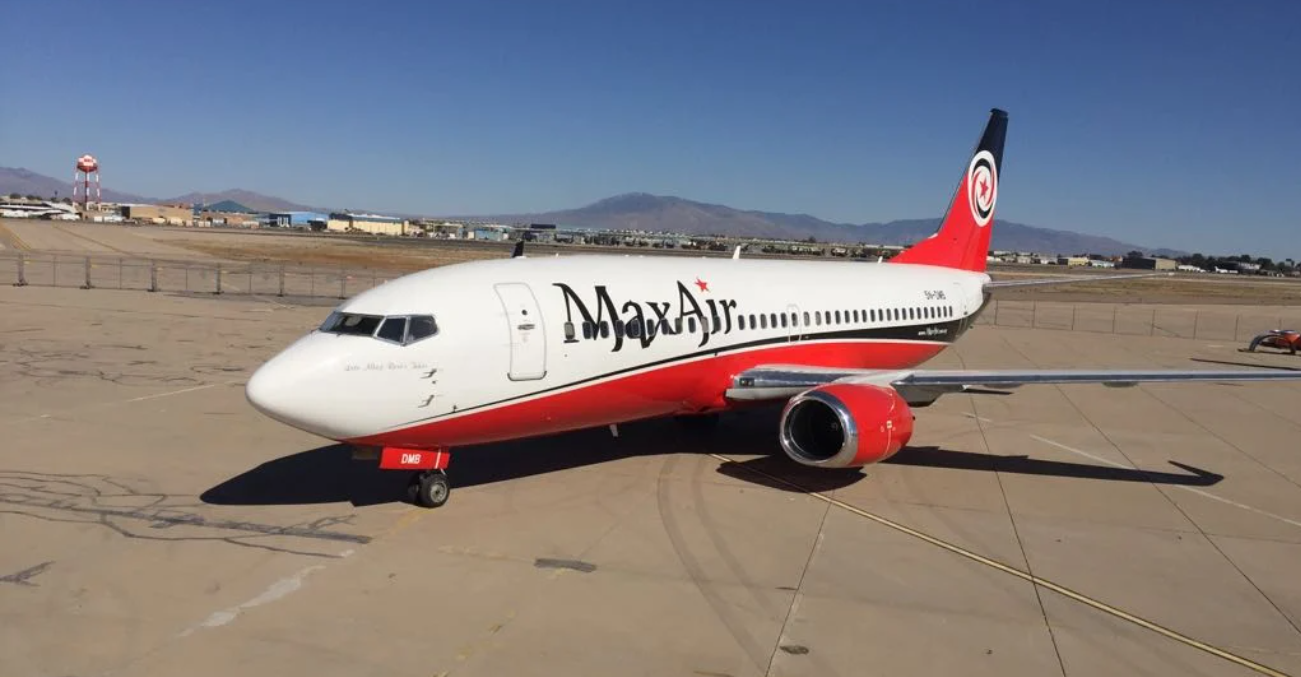
Ground handling companies in Nigeria have suspended services to Max Air over unpaid debts tied to aviation support operations.
The suspension was announced by the Aviation Ground Handlers Association of Nigeria (AGHAN), the umbrella body of ground handling companies in the country, in a statement issued on Thursday in Lagos, according to the News Agency of Nigeria (NAN).
The association said the decision followed the airline’s alleged failure to settle outstanding obligations or engage in discussions aimed at reconciling its debts with service providers.
Ground handling covers essential airport support services provided to aircraft on the ground, including baggage handling, passenger assistance, aircraft towing, cargo processing, and ramp operations.
What they are saying
AGHAN Chairman, Mr Olaniyi Adigun, said the suspension marked the association’s first major enforcement action against a defaulting airline.
He explained that while some indebted airlines had opened negotiations and were working toward repayment agreements, Max Air had failed to respond to repeated attempts at reconciliation.
- “The Aviation Ground Handlers Association of Nigeria (AGHAN) has suspended ground handling services to Max Air over debts.
- “The Chairman of AGHAN, Mr Olaniyi Adigun, disclosed the suspension in a statement on Thursday in Lagos,” the NAN report stated.
- “According to him, the decision became necessary following Max Air’s refusal to engage with aviation handling companies on the reconciliation and settlement of its indebtedness,” it added.
Adigun said the decision followed repeated but unsuccessful efforts to engage Max Air, stressing that ground handlers could no longer continue services without payment assurances. He noted that other indebted airlines had entered repayment talks, unlike Max Air, which remained unresponsive.
He said the move was aimed at enforcing financial discipline in the sector, warning that continued defaults were straining ground handling companies responsible for key airport operations.
He added that the suspension would not affect Hajj operations, as related handling charges are paid directly by the National Hajj Commission of Nigeria (NAHCON).
Backstory
The development follows months of tensions between ground handling companies and airlines over unpaid service charges.
- AGHAN had issued multiple ultimatums warning that failure to clear debts could lead to service withdrawal. It initially planned enforcement from May 1, 2026, but delayed the action due to Workers’ Day and efforts to maintain industrial harmony.
- The association later issued a fresh three-day ultimatum demanding reconciliation and repayment plans from affected airlines.
AGHAN has repeatedly warned that unpaid debts are straining its members, who provide services such as baggage handling, passenger facilitation, cargo processing, aircraft cleaning, ramp operations, and turnaround support. It said continued defaults could disrupt aviation services nationwide.
What you should know
The development comes amid ongoing financial strain in Nigeria’s aviation sector, marked by repeated airline debt disputes, regulatory interventions, and asset recovery actions.
- In April 2024, Aviation Minister Festus Keyamo said a 2022 NCAA audit found Dana Air financially unfit to operate due to liabilities exceeding assets and prolonged negative equity, leading to the suspension of its certificates.
- He also said the Federal Government may liquidate the airline’s assets to refund trapped passenger and travel agent funds, while NCAA investigates delayed reimbursements.
- In January 2025, AMCON reaffirmed plans to recover about N227 billion from Arik Air as part of broader non-performing loan recoveries in the sector, noting that the airline’s operational capacity had significantly weakened over time.
Arik Air’s exposure forms part of a wider AMCON recovery portfolio exceeding N455.17 billion, with only a limited number of aircraft serviceable at the point of takeover.
In November 2024, a Federal High Court in Lagos also ruled that Export Development Canada could repossess a CRJ1000 aircraft leased to Arik Air, reinforcing enforcement of the Cape Town Convention in Nigeria.