Follow Us on Google Discover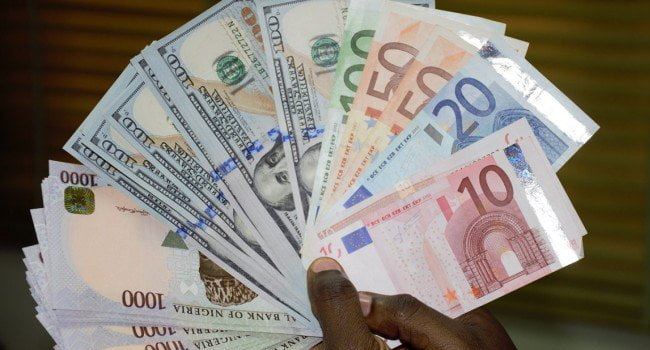
The Nigerian naira strengthened against major European currencies during the week’s fourth trading session.
The indicative daily rate for the EUR/NGN pair in the first week of June 2026 averaged in the high N1500s.
CBN latest data indicated the naira closed at N1582/€1 on Thursday.
Recent reports from the World Bank and domestic sources indicate Nigeria’s headline inflation has fallen significantly from its peak, helped by increased stability in the FX market and improved supply driven by higher agricultural yields.
Also Read
Analysts expect the CBN to gradually ease monetary policy later this year after maintaining a tight stance to defend the Naira, aiming to support domestic credit growth as inflation expectations stabilize.
The CBN is committed to strictly following the Nigerian FX Code to ensure proper price discovery. Strong market oversight and the CBN’s substantial FX reserves have kept speculative attacks on the Naira rare, maintaining its current trading range.
The European Central Bank adopted a hawkish stance to combat inflation, contrasting with the stable approach of Nigeria’s Central Bank, which is cautious about economic recovery.
Nigeria’s macro stabilization efforts appear to be deterring large NGN sell-offs, while the major European currency remains supported by high Eurozone inflation figures and an anticipated rate hike on June 11.
Euro Holds the US Dollar Near Keu Support Amid High Geopolitical Uncertainty
The Euro is hovering near $1.16 against the greenback in Thursday’s early European trading, struggling to rise and close to Wednesday’s low, indicating uncertainty. The European currency remains under pressure from the Middle Eastern crisis, which has caused energy prices to soar, reducing the attractiveness of currencies from energy importers.
The RSI is declining toward 43, suggesting sellers still hold sway. Resistance is near the 20-day EMA around $1.1646; a daily close above this could provide temporary relief. Falling below the May 21 low of $1.1575 could extend losses toward $1.15.
- Markets are uncertain whether the ECB will raise rates at the upcoming meeting but expect discussions on tightening, given rising inflation—May’s headline and core HICP increased by 3.2% and 2.5% YoY, respectively. The dollar index (DXY) is retreating toward 99.45 but remains near the eight-week high of 99.55.
- The US dollar index stays strong as the US and Iran negotiations remain stalled. Market focus will likely shift to the U.S. Non-farm Payrolls (NFP) report due Friday.
- Tehran paused talks through intermediaries with Washington over the ongoing Israeli conflict in Lebanon on Monday, citing Iran’s semi-official Tasnim news agency. Iran further accused the U.S. of ceasefire violations, claiming CENTCOM attacked U.S. radar and drone facilities as a defensive response over the weekend.
Iran’s Revolutionary Guards responded by attacking a US. -occupied airbase following an airstrike in southern Iran. Recent events have also caused the USD and oil prices to recover intraday.
The DXY is around 99.20 after rebounding from a two-week low of just below 98.75 last Friday. WTI crude oil is up over 5%, trading just below $92.50 as of now.
The US dollar benefits from increased speculation that the Fed may hike rates to address rising inflation risks driven by the oil price increase. According to CME Fed Watch, there is currently a 42% chance of a 25-basis point rate hike in December.
The persistent instability in the Middle East pushed up energy and crude oil prices and led to cost-push inflation in the Eurozone (recent rise of energy prices was 10.9%) which in turn requires the ECB to hold to an expansionary/restrictive, high-interest rate monetary stance longer than previously thought.